Not every wall in a building serves the same purpose, and mixing them up can cause serious issues.
Many people think demising walls and partition walls are interchangeable, but they are not. Choosing the wrong type can affect safety, privacy, and long-term costs.
A demising wall separates one tenant space from another and also defines a legal boundary. These walls are common in apartments, offices, and retail spaces.
They must meet stricter standards for sound control and fire protection than regular interior walls.
This guide explains the difference between demising walls and partition walls. You will learn where each is used, what materials are required, and how costs differ.
Understanding these distinctions helps you meet building codes, avoid costly fixes, and make better decisions during planning rather than dealing with problems later.
What Is a Demising Wall?
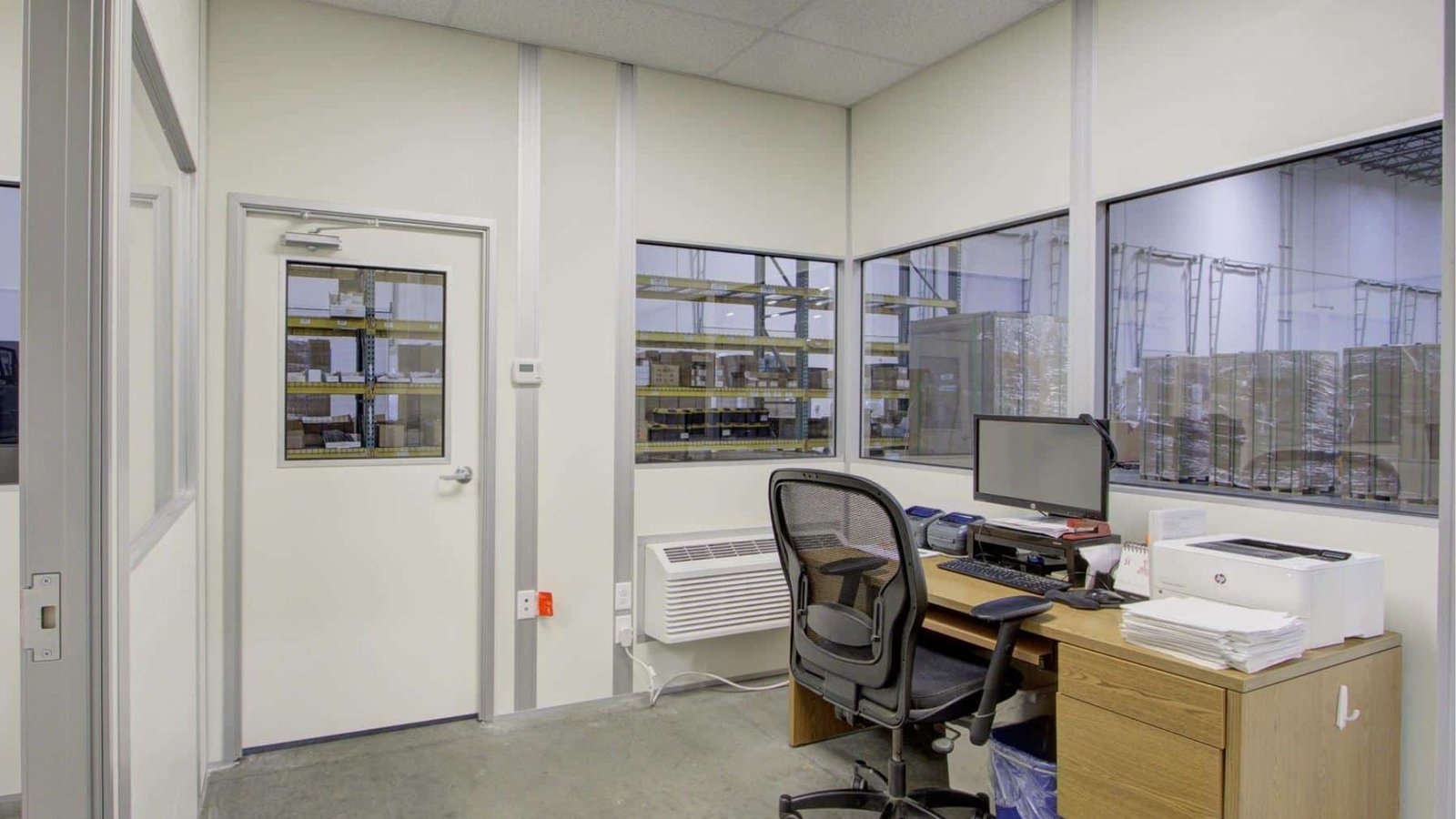
A demising wall’s main purpose is to separate tenants by creating a physical and legal boundary between different spaces.
It ensures privacy, security, and compliance, and is also known as a party wall or separation wall.
These walls are built stronger than standard interior walls and must meet strict fire, sound, and building code requirements. They are permanent structures, and any changes usually require permits and professional work.
Demising walls are common in multi-tenant buildings like malls, offices, warehouses, apartments, and condos.
Anytime multiple tenants share one structure, demising walls are typically required by law to keep spaces properly divided.
What Is a Partition Wall?
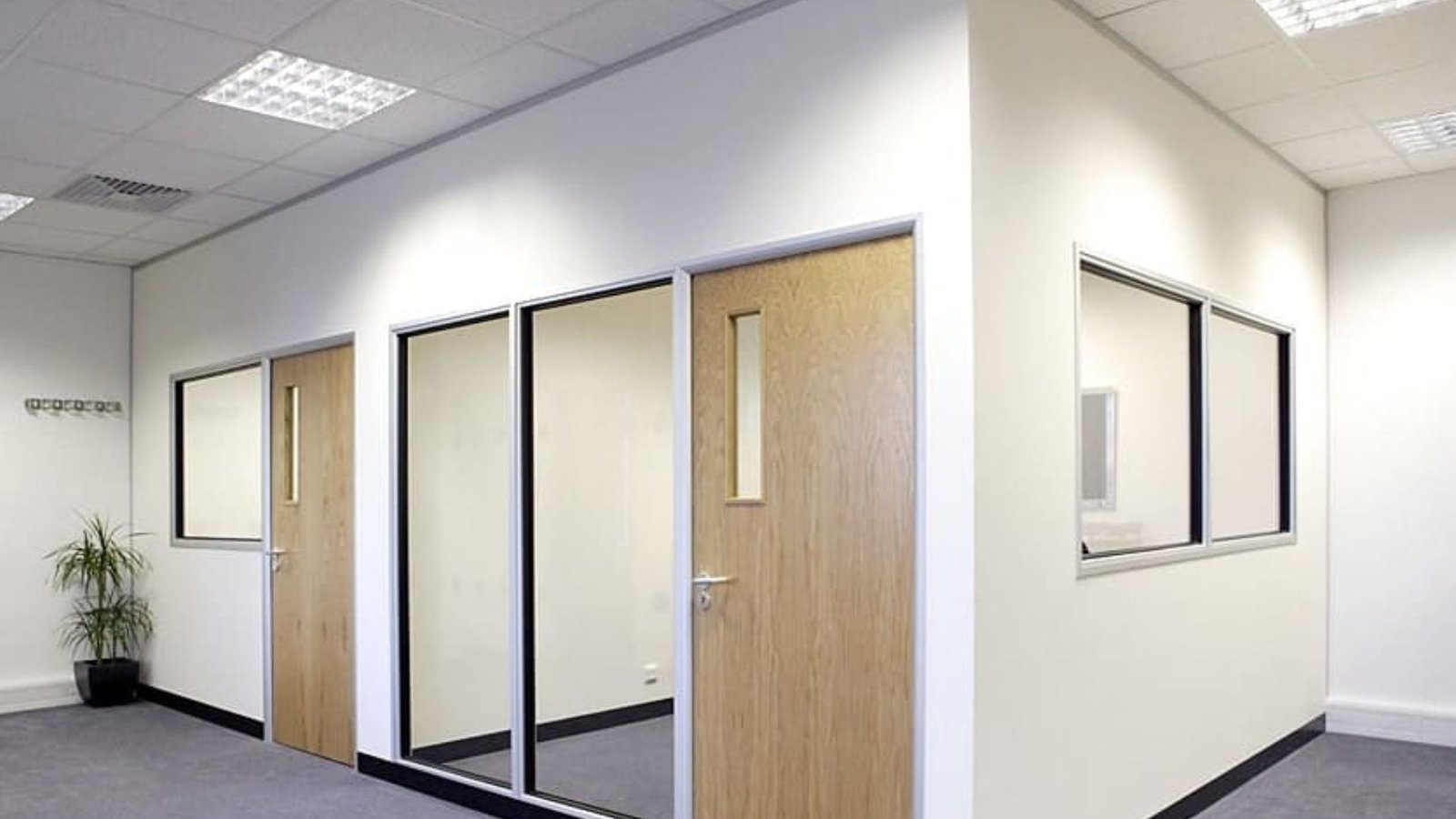
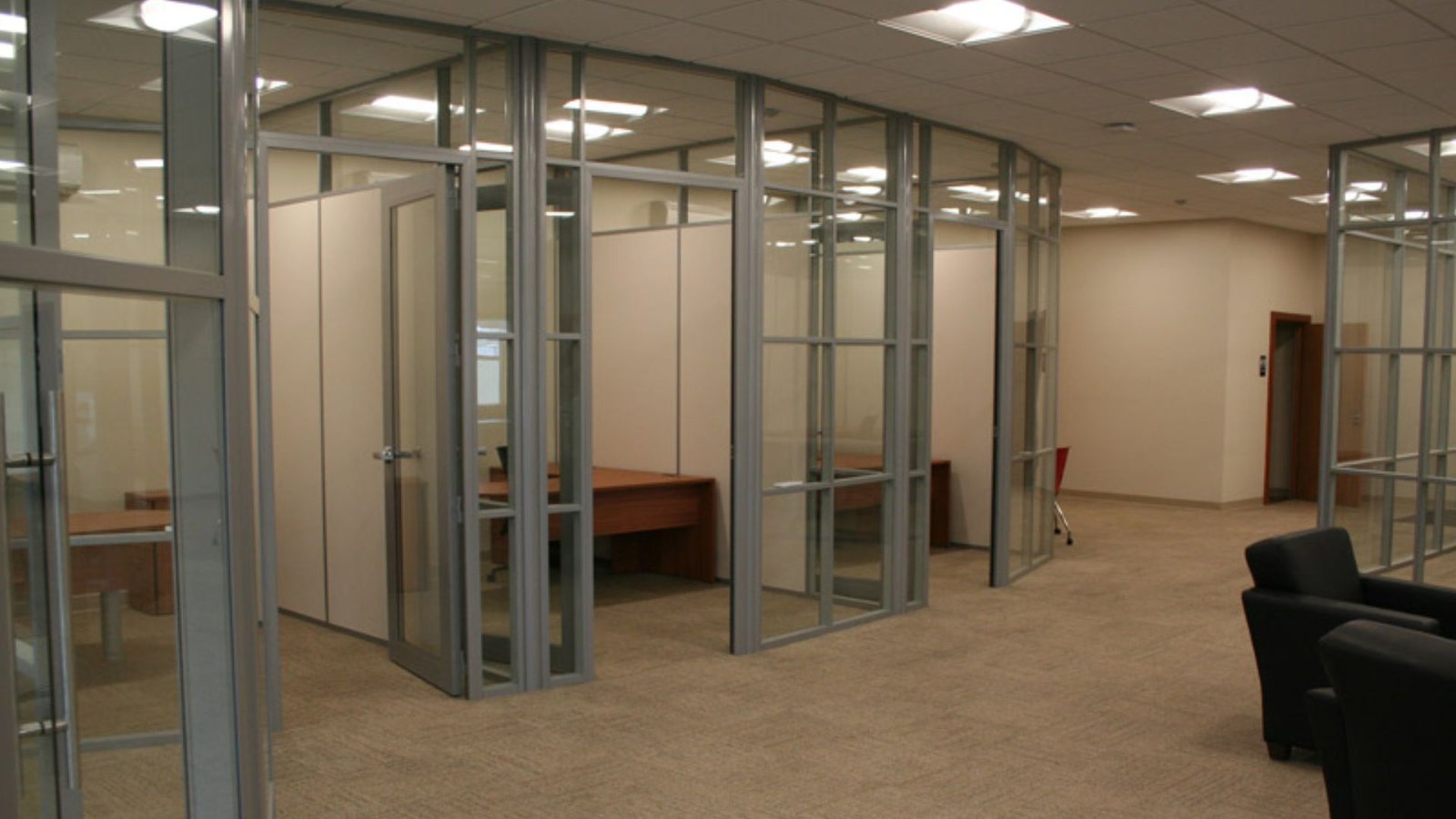
Partition walls divide space within a single unit rather than separating different tenants. Their purpose is to organize interiors by creating smaller, functional areas inside one larger space.
These walls are non-load-bearing and designed for flexibility. They use lightweight materials, are easy to modify or remove, and usually require fewer permits or inspections than permanent wall types.
Partition walls are common in offices, schools, healthcare facilities, warehouses, and homes. They help adapt layouts for work, privacy, or storage while keeping everything under one owner or tenant.
How Demising Walls Differ From Partition Walls?
The differences between these walls matter. Choose wrong, and you’ll face problems with safety, cost, or building codes.
|
Aspect |
Demising Walls |
Partition Walls |
|
Structural Strength |
Thicker, heavier, and built for permanence. may be load-bearing or reinforced to meet code |
Lightweight, non-load-bearing, and designed for easy changes |
|
Primary Purpose |
Separate different tenants or owners and create legal boundaries |
Divide the interior space within a single tenant or owner area |
|
Functionality |
Ensures privacy, security, and legal compliance between units |
Focuses on space organization, flexibility, and appearance |
|
Materials Used |
Fire-rated drywall, soundproofing insulation, and decoupled assemblies |
Standard gypsum board, simple wood/metal framing, glass or modular panels |
|
Fire & Sound Requirements |
Requires fire ratings (1–2 hours) and high STC soundproofing |
No fire-rating or sound-testing requirements |
|
Regulatory Compliance |
Strict building codes, permits, inspections, and testing are required |
Minimal code requirements for interior construction |
|
Installation Complexity |
Professional contractors required. permanent construction |
Faster, simpler installation. Some systems are DIY-friendly |
|
Flexibility & Reuse |
Permanent and difficult to modify or relocate |
Easy to remove, reconfigure, and reuse |
|
Cost |
Higher upfront cost due to materials, labor, and permits |
Lower cost with cheaper materials and quicker installation |
|
Best Use Case |
Multi-tenant buildings need legal and safety separation |
Offices, homes, or facilities needing adaptable interior layouts |
Types of Demising Walls
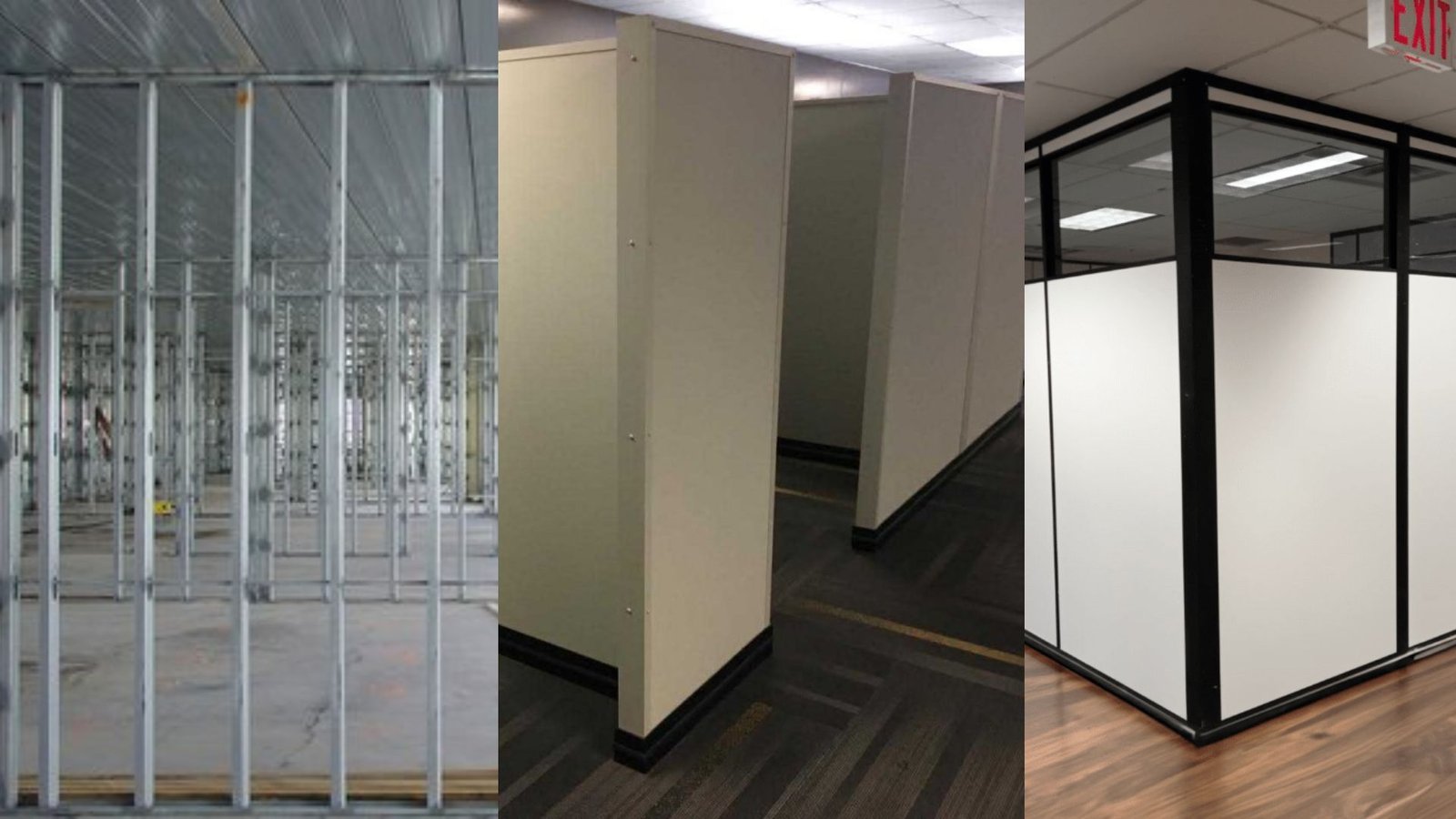
Not all demising walls are identical. Different buildings need different protection levels.
Fire-Rated Demising Walls
Demising walls prevent fire from spreading between units, keeping occupants safe. Fire resistance is measured in hours, typically one or two, depending on code requirements.
Materials include fire-rated gypsum board, mineral wool insulation, and metal studs. A one-hour wall resists fire for 60 minutes, while a two-hour wall doubles that protection for added safety.
Soundproof Demising Walls
Sound control is crucial in shared buildings to maintain private and quiet spaces. Proper walls prevent noise from TVs or conversations from disturbing neighbors.
Soundproof demising walls use STC ratings to measure noise transfer. Higher numbers indicate better soundproofing, achieved through insulation, double drywall layers, and staggered studs.
Combination Walls
Most modern demising walls serve dual purposes. They prevent fire spread and block sound simultaneously, combining safety and privacy in a single structure.
These combination walls use fire-rated materials with built-in acoustic insulation. While the upfront cost is higher, they meet all code requirements in one installation, providing both protection and soundproofing efficiently.
Building Code Requirements for Demising Walls
Codes aren’t optional. They’re legal requirements that protect tenants and building owners.
Fire Safety Standards
Fire resistance ratings depend on your building type. A residential apartment has different requirements than a commercial office building.
Building codes specify which materials you can use:
- Fire-rated gypsum board is the most common choice for demising walls
- Type X drywall provides one-hour fire protection, while Type C offers even more
- Fire-resistant insulation and proper sealing around penetrations are required
After installation, inspectors verify that the wall meets code. You can’t skip this step.
Soundproofing Regulations
Sound codes vary by location and building use. Check your local requirements before building.
Most areas require minimum STC ratings:
- Residential buildings: STC 50 to 55
- Office buildings: STC 45 to 50
- Mixed-use buildings: higher ratings between residential and commercial
Acoustic testing verifies performance. Inspectors use specialized equipment to measure sound transmission.
Common soundproofing techniques include dense insulation, resilient channels that decouple drywall from studs, and double layers of drywall with staggered seams.
Structural Standards
Thickness requirements exist for good reason. Thicker walls perform better for both fire and sound.
Standard demising wall construction includes:
- Wall thickness ranges from 6 to 8 inches for proper fire and sound protection
- Walls must extend from the floor slab to the roof deck, not just to a drop ceiling, to prevent gaps
- HVAC ducts, plumbing, and electrical lines passing through require proper fire-rated seals
Connection to floor and ceiling assemblies matters too. Gaps let sound and fire through, compromising the wall’s effectiveness.
How to Choose Between Demising Walls and Partition Walls
Your project determines which wall type you need. Ask yourself a few key questions.
Assess Your Space Requirements
The first question is whether you’re separating tenants or just dividing interior space. If the goal is to separate different tenants, owners, or businesses, a demising wall is necessary and often legally required.
For dividing space within a single unit, a partition wall works well. High privacy needs favor demising walls, while basic layout changes are easier with partition walls, offering flexibility and adaptability.
Review Building Codes and Regulations
Local building codes take priority over personal preferences. Always check requirements before starting construction.
Visit your local building department to find out fire ratings, soundproofing minimums, and tenant separation rules. Rules vary by occupancy type, and ignoring them can lead to failed inspections, fines, and costly corrections.
Budget and Timeline Considerations
Compare costs by considering both short-term and long-term expenses. Demising walls require professional contractors, specialized materials, permits, and inspections, making installation pricier.
Partition walls cost less upfront and install faster. They can be moved or reused, spreading costs over multiple projects, while demising walls remain permanent and less flexible for future changes.
Consult with Professionals
Don’t go it alone. Construction experts save time, money, and headaches by guiding your project from start to finish.
Work with building designers or contractors who understand building codes. They ensure compliance, spot potential issues early, and recommend the best solution for your specific situation.
Conclusion
You now understand what a demising wall is and how it differs from a partition wall. A demising wall separates one tenant from another and must meet strict rules for fire safety and sound control. A partition wall divides spaces within a single unit and allows more layout flexibility.
The right choice depends on your project goals. If you are separating tenants, a demising wall is required.
If you are dividing rooms inside one space, a partition wall is usually enough. These walls serve different purposes and should not be used interchangeably.
Knowing the rules, costs, and construction requirements helps you avoid problems later. If you are unsure which wall type fits your project, a construction professional can review your plans and ensure everything meets local building codes.
Frequently Asked Questions
What is a demising wall?
A demising wall separates one tenant’s space from another in multi-tenant buildings. It serves as both a physical and legal boundary, meeting strict building codes for fire safety and soundproofing. Common in apartments, offices, and shopping centers.
What is the difference between a demising wall and a partition wall?
Demising walls separate different tenants and must meet fire and sound codes. Partition walls divide interior spaces within one unit, are more flexible, and have fewer regulations. Demising walls are permanent. Partition walls can be moved.
Are the demising walls load-bearing?
Demising walls can be load-bearing or non-load-bearing, depending on the building design. However, they’re always built more substantially than partition walls to meet fire safety and soundproofing requirements, regardless of whether they support structural loads.
What materials are used in demising walls?
Demising walls use fire-rated drywall, soundproofing insulation, and specialized materials to meet building codes. They’re constructed thicker than standard walls with decoupled framing to achieve high STC ratings for noise reduction between tenants.
Do demising walls require building permits?
Yes, demising walls require building permits because they must meet fire safety, soundproofing, and structural codes. Installation needs professional contractors and inspections to ensure compliance with local regulations for tenant separation and safety standards.