Walking into a living room with high ceilings often stops people in their tracks. The room feels open and bright, but those tall walls can also feel hard to decorate in a way that feels comfortable.
Many homeowners worry the space will feel empty or cold if the walls stay bare. That concern is valid, but it is also fixable.
The right living room high ceiling wall decor ideas help bring balance by drawing the eye upward while still keeping focus at eye level.
This guide shares practical ways to handle tall walls using large art, grouped pieces, lighting, and paint choices.
These ideas work in real homes, not just showrooms. If you are decorating from scratch or refreshing what you have, you now have clear options to make your high ceiling living room feel welcoming and well planned.
Understanding the Potential of High Ceiling Living Rooms
High ceilings offer more than just extra space. They provide an opportunity to add style and personality to your room.
With all that vertical room, you can create dramatic effects, hang standout lighting, or showcase tall artwork that captures attention.
The design potential of high ceilings is clear when you look at galleries or historic homes. They use height to make a statement, giving a sense of luxury and airiness. You can achieve the same impact in your living room, making it feel more spacious and visually striking.
However, high ceilings come with challenges. Large vertical spaces can feel cold or uninviting if not balanced properly.
The key is to fill the space thoughtfully while maintaining warmth and comfort at eye level, so your room feels grand without losing coziness.
11 Living Room High Ceiling Wall Decor Ideas You’ll Love
These creative strategies will help you fill vertical space, add visual interest, and maintain warmth while turning your tall walls into design features that feel both impressive and inviting.
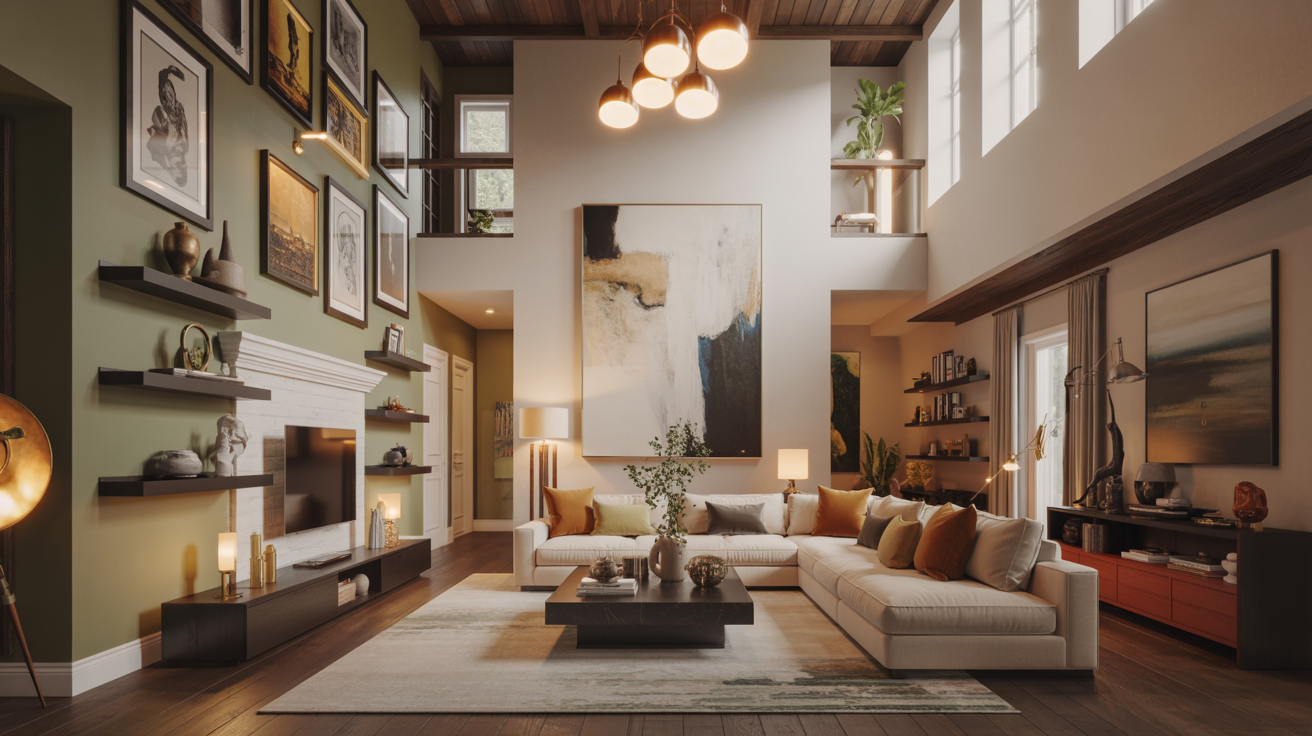
1. Create a Gallery Wall That Reaches Upward
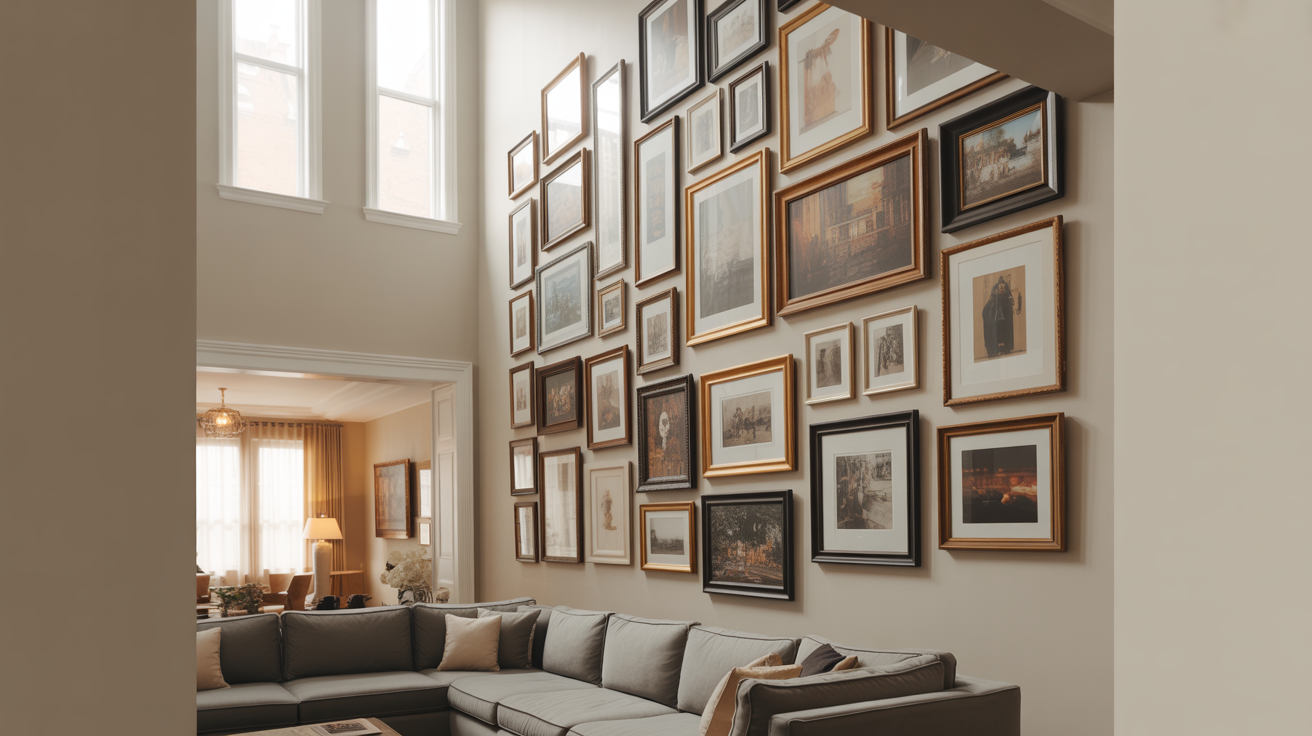
Tall walls are like a blank canvas waiting for creativity. A gallery wall that climbs upward fills the space and naturally draws the eye, making your room feel dynamic and engaging. High walls let you go big with art, mixing large and small pieces and experimenting with different frame styles.
To make the most impact, start with your favorite piece as the anchor and build the arrangement upward and outward.
Keep spacing consistent, around 2 to 3 inches, and balance larger statement pieces with smaller complementary works. This creates a visual flow that keeps the wall interesting from top to bottom.
2. Install Oversized Wall Art and Large-Scale Paintings
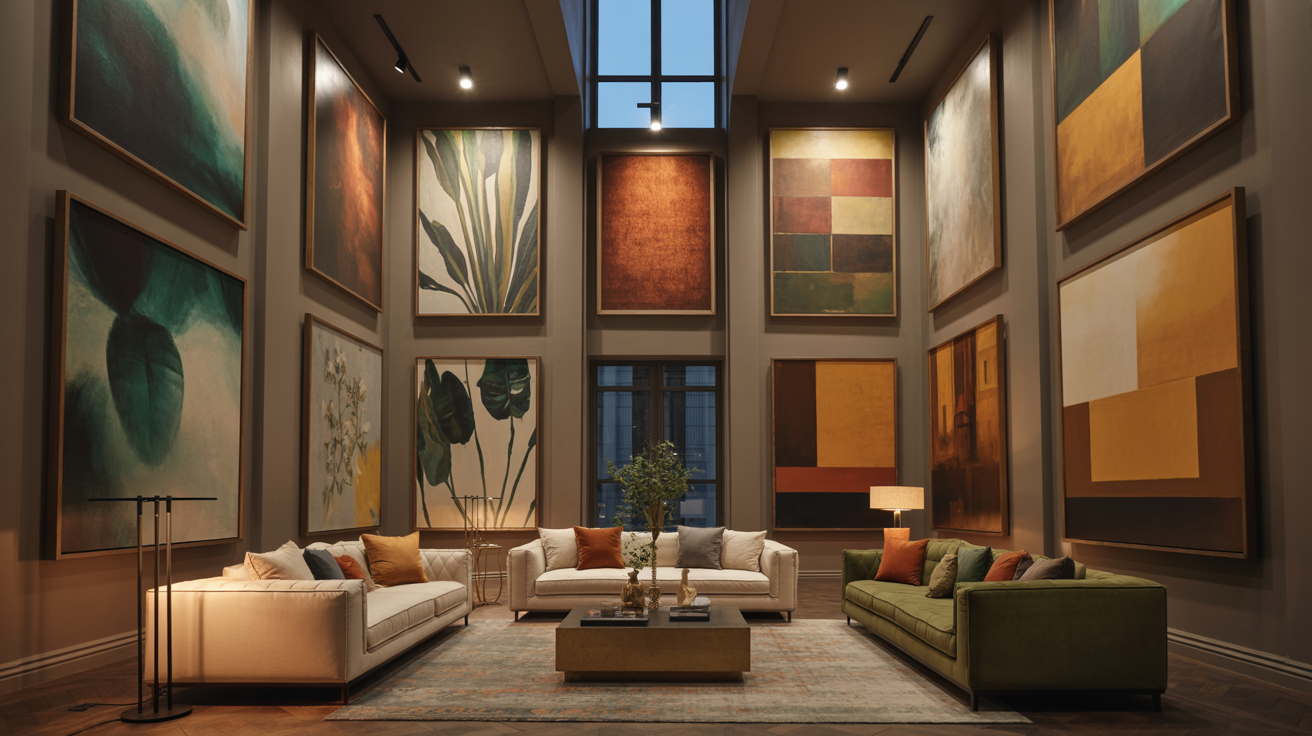
Sometimes one large piece of art is more effective than a collection of smaller ones. Oversized artwork makes a bold statement and fills the space without needing dozens of frames. It also simplifies hanging and instantly draws attention.
When selecting art for tall walls, make sure it matches the scale of the space. Keep the center at eye level or slightly above and pair it with furniture that complements its size. This creates a balanced focal point that anchors the room and feels intentional.
3. Use Statement Lighting as Wall Decor
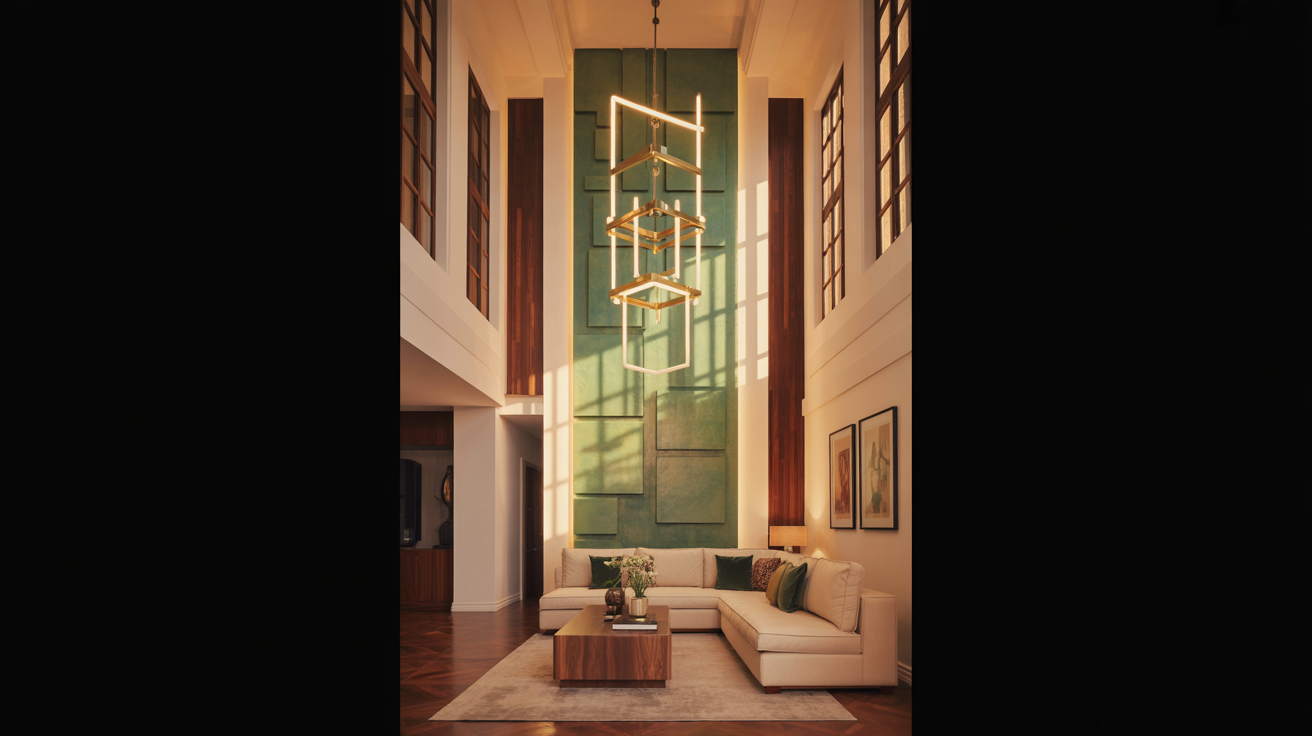
Lighting serves two purposes in rooms with high ceilings. It brightens the space while acting as a decorative element. A chandelier or pendant light fills vertical space and naturally draws the eye upward.
A single ceiling fixture is not enough for tall rooms. Layered lighting with wall sconces, floor lamps, and table lamps adds depth and balance.
Adjustable lighting also helps create different moods and connects the high ceiling with the rest of the living area.
4. Paint the Ceiling in Bold or Contrasting Colors
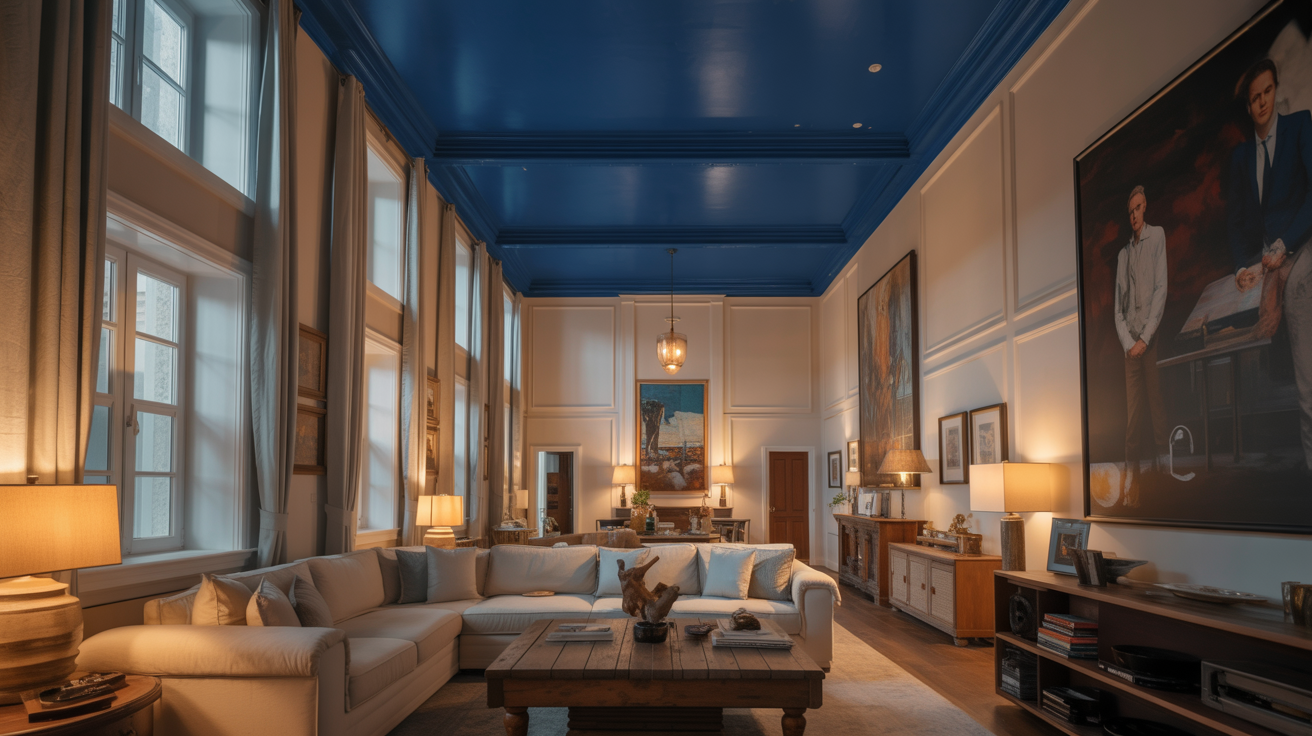
White ceilings can feel dull in rooms with high ceilings. Using a bold color draws the eye upward and adds depth. Shades like deep blue, rich green, or warm pink make the ceiling an integral part of the room design.
Design details can be highlighted with complementary colors. Painting crown molding or ceiling roses adds elegance, while coordinating ceiling colors with walls or wallpaper creates a balanced and intimate feel.
5. Define the Ceiling Line with Accent Colors
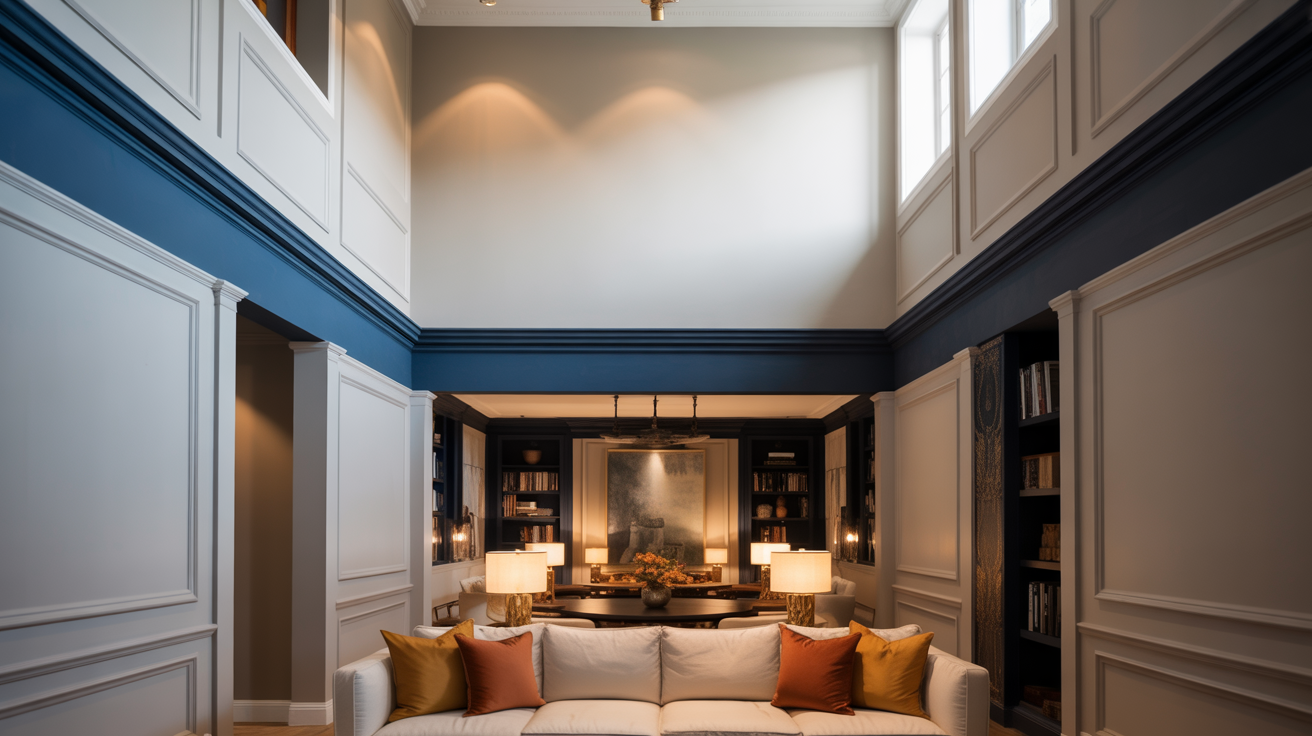
Painting where the wall meets the ceiling in a different color creates a visual boundary and highlights the scale of your room.
Extending the accent to door frames and window surrounds guides the eye and makes the space feel cohesive.
Matching baseboards and trim with the accent color ties elements together and enhances flow. Bold and unexpected color pairings add a modern twist to traditional spaces and give the room personality and confidence.
6. Embrace Full-Height Wallpaper
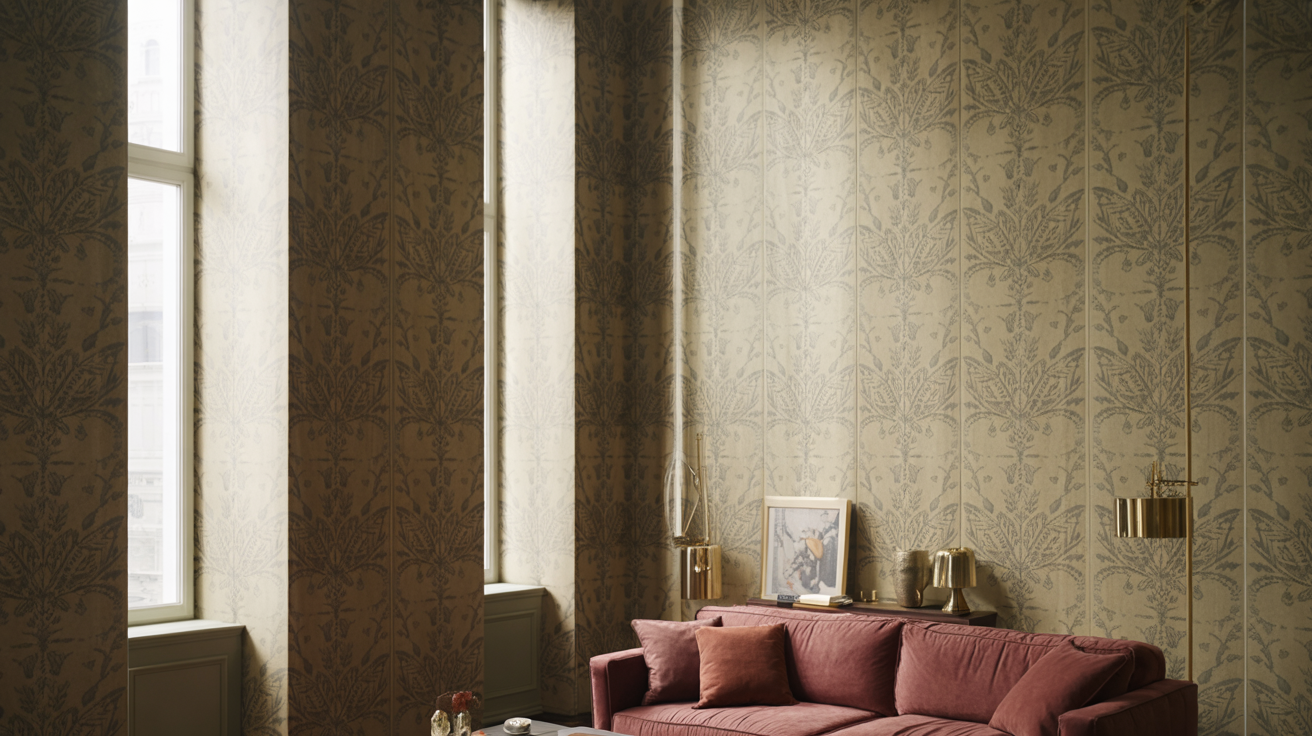
High ceilings are perfect for wallpaper that covers all four walls. Floor-to-ceiling patterns emphasize the room’s vertical space and give it personality.
Warm designs like botanical prints or sunny colors make large rooms feel inviting and cozy.
Choosing the right scale is important for tall walls. Larger patterns work best and create a balanced look.
Coordinate wallpaper with ceiling and trim colors, using accent shades from the design to make the room feel cohesive and intentional.
7. Feature Mural Wallpaper on Large Walls
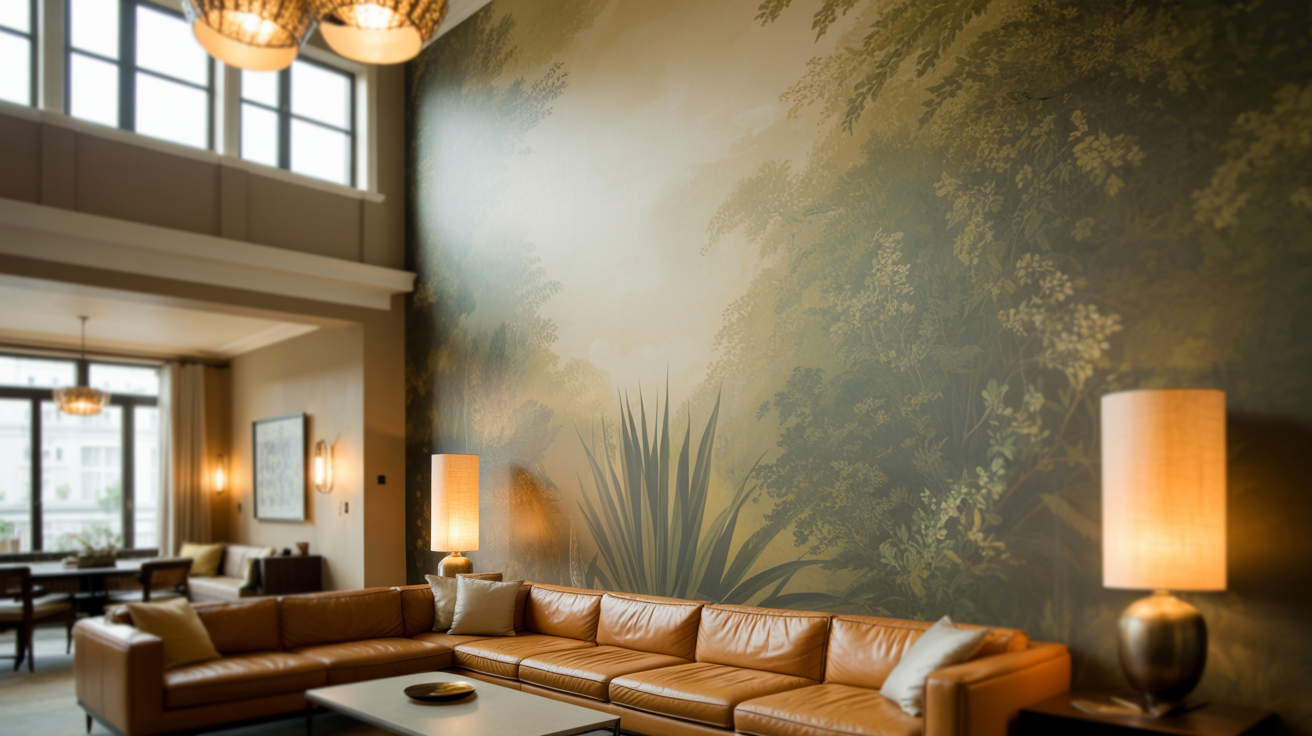
Mural wallpaper transforms a wall into a piece of art and works especially well in rooms with high ceilings.
Botanical designs with birds, butterflies, and flowers bring nature indoors and give the eye a place to explore. Light murals feel airy while dark murals add drama and coziness.
Choose a feature wall carefully, often behind a sofa or opposite the entrance, to make the biggest impact.
Coordinate mural colors with woodwork and trim to create balance. Dark trim with a dark mural creates a cocooning effect, while light trim keeps the space open and bright.
8. Incorporate Tall Shelving and Vertical Storage
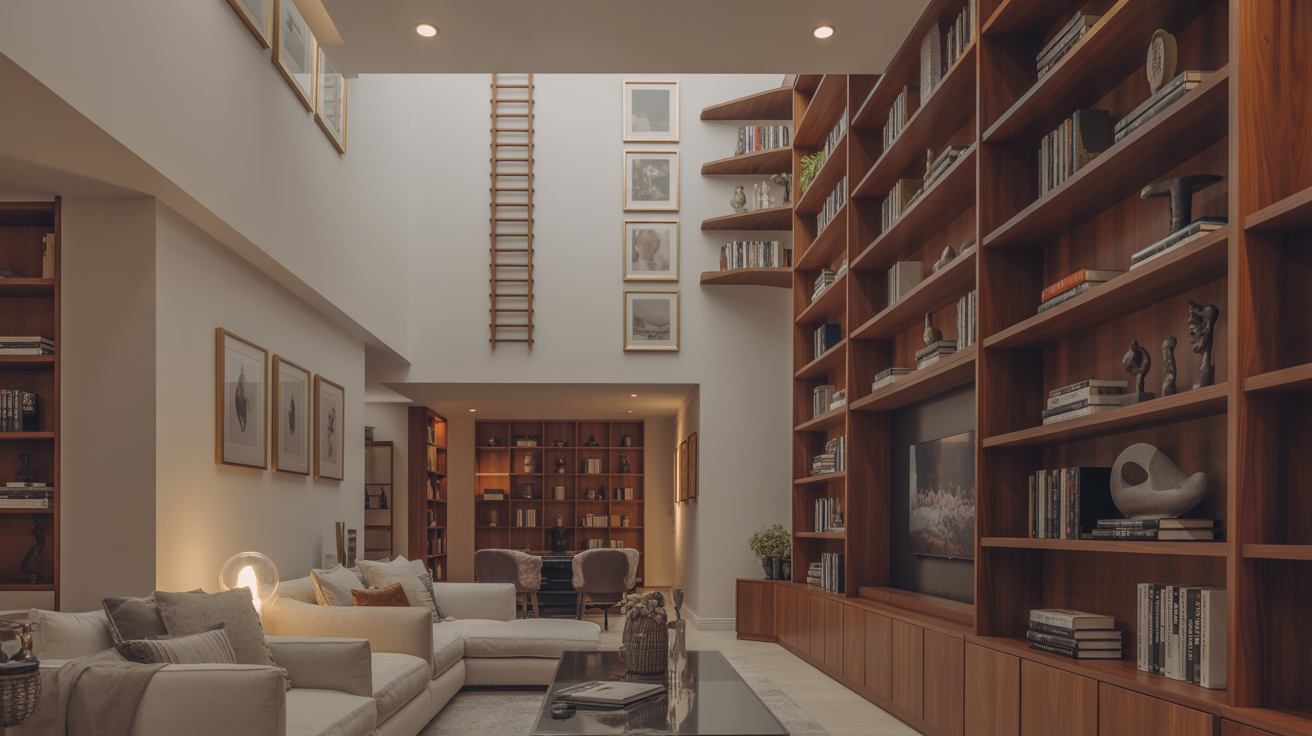
Shelving does more than store items. Floor-to-ceiling bookshelves fill vertical space and add texture, color, and visual interest while providing practical storage.
Mixing books with decorative objects and plants keeps the display dynamic and engaging.
Open shelves allow you to showcase collections and add personality to a room. Group items thoughtfully, leave some space for breathing, and balance function with style.
Ladder-style shelves make higher levels accessible and maintain a polished look.
9. Add Tall Indoor Plants and Greenery
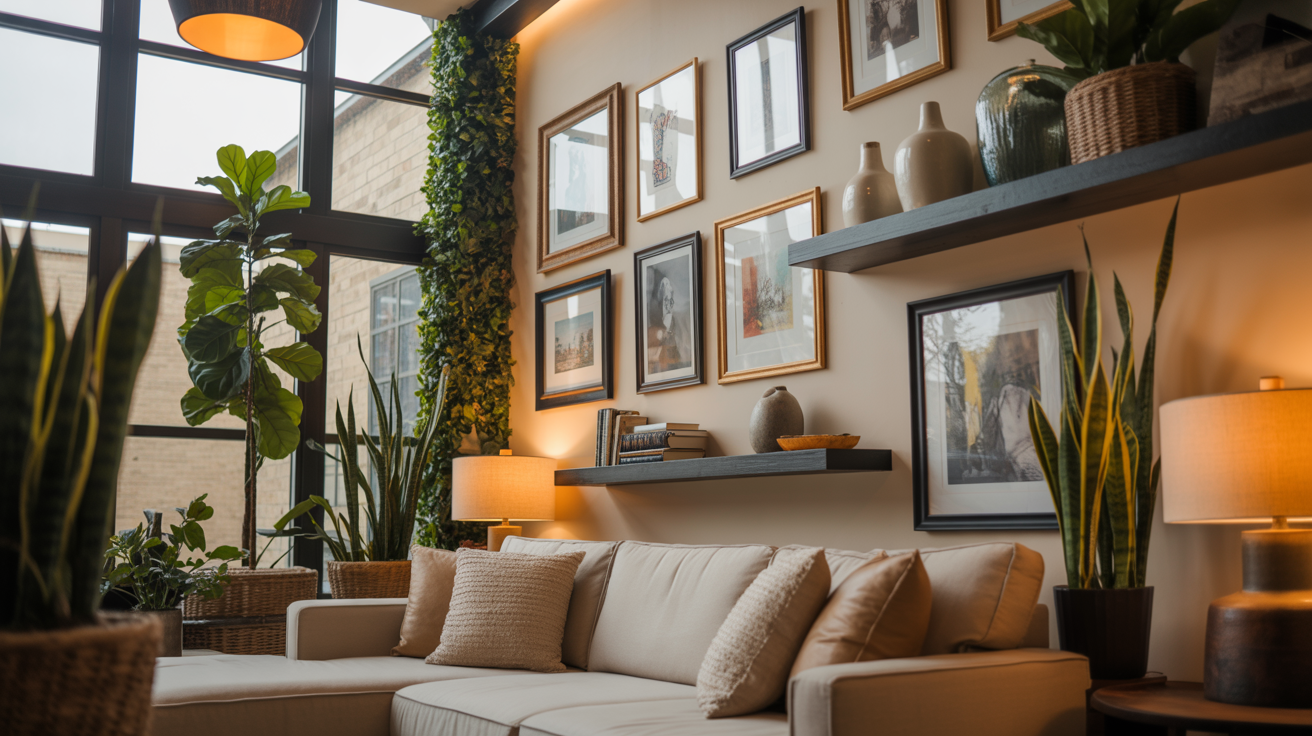
Tall plants are a natural way to fill vertical space. They soften the room, improve air quality, and bring a touch of nature indoors.
Plants like fiddle leaf figs, rubber trees, and birds of paradise work especially well in high-ceiling rooms.
Placement is key to creating impact. Corner plants or ones flanking a fireplace or TV draw the eye upward and create balance.
You can also layer plants at different heights or install a vertical garden to add depth and make the space feel alive.
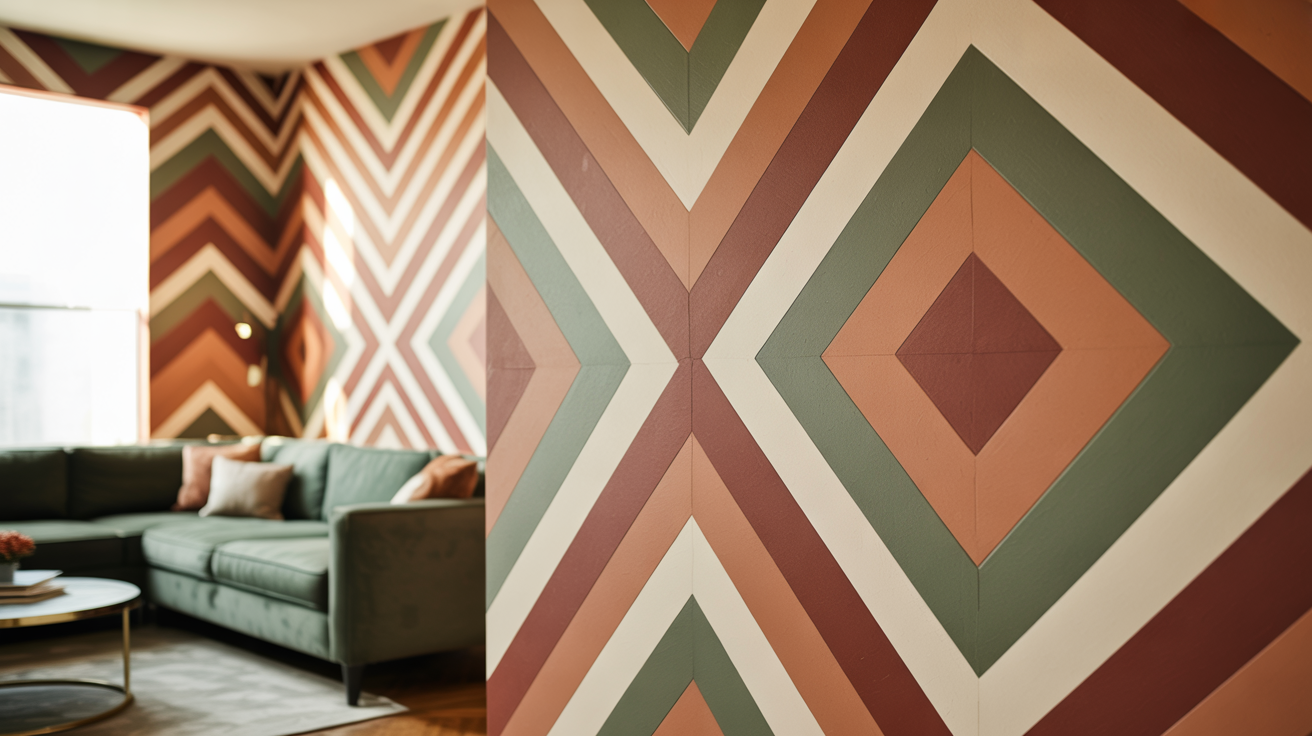
10. Use Vertical Stripes for Design Illusion
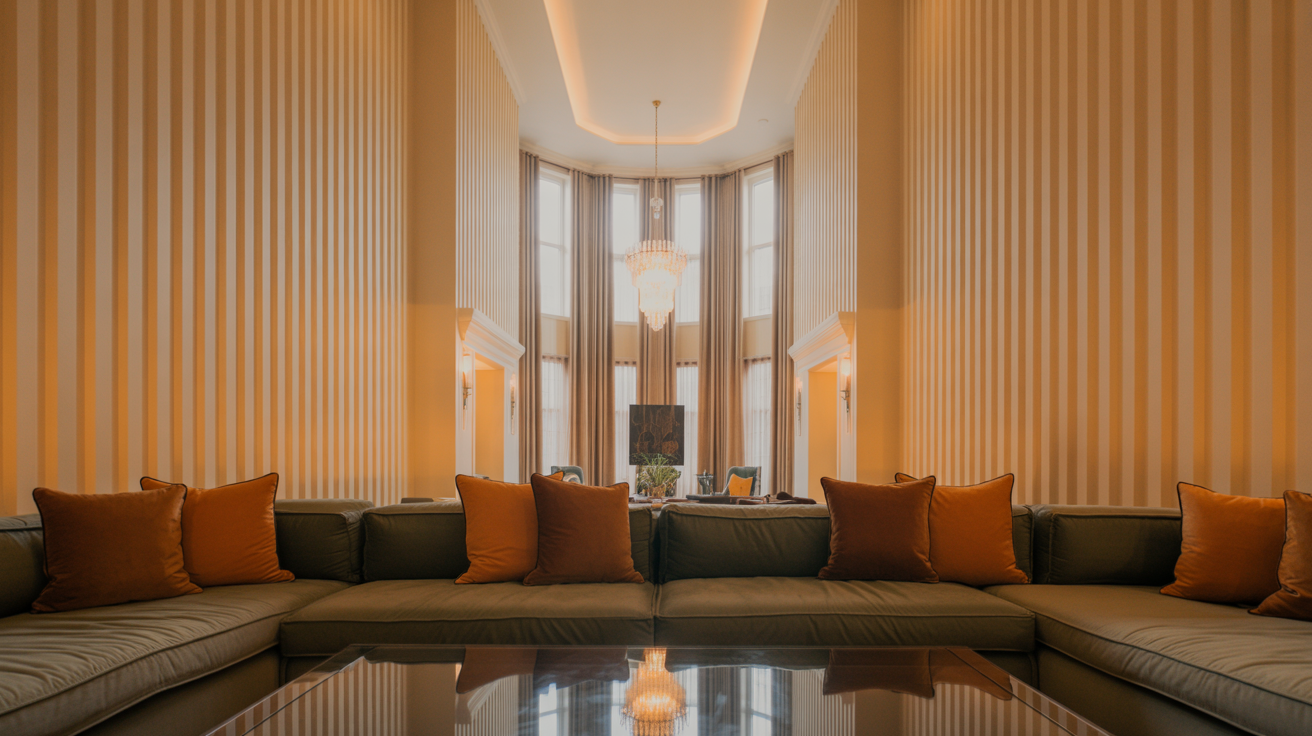
Stripes are a smart way to play with the perception of height. Vertical stripes make ceilings look taller and add drama, while horizontal stripes pull the eye downward to create a cozier feel.
Choose the orientation based on if you want to emphasize or soften the room’s height.
Keep color choices simple with two shades for the best effect. Incorporate stripe colors into shelving and accessories to create a cohesive look.
This makes the stripes feel like part of the overall design instead of just a wall treatment.
11. Try Color Drenching for a Wraparound Effect
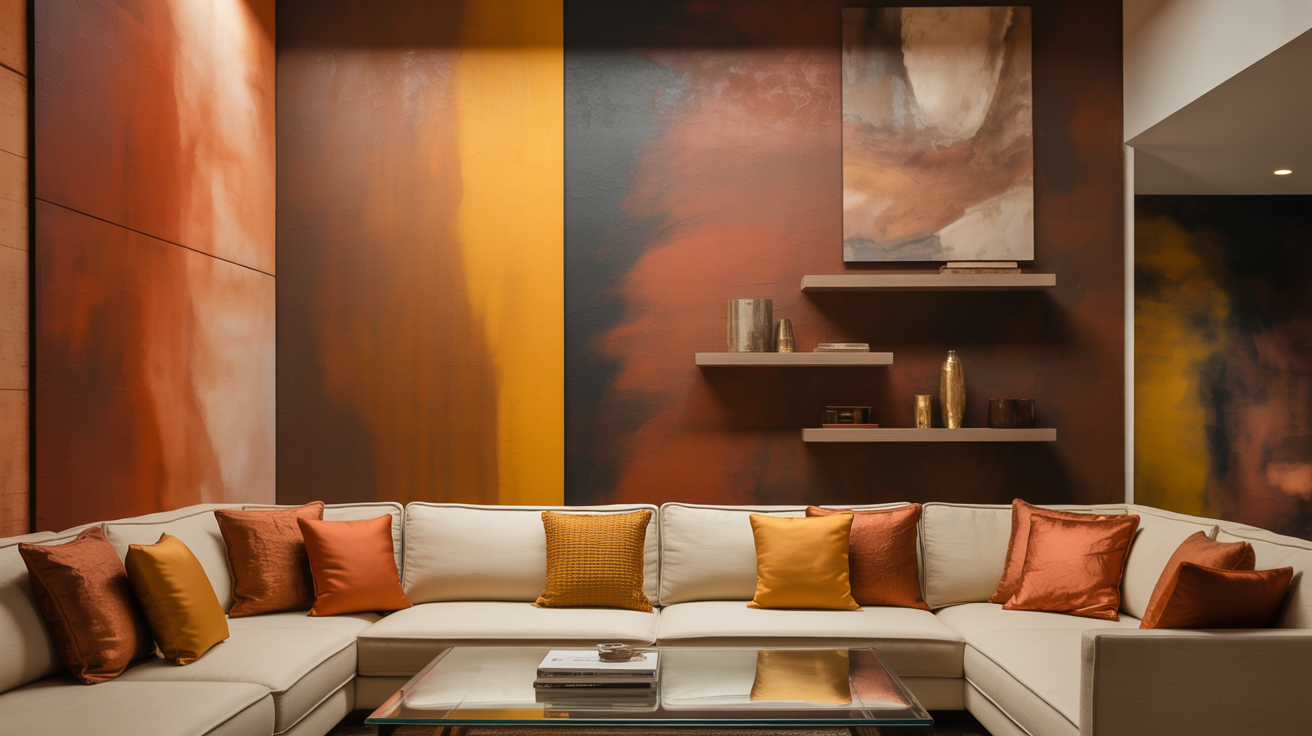
Color drenching means painting walls, ceiling, trim, and woodwork all the same rich color. Deep greens, chocolate browns, and jewel tones work well to create a cozy and intimate feeling in tall rooms. The uniform color makes the space feel cohesive and intentional.
Adding panelling gives dimension and prevents the color from feeling flat. Use tonal accents in furniture and accessories to introduce subtle variation while keeping the wrapped, cozy effect of color drenching. This approach makes tall rooms feel warm and inviting.
Choosing the Right Furniture Scale and Placement
Your furniture needs to match your room’s proportions. Small furniture in a tall room looks wrong. Everything feels disconnected and floaty. You need substantial pieces that anchor the space.
Selecting Appropriately Sized Furniture
Go bigger than you would in a standard room. Tall bookshelves, massive sofas, and large coffee tables ground your space. They create visual weight at floor level that balances the height above.
Avoid furniture that looks dwarfed. If it seems small on the showroom floor, it’ll look tiny in your high-ceiling room. Think substantial. Think solid. Your furniture should feel confident in the space.
Creating Intimate Seating Arrangements
Arrange furniture to create cozy groupings. Pull pieces together instead of pushing them against walls. This makes conversation areas feel more intimate despite the tall ceilings overhead.
Use area rugs to define spaces. The rug visually anchors your furniture arrangement. It tells people “this is the sitting area” or “this is the reading nook.” Strategic placement makes the room feel inviting and down-to-earth.
Practical Tips for Implementation
Let’s get practical. You’ve got ideas, now what? Here’s how to actually make these changes without overwhelming yourself or your budget.
- Focus on scale, light, and warmth to make the room feel balanced and cozy.
- Use vertical space wisely and leave some areas empty to let the eye rest.
- Start with paint or wallpaper for a big visual impact on a budget.
- Choose one statement light fixture or tall plants instead of costly decor.
- Thrift frames and use large rugs to add warmth and define spaces affordably.
Conclusion
High ceilings do not have to feel overwhelming. With the right living room high ceiling wall decor ideas, tall walls can feel warm, balanced, and comfortable rather than empty.
You now know how to work with height instead of fighting it. Large art, grouped frames, ceiling paint, or full wall wallpaper help fill vertical space. Adding furniture at eye level, softer colors, and layered lighting keeps the room feeling grounded and inviting.
Start with one idea that fits your space and build from there. Small changes can make a noticeable difference over time. Your high-ceiling living room has plenty of potential, and you now have a clear direction to move forward. Share your thoughts in the comments or pass this along to someone decorating a similar space.
Frequently Asked Questions
How do you decorate a living room wall with high ceilings?
Use oversized art, gallery walls that stretch upward, or full-height wallpaper to fill vertical space. Add statement lighting like chandeliers, paint the ceiling a bold color, and incorporate tall plants or shelving. Balance height with cozy furniture arrangements and warm colors at eye level to maintain comfort.
What color should I paint my high-ceiling living room?
Consider bold or contrasting colors instead of plain white. Deep blues, rich greens, warm pinks, or coordinating shades from your wallpaper work well. You can also try color drenching, painting walls, ceiling, and trim the same rich shade, to create a cozy, wraparound effect.
How do you make a high-ceiling living room feel cozy?
Use warm, rich colors and textured fabrics throughout the space. Layer large rugs, add plush cushions, and arrange furniture in intimate groupings. Incorporate layered lighting with floor lamps and wall sconces. Tall plants and properly scaled furniture help bridge the gap between the ceiling and the floor.
What size art should I hang on tall living room walls?
Choose oversized pieces that match your room’s proportions—don’t let artwork look lost on expansive walls. Single large-scale paintings work well, or create vertical gallery walls that stretch upward. The art should feel substantial enough to anchor the space and fill the visual field appropriately.
Should I use horizontal or vertical stripes on high ceiling walls?
It depends on your goal. Vertical stripes emphasize and elongate the height further, creating more drama. Horizontal stripes draw the eye downward and can make ceilings feel lower, adding coziness. A single vertical accent stripe offers subtle interest without overwhelming the space.