Looking to shake up your space? A diagonal accent wall might be exactly what you need. Unlike boring horizontal stripes or plain painted walls, diagonal lines create movement and energy that instantly modernizes any room.
This guide walks you through practical diagonal accent wall ideas that actually work in real homes.
You’ll find which patterns fit your space, what colors make the biggest impact, and how to pull off this bold look without it feeling overwhelming. We’ve tested these approaches in rooms.
I’m not just throwing design buzzwords at you. As someone who’s helped homeowners upgrade hundreds of rooms,
I know which diagonal designs hold up over time and which ones you’ll regret in six months. You’ll get honest advice on materials, costs, and whether DIY makes sense for your skill level.
13 Fantastic Diagonal Accent Wall Ideas
You don’t need to be a designer to pull off a diagonal accent wall. I’ve seen these changes work in tiny apartments and sprawling homes alike.
The key is picking the right style for your space and comfort level. Let me walk you through thirteen ideas that actually deliver.
Two-Tone Diagonal Paint Wall
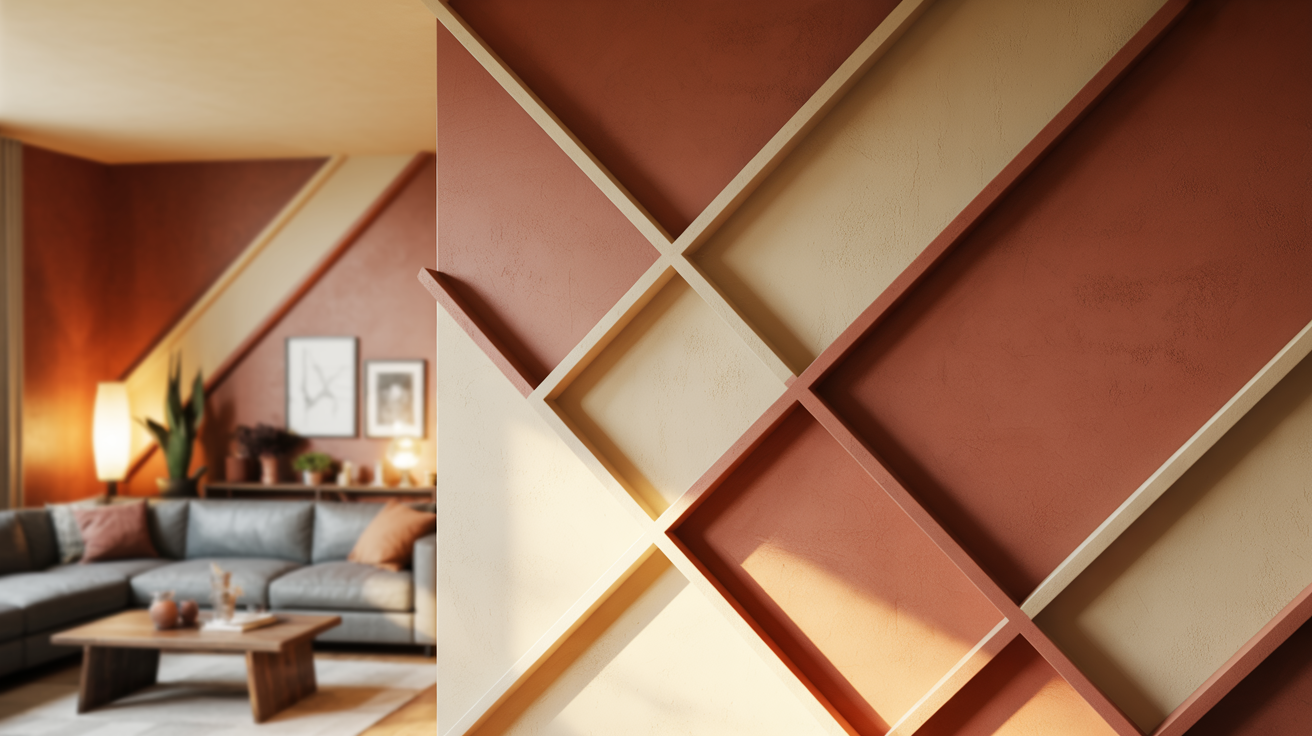
This is where most people start, and for good reason. You split your wall diagonally with two colors that contrast just enough to create impact.
Think soft sage meeting crisp white, or warm terracotta against cream.
How to create it:
- Measure corner to corner and mark your diagonal line with a pencil and a level
- Apply painter’s tape along the line, seal the edge, then paint one section at a time
- Remove tape while the paint is slightly wet for the cleanest edge
The clean line creates movement without chaos. I’ve used this in bedrooms where clients wanted something interesting but not overwhelming.
It’s modern, it’s simple, and you can tackle it in a single weekend with painter’s tape and a steady hand.
Soft Neutral Diagonal Color Block
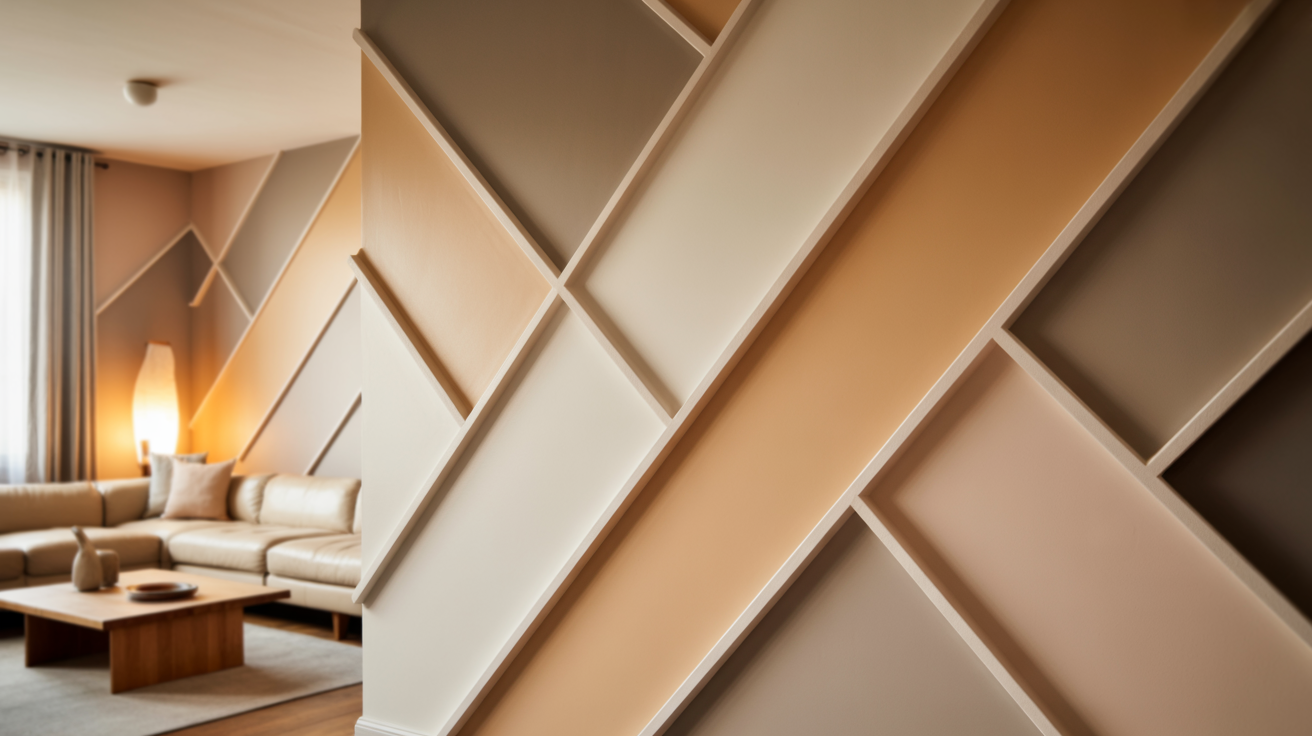
Not everyone wants bold contrast, and that’s perfectly fine. A diagonal split using two shades from the same color family gives you sophistication without the drama.
Beige flowing into greige, or light gray meeting charcoal.
How to create it:
- Choose two colors from the same paint strip, separated by 2-3 shades for subtle contrast
- Use the same taping technique as two-tone walls, but test samples first to ensure enough definition
- Consider matte finish for the lighter shade and eggshell for the darker to add subtle texture
This approach feels calm and grown-up. Your room gets visual interest without competing with your furniture or art.
I recommend this for living rooms and primary bedrooms where you want a modern touch that won’t tire you out after six months.
Bold High-Contrast Diagonal Wall
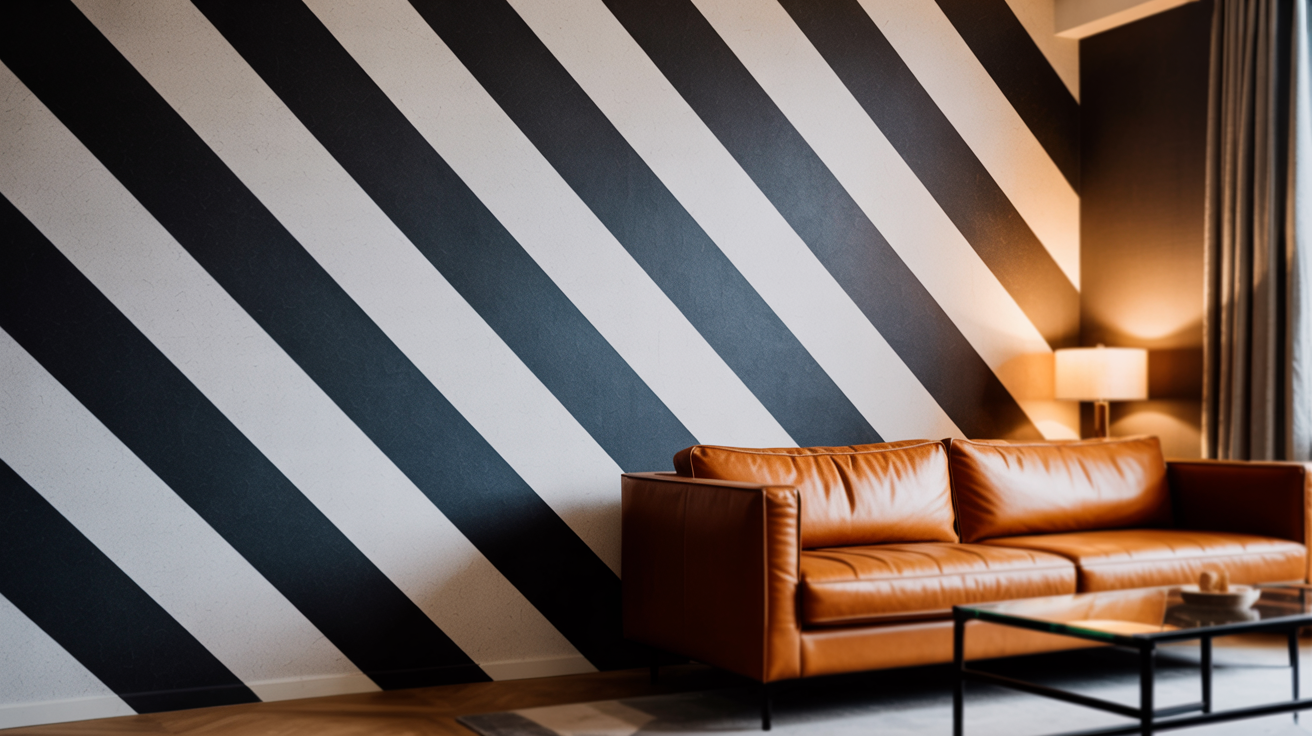
Now we’re talking impact. Black and white. Navy and cream. Charcoal and pale blush. When you want people to notice your wall the second they walk in, high contrast delivers every time.
How to create it:
- Paint the entire wall in your lighter color first and let it dry completely
- Tape off your diagonal section and apply 2-3 coats of the darker color for solid coverage
- Use high-quality paint to prevent the dark color from looking streaky or uneven
Fair warning: this isn’t subtle. But if you’re decorating a dining room, entryway, or any space that can handle drama, go for it.
I’ve seen these walls become the centerpiece of entire homes. Just keep the rest of your decor relatively simple so the wall can shine.
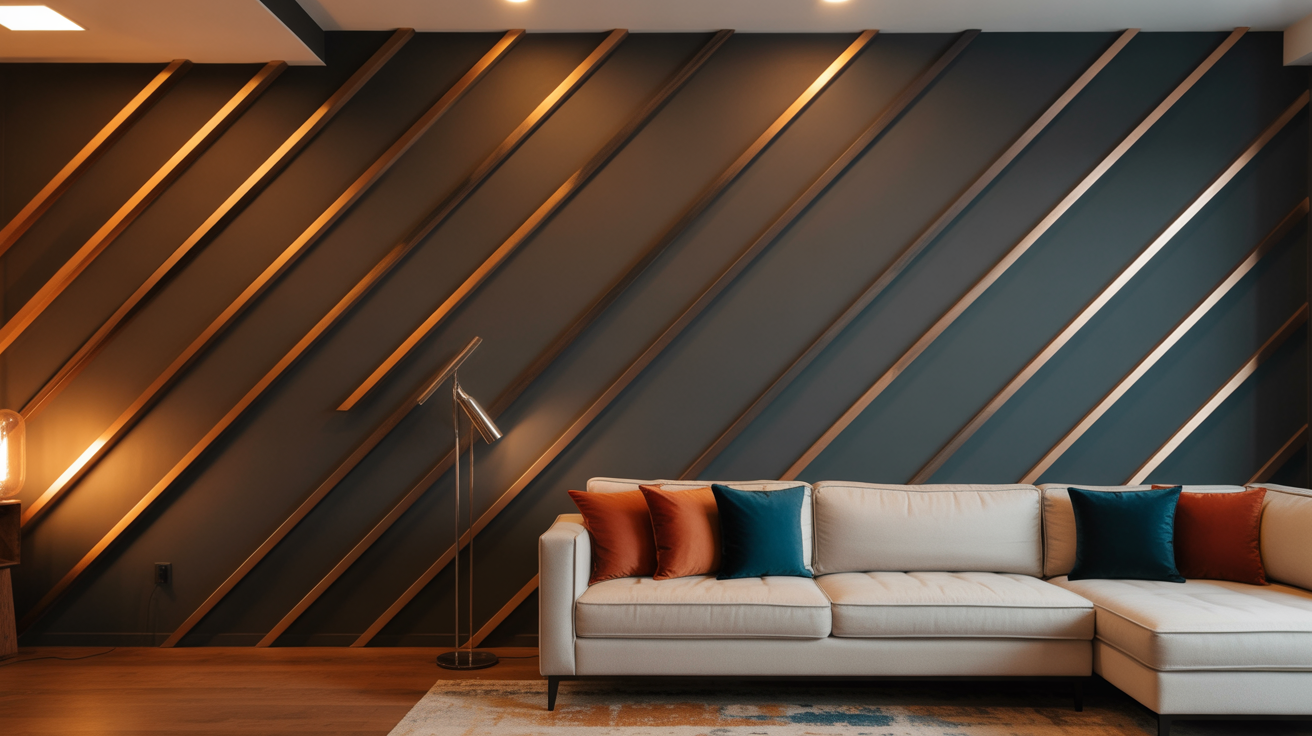
Diagonal Wood Trim Accent Wall
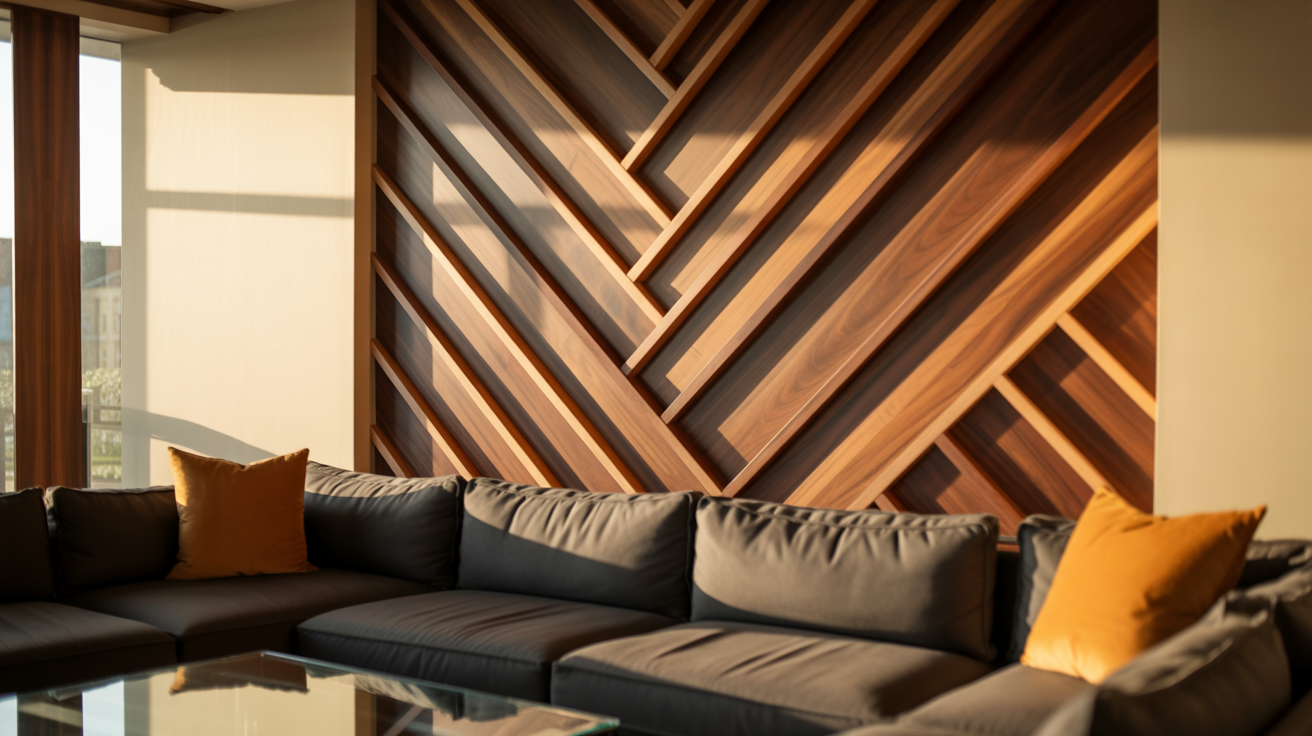
You’re adding dimension here, not just color. Thin wood trim boards installed at an angle create shadow lines and texture that paint alone can’t match. This is an architectural interest you can touch.
How to create it:
- Plan your geometric pattern on paper first, then mark guidelines on the wall with a level
- Cut trim boards at matching angles using a miter saw, and attach with construction adhesive and finish nails
- Fill nail holes, caulk gaps, then paint or stain the entire wall for a polished finish
The wood adds warmth even if you paint it. I love this for offices and dens where you want something refined and inviting.
Yes, it takes more effort than painting, but the payoff is a wall that photographs as it belongs in a magazine.
Painted Diagonal Lines for a Graphic Look
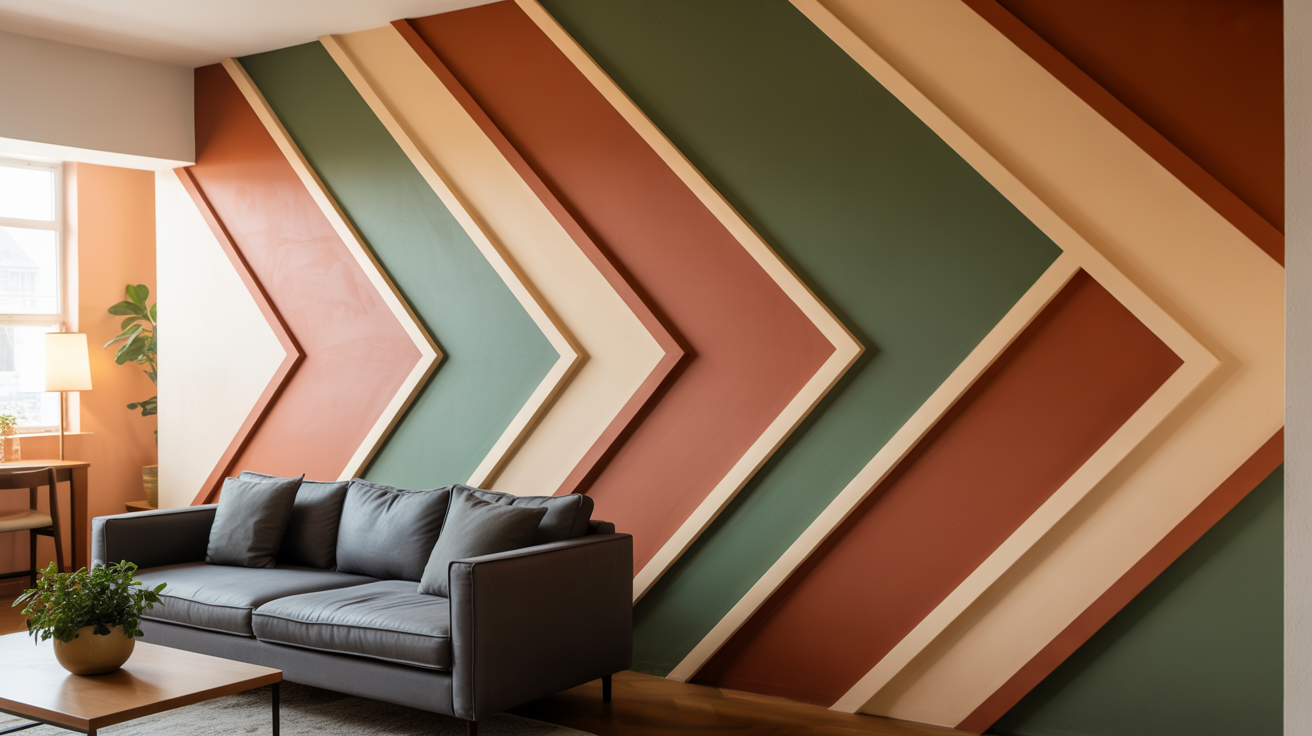
Multiple diagonal stripes instead of one big split. You’ll need quality painter’s tape and patience for measuring, but the result is clean, graphic, and totally budget-friendly.
Renters love this because it’s just paint.
How to create it:
- Decide on stripe width and use a measuring tape to mark equal intervals along your diagonal line
- Tape off alternating stripes, paint the first color, let it dry, then tape and paint the second color
- Work from top to bottom to avoid smudging wet paint with your hands or ladder
Pick two or three colors maximum. Space your stripes evenly, or vary the widths for something more dynamic.
I’ve done this in teen rooms, playrooms, and even laundry rooms that needed personality. It’s forgiving if your walls aren’t perfectly smooth.
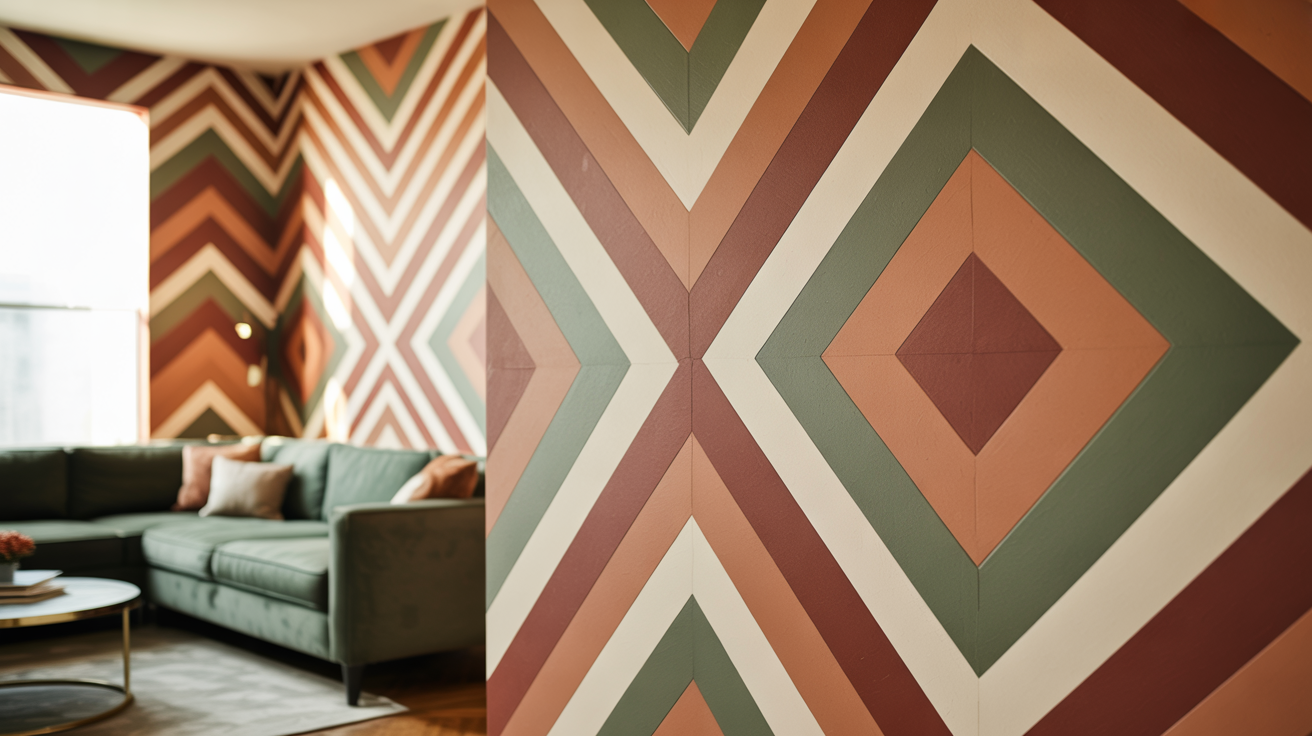
Chevron-Style Diagonal Accent Wall
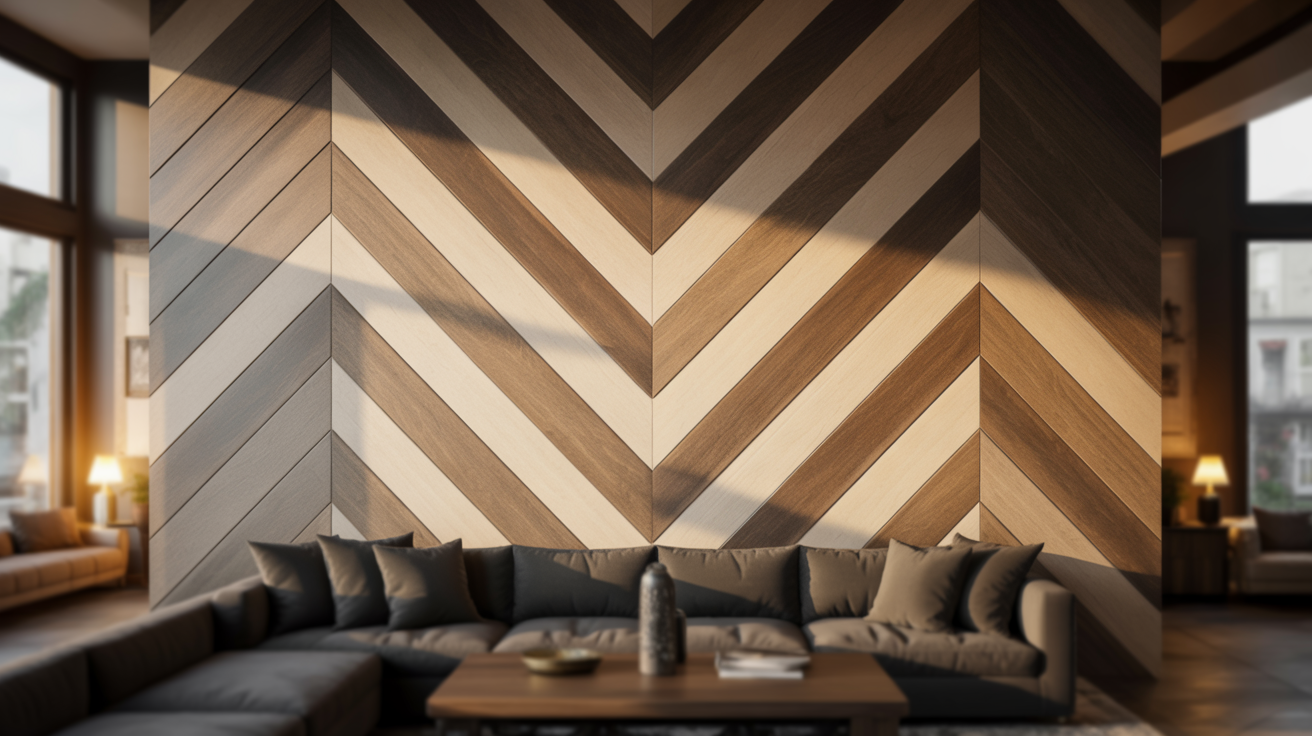
Those clean “V” shapes pointing up create energy and height. You can paint them or build them with wood planks. Chevron works effectively behind a bed because it naturally draws your eye upward.
How to create it:
- Find the center point of your wall and draw a vertical line, then measure equal angles on both sides
- Tape one side of the chevron at a time and paint, letting each section dry before taping the adjacent area
- Use a small artist’s brush to touch up the center point where all angles meet for crisp perfection
The pattern requires precision, I won’t lie. Your angles need to meet perfectly at that center point, or it looks wonky.
But when you nail it, you get a wall that feels custom and intentional. Great for modern or transitional spaces.
Herringbone-Inspired Diagonal Wall
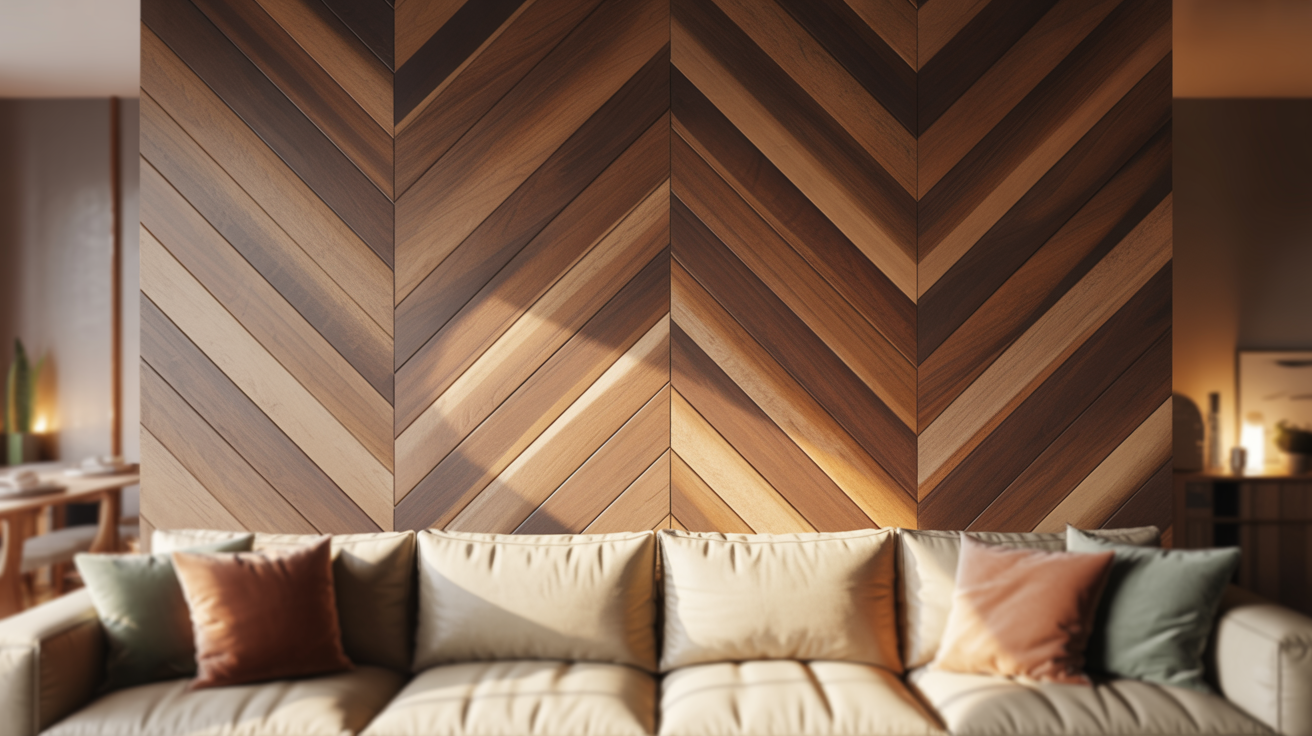
Think of this as Chevron’s refined and inviting cousin. The staggered diagonal pattern creates movement in multiple directions.
It’s the kind of detail that makes people ask who did your design work.
How to create it:
- Start from the center and work outward, laying out your pattern on the floor first to visualize placement
- Install wood planks or apply wallpaper in alternating diagonal sections, maintaining consistent spacing throughout
- Step back frequently to check alignment since small errors compound quickly in herringbone patterns
This takes time and planning. If you’re using wood, tile, or even wallpaper, you’re creating a complex pattern that reads as high-end.
I save this for feature walls in living rooms or primary bedrooms where you really want to invest in the impact.
Diagonal Slat Wood Wall
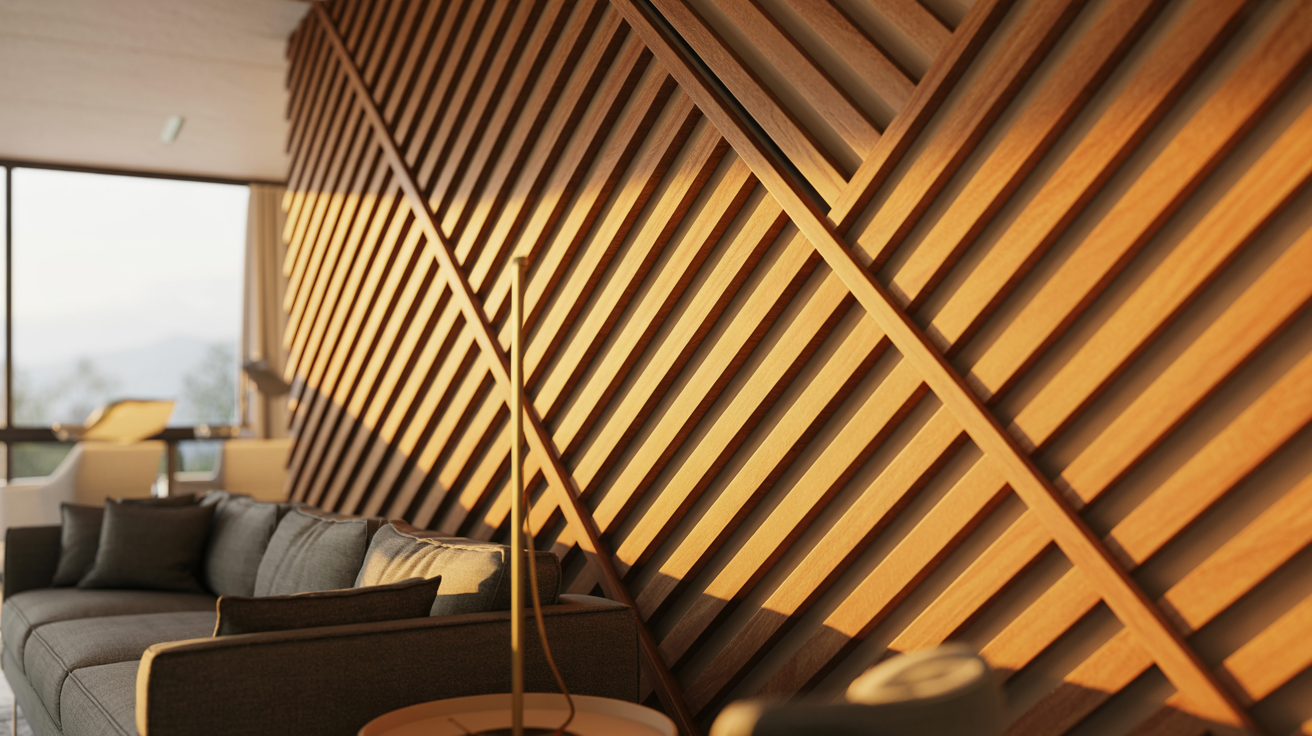
Vertical wood slats are installed at an angle instead of straight up and down. Simple concept, effective result. The slats create rhythm and texture while keeping things clean and modern.
How to create it:
- Attach horizontal furring strips to your wall at your chosen angle to create a mounting base
- Space wood slats evenly and secure them to the furring strips with finish nails or a brad nailer
- Sand lightly between slats and finish with paint or stain for a cohesive, professional appearance
This works especially well in Scandinavian or minimalist spaces. Paint them white for brightness, stain them natural for warmth, or go dark for drama.
The slats don’t need to cover the whole wall either. Sometimes a section creates more interest than full coverage.
Asymmetrical Diagonal Design
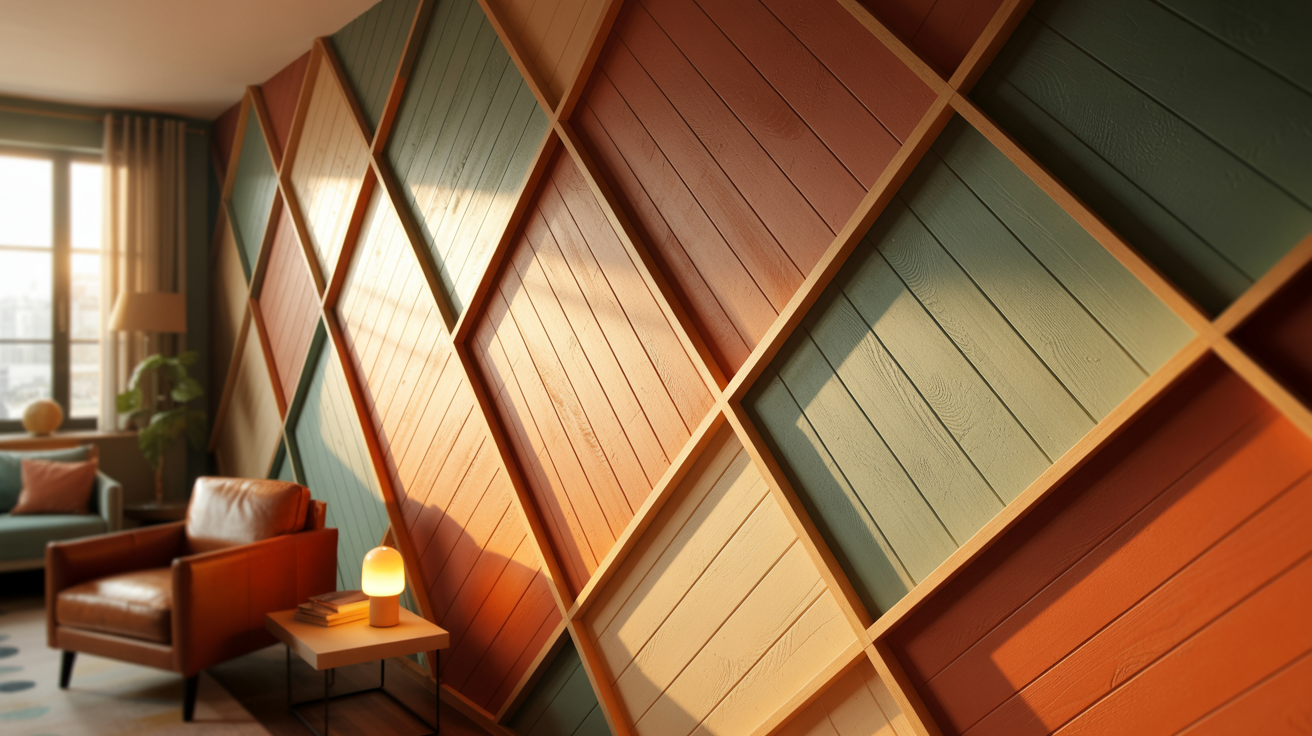
Who says your diagonal has to be perfectly centered? An off-kilter angle or multiple diagonals at different positions gives you an artistic, almost gallery-like feel. This is for the bold decorators.
How to create it:
- Draw your design to scale on graph paper before committing anything to the wall
- Use a projector or chalk line to transfer your asymmetrical pattern onto the wall accurately
- Tape and paint one section completely before moving to the next to avoid confusion and mistakes
I use asymmetrical designs in creative spaces like studios, craft rooms, or modern home offices. It breaks the rules in a way that feels intentional, not messy.
Just sketch it out first so you know exactly where your angles will land.
Half-Wall Diagonal Accent
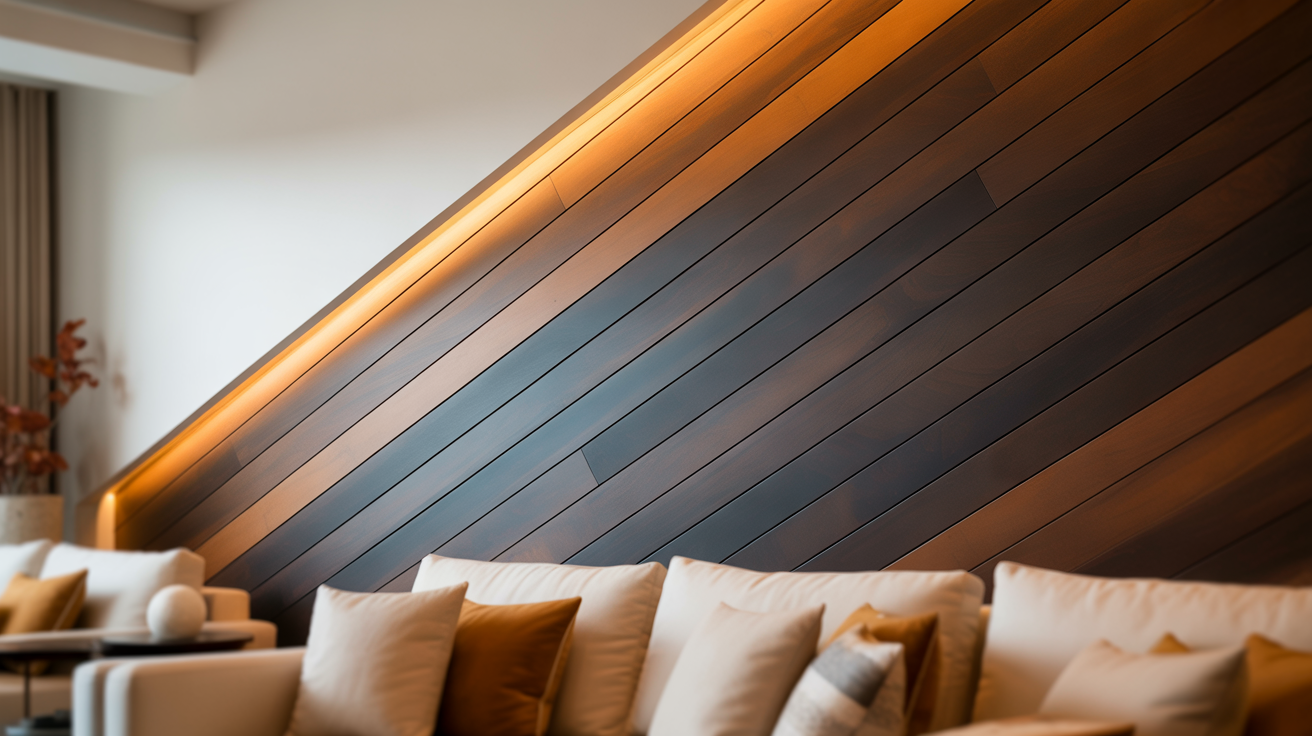
Your diagonal only covers part of the wall, maybe the bottom two-thirds or one side. This creates visual separation without building an actual wall. Perfect for defining zones in open floor plans.
How to create it:
- Decide where your diagonal section will end and mark a horizontal or vertical boundary line
- Paint the base wall in your neutral color first, then tape off the diagonal accent section
- Blend the transition point with careful taping so the diagonal section looks intentional, not accidental
I’ve used this to separate dining areas from living spaces, or to create a “headboard zone” in a bedroom.
It gives you the impact of an accent wall while leaving breathing room. Paint the rest a neutral shade so the diagonal section stands out.
Diagonal Accent Wall Behind the Bed
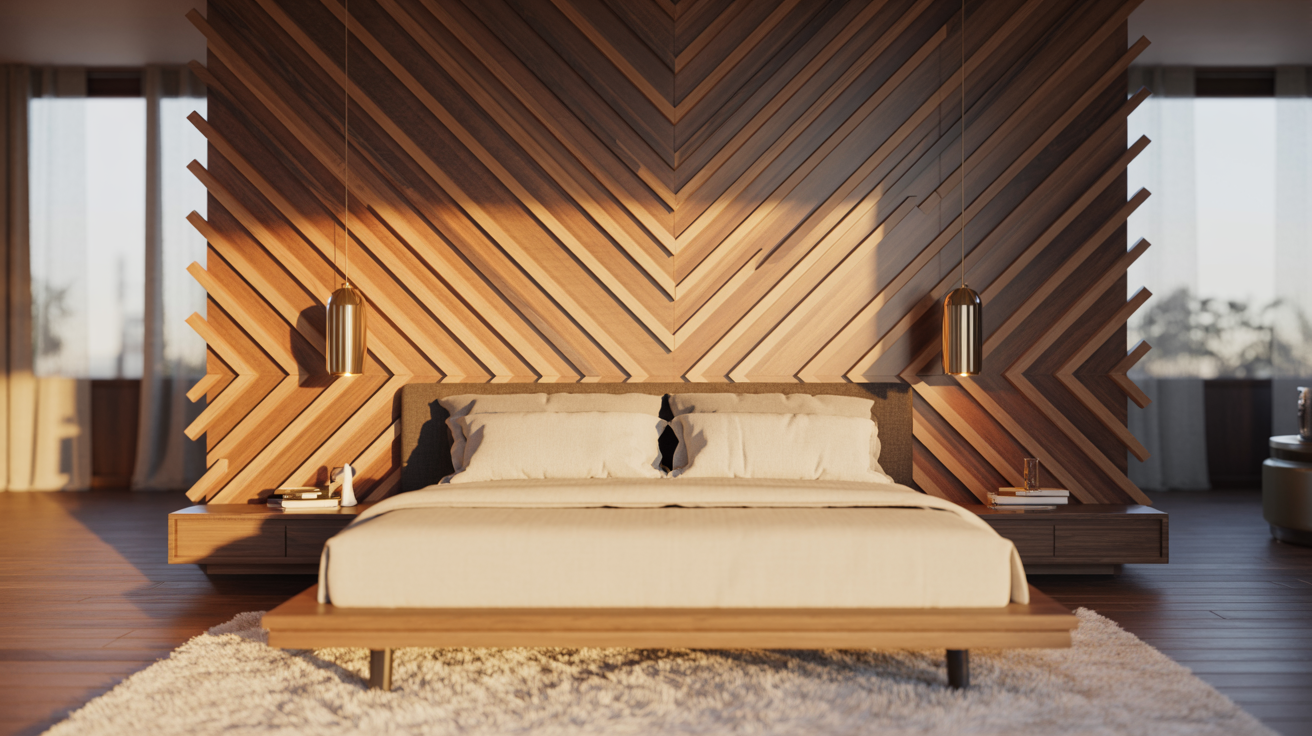
No headboard? No problem. A diagonal design behind your bed becomes your focal point and eliminates the need for furniture you might not have room for anyway. It frames the sleeping area perfectly.
How to create it:
- Center your diagonal angle behind the bed, measuring from the bed’s midpoint for balance
- Choose colors that complement your bedding so the wall enhances rather than clashes with your decor
- Extend the diagonal slightly beyond the bed width on each side for proper visual proportion
Keep it relatively calm if this is your bedroom. You’re looking at this wall every night and every morning.
I usually recommend softer contrasts here unless you really love bold energy in your personal space. The diagonal adds plenty of interest on its own.
Diagonal Nursery or Kids’ Room Wall
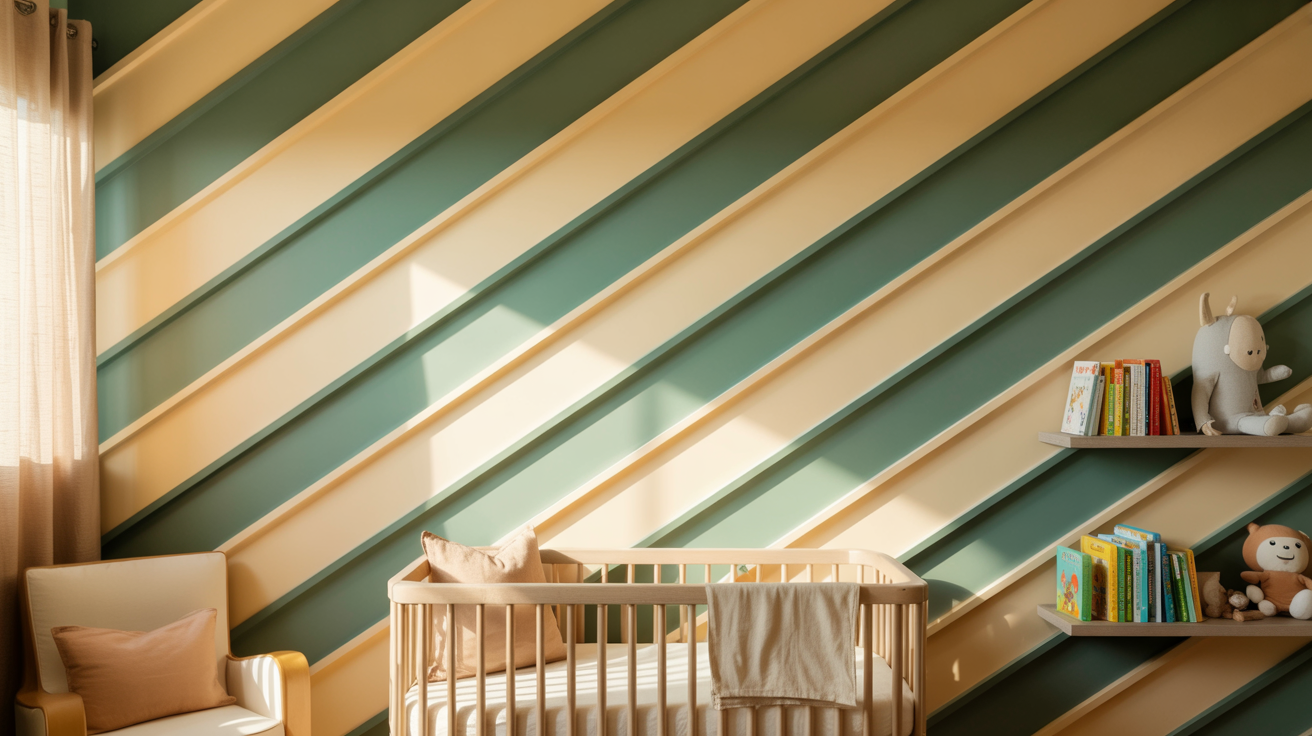
Kids’ rooms can handle playful angles without looking childish. Soft pastels in diagonal patterns feel modern, not babyish. Or go bright and fun if that matches your child’s personality.
How to create it:
- Select washable paint since kids’ rooms take more abuse than adult spaces
- Keep patterns simple with one diagonal split or easy stripes that you can repaint if needed
- Involve older kids in color selection so they feel ownership over their space
The beauty here is that diagonal lines work at any age. Your design won’t feel dated when your toddler becomes a teen.
Just choose colors you can live with for a while, because repainting geometric patterns is more work than repainting a solid wall.
Diagonal Home Office Feature Wall
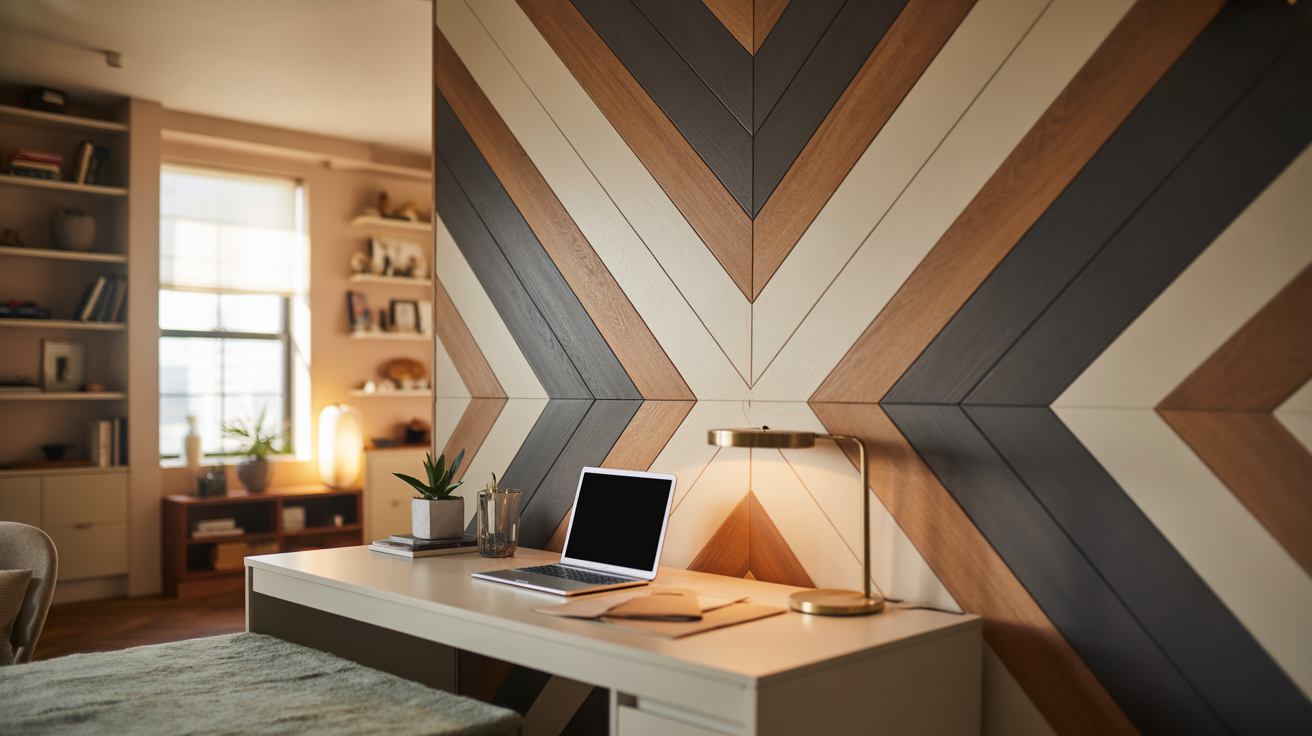
Your video call background matters now. A diagonal accent wall behind your desk creates a polished, professional backdrop that’s way more interesting than a blank wall or messy bookshelf.
How to create it:
- Test your wall on a video call before finalizing colors to see how it appears on camera
- Position your diagonal to frame your upper body when seated at your desk for the best visual effect
- Use a matte or eggshell finish to minimize glare and reflection during video conferences
Deep colors like navy, forest green, or charcoal work effectively here. They photograph well on camera and create a refined and inviting atmosphere for work.
Just make sure your lighting doesn’t create harsh shadows across the diagonal line during calls.
Tips for Designing the Diagonal Accent Wall
Planning beats winging it every single time. I’ve watched too many people rush into diagonal walls without thinking through the details, only to paint over them six months later.
A little prep work saves you frustration and wasted money.
- Pick your angle: Don’t just eyeball it. Use a level and measure from corner to corner, or align your diagonal with existing room features like doorways or furniture edges.
- Simplify everything else: Your diagonal wall is the star. Keep furniture minimal, skip busy patterns on other walls, and let the angles do the talking without competition.
- Sample first, commit later: Tape up large paint swatches in your chosen colors. Live with them for a few days and check how they look in morning light versus evening. Diagonals amplify color intensity.
- Tape like a pro: Press your painter’s tape down firmly, then run a credit card along the edge. For extra insurance, paint over the tape edge with your base color first to seal any gaps.
- Light it right: Add directional lighting that hits your wall at an angle. Track lights or wall sconces create shadows that make your diagonal pattern pop and add depth you can’t get from overhead fixtures alone.
Conclusion
Your diagonal accent wall doesn’t have to be complicated. If you go with painted stripes, wood planks, or geometric patterns, the key is choosing a design that fits your space and style. Start with one wall, pick colors you already love, and don’t overthink it.
The beauty of diagonal designs is how they change a room without major renovation. You’ve got options for every budget and skill level, from simple painter’s tape projects to hiring a pro for intricate patterns.
Ready to get started? Grab some samples, test your angles, and see what feels right. If you’ve already tackled a diagonal accent wall project, drop a comment below. We’d love to see what worked (or what you’d do differently next time. Your experience might be exactly what someone else needs to hear.
Frequently Asked Questions
What is a diagonal accent wall?
A diagonal accent wall features lines, stripes, or patterns that run at an angle instead of straight up and down. This creates visual movement and makes your room feel more dynamic. You can achieve it with paint, wood, wallpaper, or other materials arranged diagonally across one wall.
Are diagonal accent walls hard to paint?
Not really, but they require patience. You’ll need painter’s tape, a level, and careful measuring to get clean, straight lines. The actual painting is simple once your tape is down. Most DIYers complete a diagonal accent wall in a weekend with basic tools.
Which wall should be the diagonal accent wall?
Choose the wall you see first when entering the room, or the one behind your bed or sofa. Avoid walls with lots of windows or doors, as they’ll interrupt your diagonal pattern. The goal is maximum visual impact with minimal obstructions.
What colors work best for diagonal accent walls?
Use colors that complement your existing palette. Bold contrasts like navy and white create drama, while tone-on-tone designs feel subtler. Test samples on your wall first, since lighting affects how colors look. Two or three colors maximum, keep it from feeling chaotic.
Do diagonal lines make a room look bigger or smaller?
Diagonal lines typically make rooms feel larger because they draw the eye across the space rather than stopping at boundaries. Angled patterns create depth and movement, especially in narrow rooms. Lighter colors enhance this spacious effect even more.