Spotted a vertical crack running up your brick wall? That’s stressful, especially when you don’t know if it’s serious or just cosmetic. Some cracks are no big deal, while others signal foundation problems that need immediate attention.
This article explains what causes vertical cracks in brick and how to tell the difference between minor settling and major structural issues.
You’ll learn which cracks you can fix yourself, what warning signs mean you need professional help, and the actual repair methods that work. No confusing jargon or scare tactics.
We’ve broken down real crack scenarios based on what contractors and inspectors see daily. This isn’t guesswork.
These are straightforward explanations of why brick cracks, what the patterns mean, and what your next steps should be.
What Does a Vertical Crack in a Brick Wall Look Like?
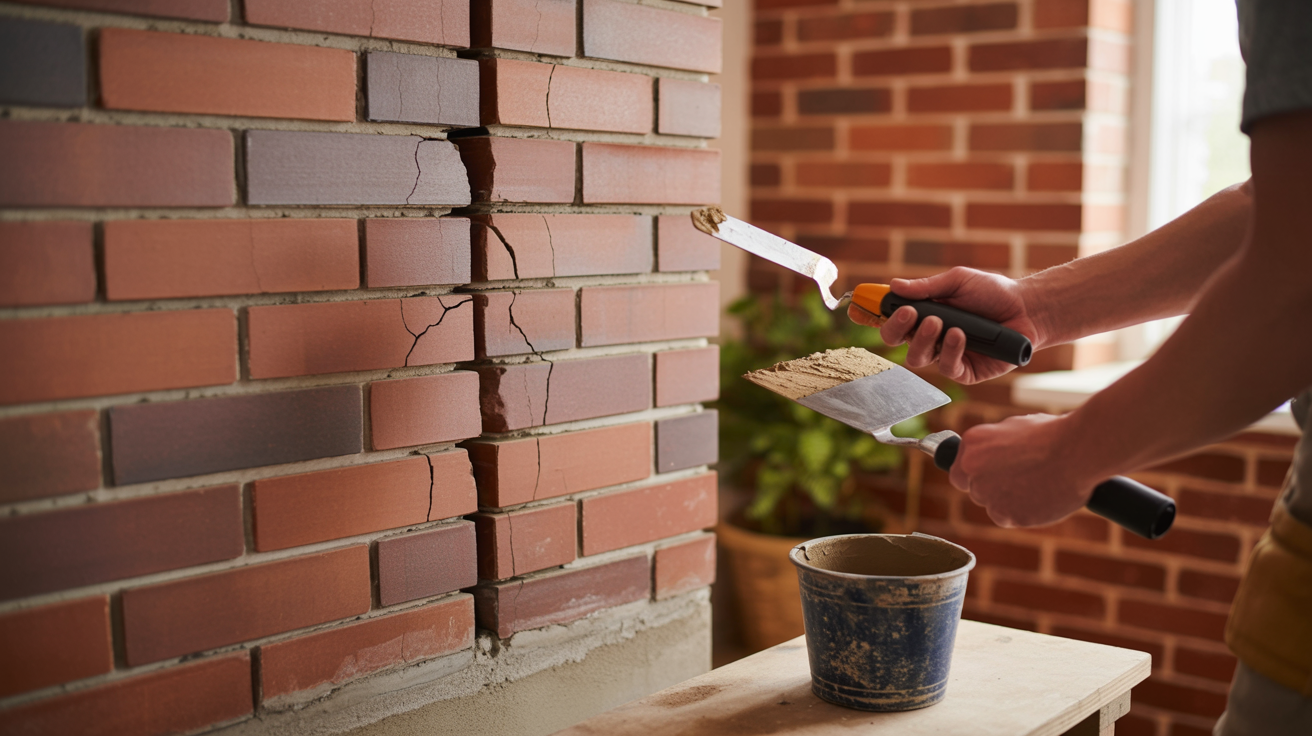
I want you to know exactly what you’re looking at when you spot a crack. Identifying the type correctly tells you how serious the problem is.
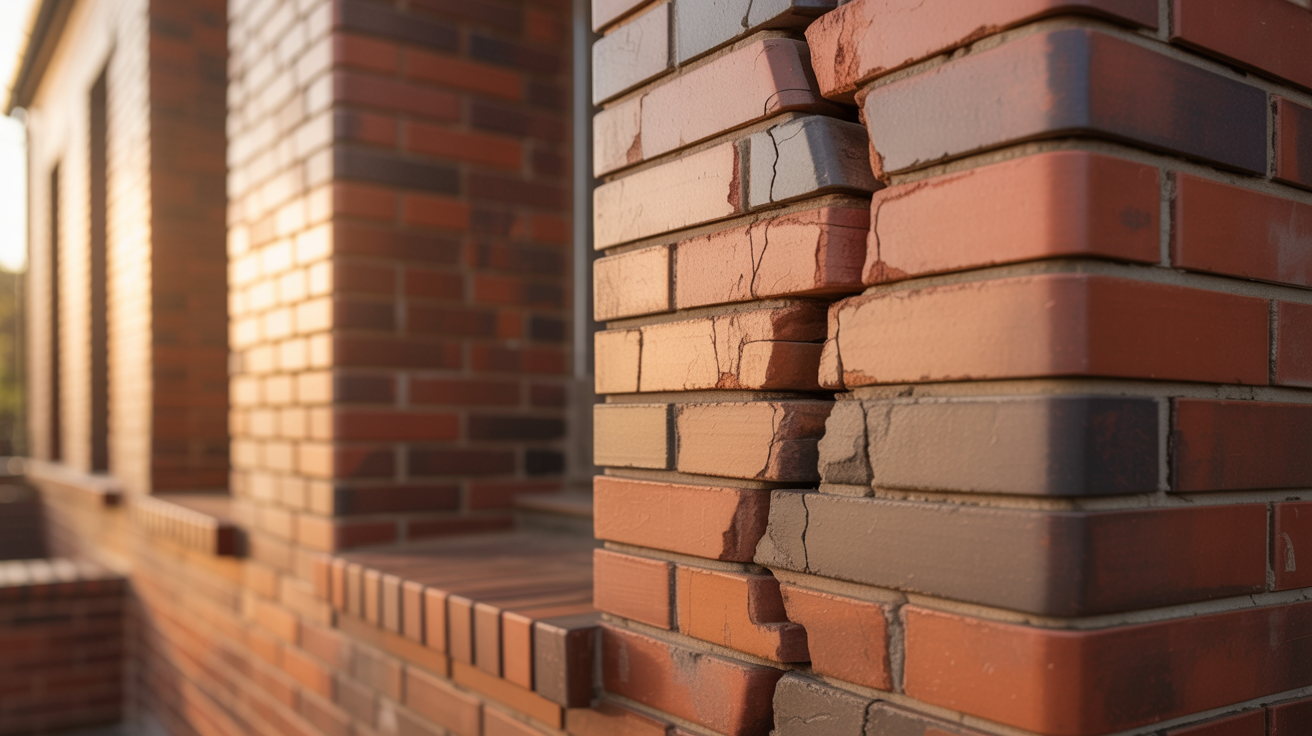
Vertical cracks have specific characteristics that set them apart:
- Straight up-and-down direction: The crack runs vertically through mortar joints or directly through bricks themselves.
- Middle wall location: These cracks typically appear in the center sections of exterior walls rather than at corners.
- Variable width: The crack may be wider at the top near the soffit or wider at the bottom near the foundation slab.
- Expansion joint relationship: Some vertical cracks follow existing expansion joints while others bypass them completely.
- Through mortar or brick: The crack either travels along mortar lines between bricks or splits straight through the brick faces.
These cracks look different from other types. Stair-step cracks zigzag up your wall, diagonal cracks angle across at a slant, and hairline cracks measure less than 1/8 inch wide.
Vertical cracks are typically less dangerous than horizontal patterns, but width matters more than direction.
Causes of Vertical Cracks in Brick Walls
I need you to understand what’s happening beneath your brick before you can fix it. Vertical cracks don’t appear randomly, as they’re symptoms of specific problems.
Foundation Settlement
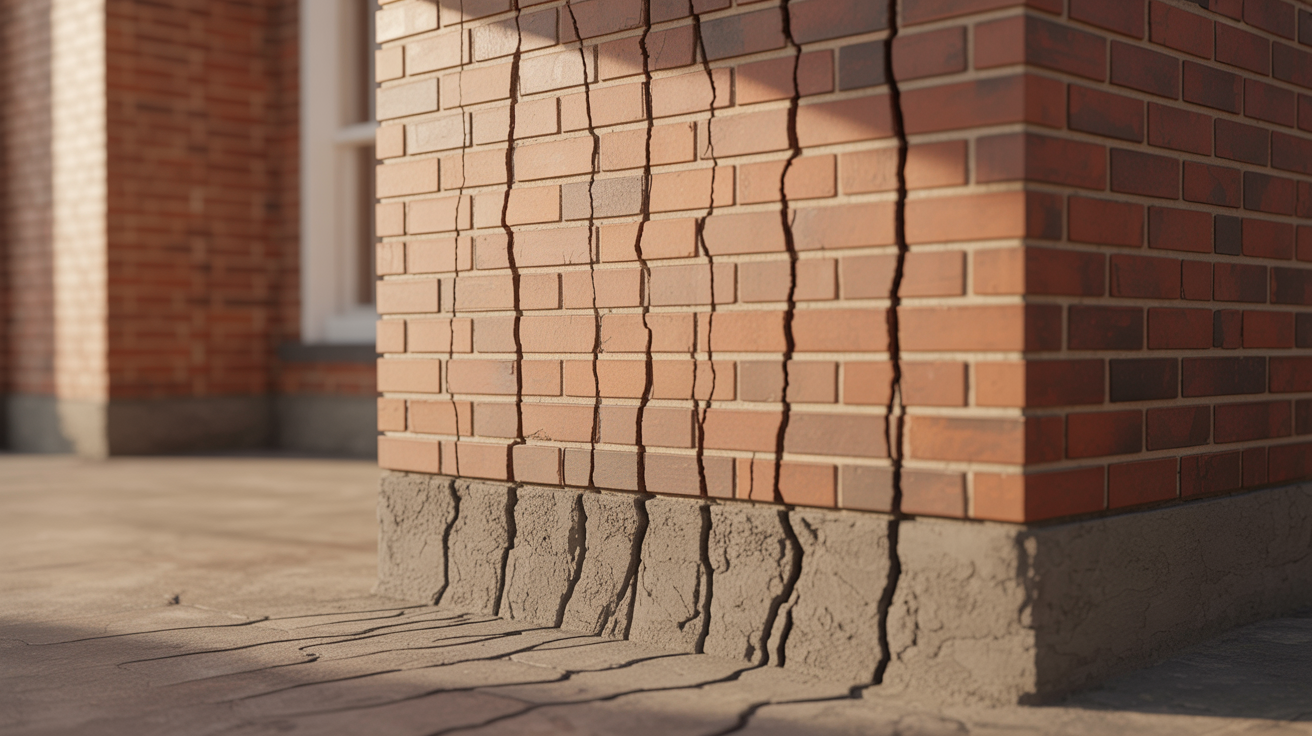
Your house foundation sinks unevenly when corners or sections settle at different rates. This creates pressure on the brick veneer above, forcing mortar joints or bricks themselves to crack vertically.
The crack width tells you where settlement is occurring. If the crack is wider at the top, your foundation corner is sinking and pulling the wall with it.
If it’s wider at the bottom, the middle section of your foundation is sagging while the ends stay stable.
This settlement happens gradually over the years or suddenly after heavy rain. Either way, the brick can’t flex with the movement, so it splits to relieve the stress and pressure building up.
Soil Conditions
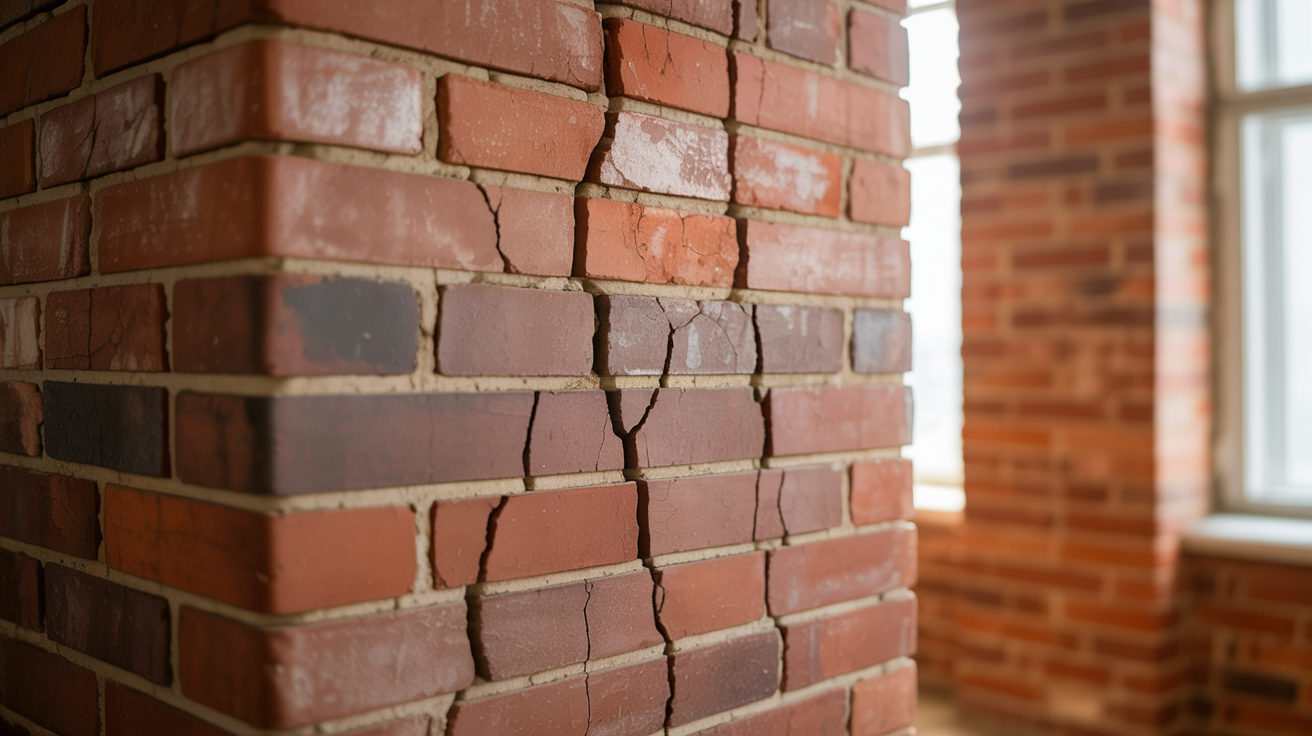
Expansive clay soil swells when wet and shrinks when dry, creating constant movement beneath your foundation.
Poor soil compaction during construction or extreme moisture fluctuations make this problem worse.
Your soil pushes up against the foundation when it swells with water. Then it pulls away and leaves gaps when it dries out, causing uneven settlement that directly transfers to your brick walls above.
Different soil types react differently to moisture. Clay causes the most problems, while sandy or rocky soil stays more stable throughout wet and dry seasons.
Aging Materials and Natural Wear
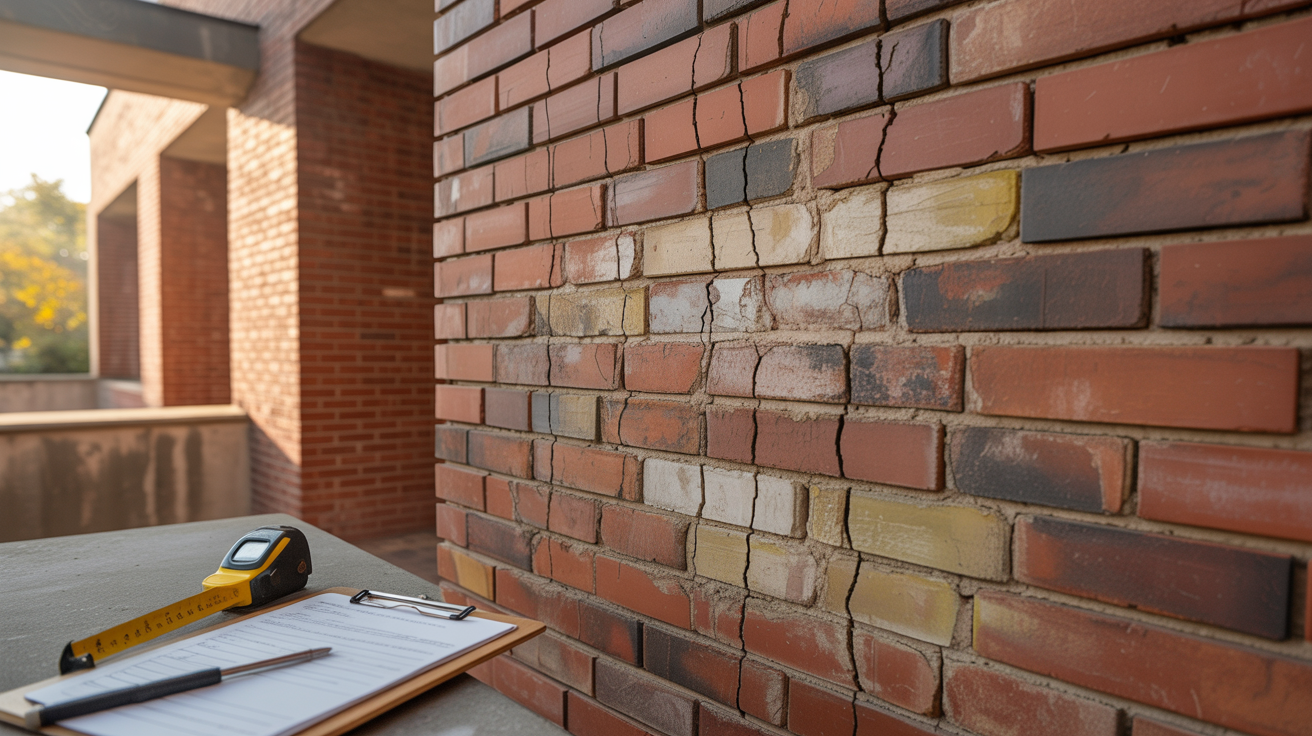
Mortar joints break down and lose strength after decades of exposure to weather. The cement binder deteriorates, turning hard mortar into crumbly powder that can’t hold bricks together.
Bricks themselves expand in summer heat and contract in winter cold. This constant thermal movement creates stress at the weakest points, usually vertical mortar joints, until they finally crack and separate.
Age doesn’t mean your wall is failing. It just means materials have reached their natural lifespan and need maintenance or repair to continue performing well.
Structural or Design Issues
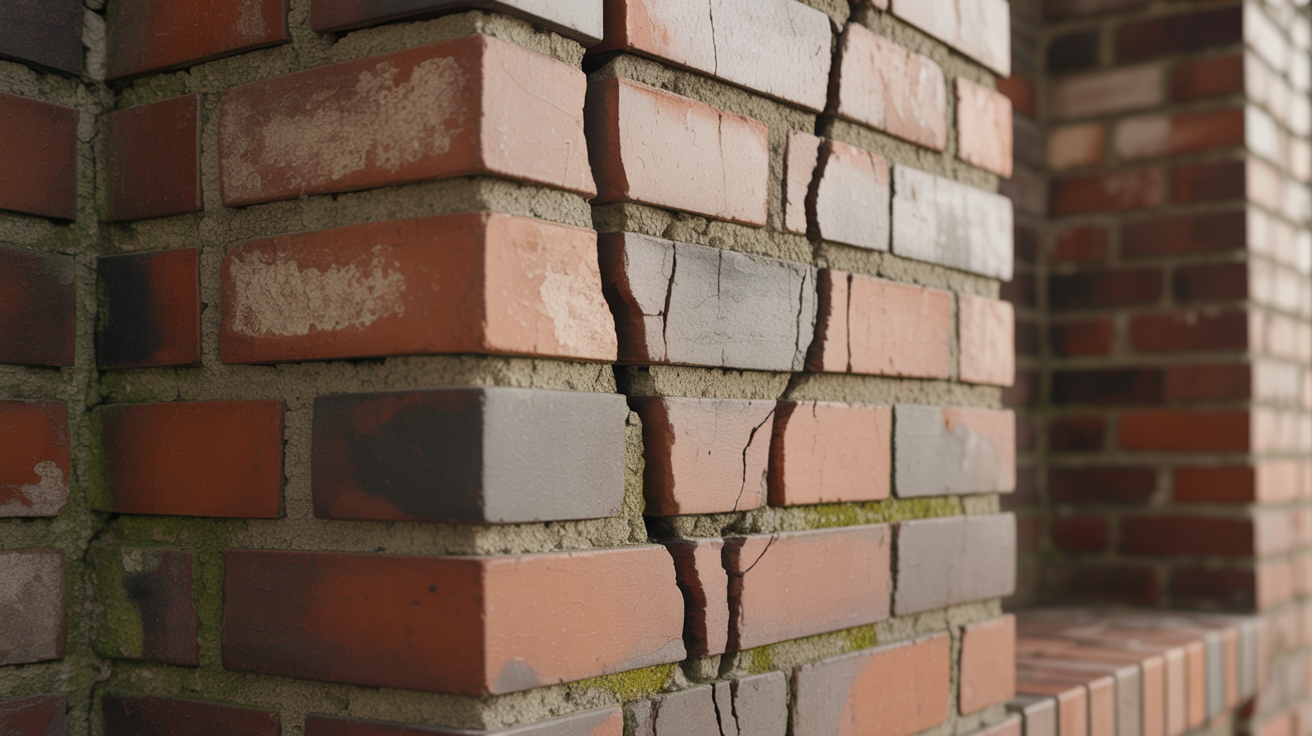
Builders sometimes skip or space expansion joints too far apart during construction. Without these flexible gaps, your brick wall has nowhere to move when it expands, so it creates its own relief cracks.
Load-bearing inconsistencies happen when weight distribution isn’t balanced properly across the wall.
Some sections carry more weight than others, creating stress points that develop into vertical cracks over time.
Poor original design or construction shortcuts eventually show up as cracks. These problems were built into your wall from day one, just waiting for the right conditions to become visible.
Signs a Vertical Crack Requires Professional Attention
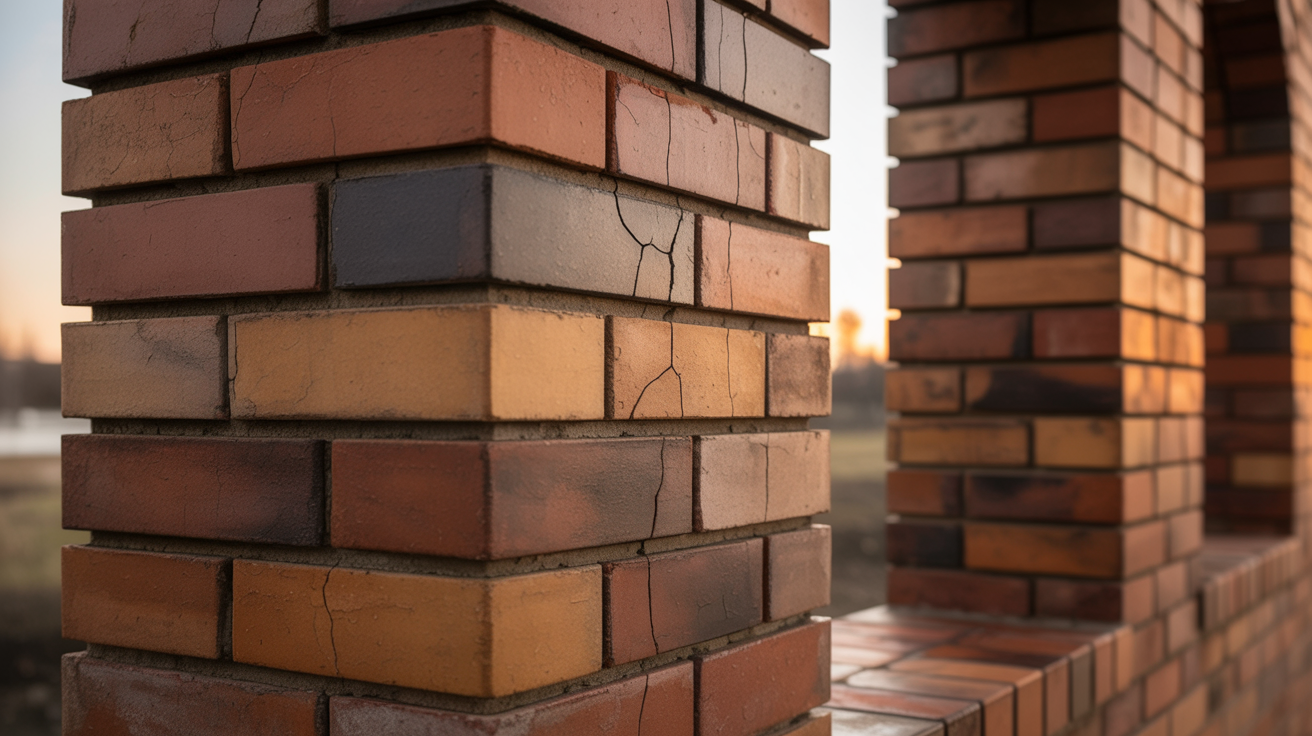
I’m going to tell you when to stop monitoring and start calling an expert. Some cracks are cosmetic, but others signal serious structural problems that won’t fix themselves.
- Crack Width and Progression: Cracks measuring wider than 1/10 inch need professional evaluation immediately. If you notice any crack actively widening over weeks or months, that’s a clear sign of ongoing foundation movement that requires expert assessment.
- Multiple or Patterned Cracks: Numerous vertical cracks appearing across your wall indicate widespread problems, not isolated issues. When you see vertical cracks combined with stair-step or diagonal patterns, your foundation is moving in multiple directions and needs structural evaluation right away.
- Structural Misalignment: Doors and windows that suddenly stick or won’t close properly mean your wall frames are shifting. Gaps forming around door frames or windows, plus floors and ceilings appearing uneven, all point to serious foundation settlement requiring professional repair.
- Bulging or Bowing Walls: Visible wall deformation where the brick pushes outward or curves inward is dangerous. This means your wall is losing its structural integrity and could potentially collapse without proper reinforcement and immediate professional intervention.
- Moisture and Mold: Water infiltration through cracks or mold growth appearing near damaged areas signals both structural and health problems. Moisture entering through cracks weakens your foundation further while creating conditions for dangerous mold that spreads quickly throughout your home.
Temporary and Cosmetic Fixes for Vertical Brick Cracks
I need to be honest with you, these fixes make cracks look better without solving the underlying problem. They work temporarily, but they’re not permanent solutions.
Caulking
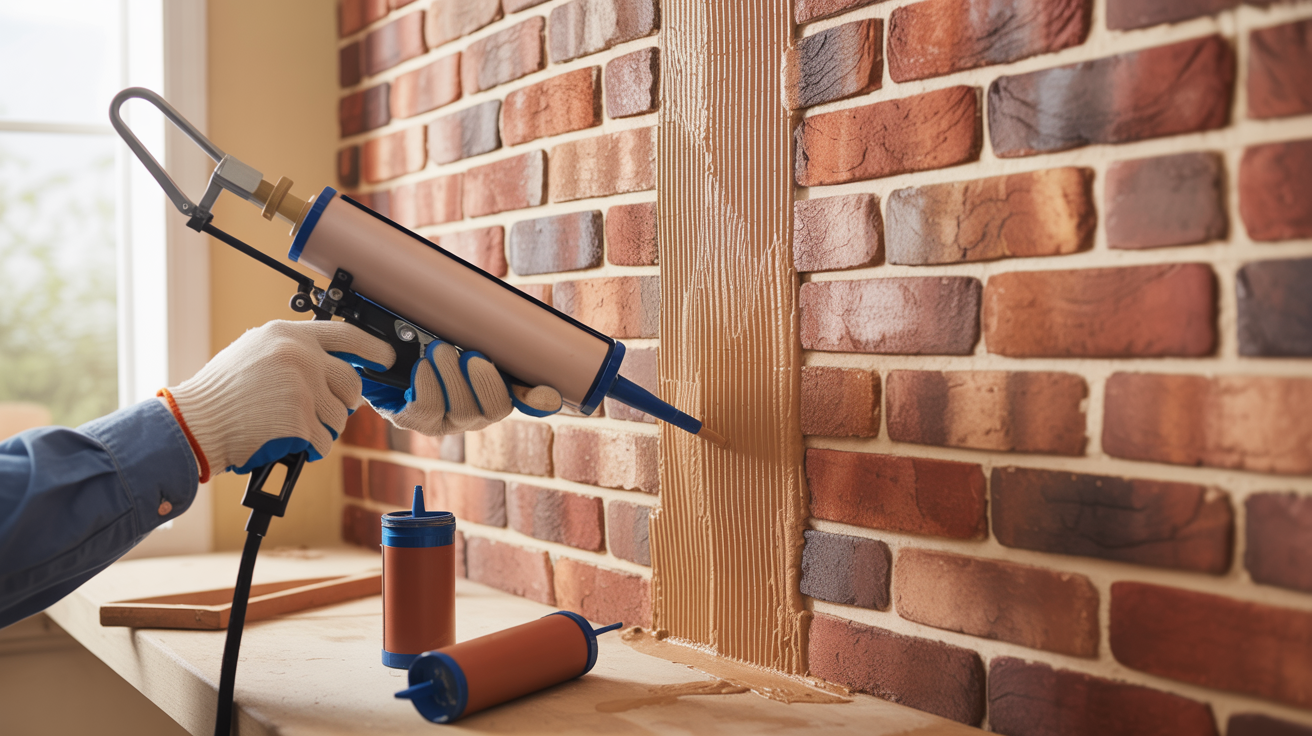
Apply exterior-grade caulk into narrow cracks for a quick, inexpensive cosmetic fix. This seals the opening and prevents water from entering, but it doesn’t strengthen your wall.
Caulking is purely aesthetic and won’t stop foundation settlement or structural movement. The crack will likely reappear within months if the underlying cause continues, so consider this a temporary band-aid rather than a real repair.
Re-Mortaring (Tuckpointing)
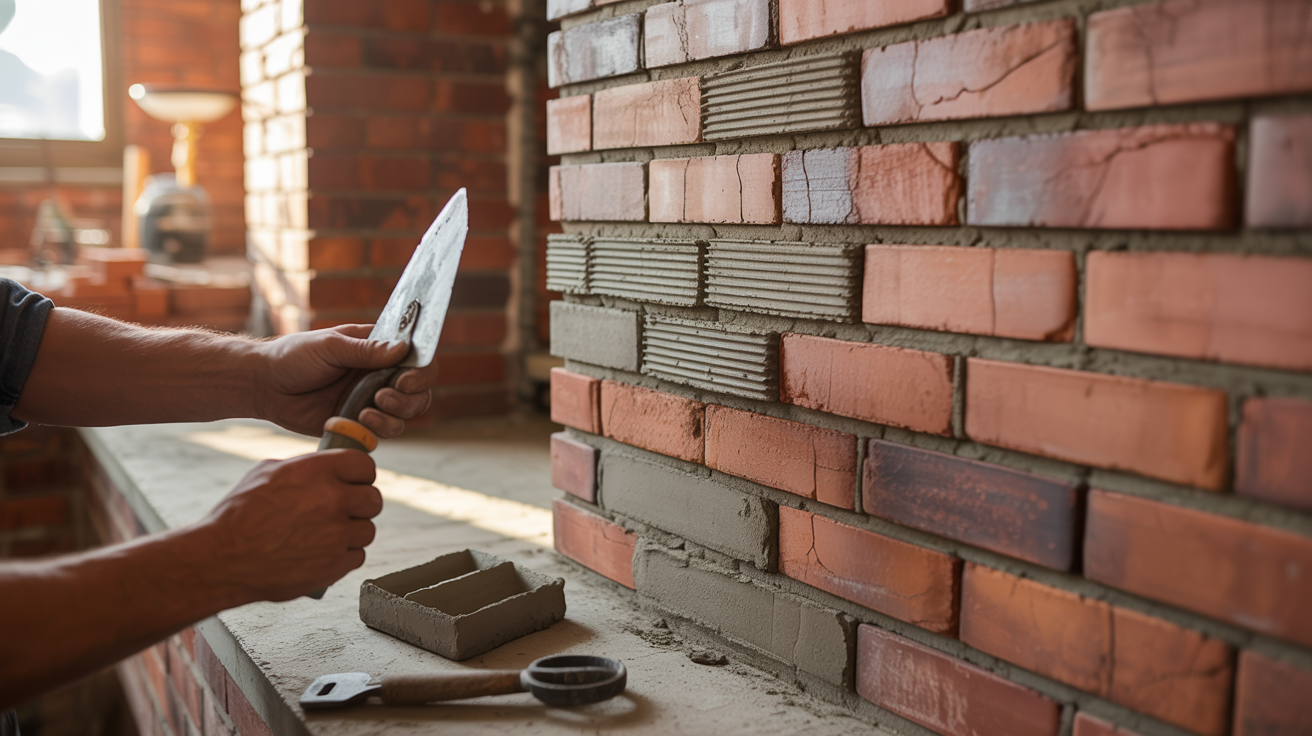
Remove damaged mortar from joints and replace it with fresh mortar that matches your existing color. This traditional repair technique improves appearance and restores some structural integrity to the wall.
Tuckpointing provides a cosmetic improvement that lasts several years if done properly. However, it’s only temporary if your foundation continues settling, since new cracks will eventually form as movement continues beneath the surface.
Partial Wall Repair
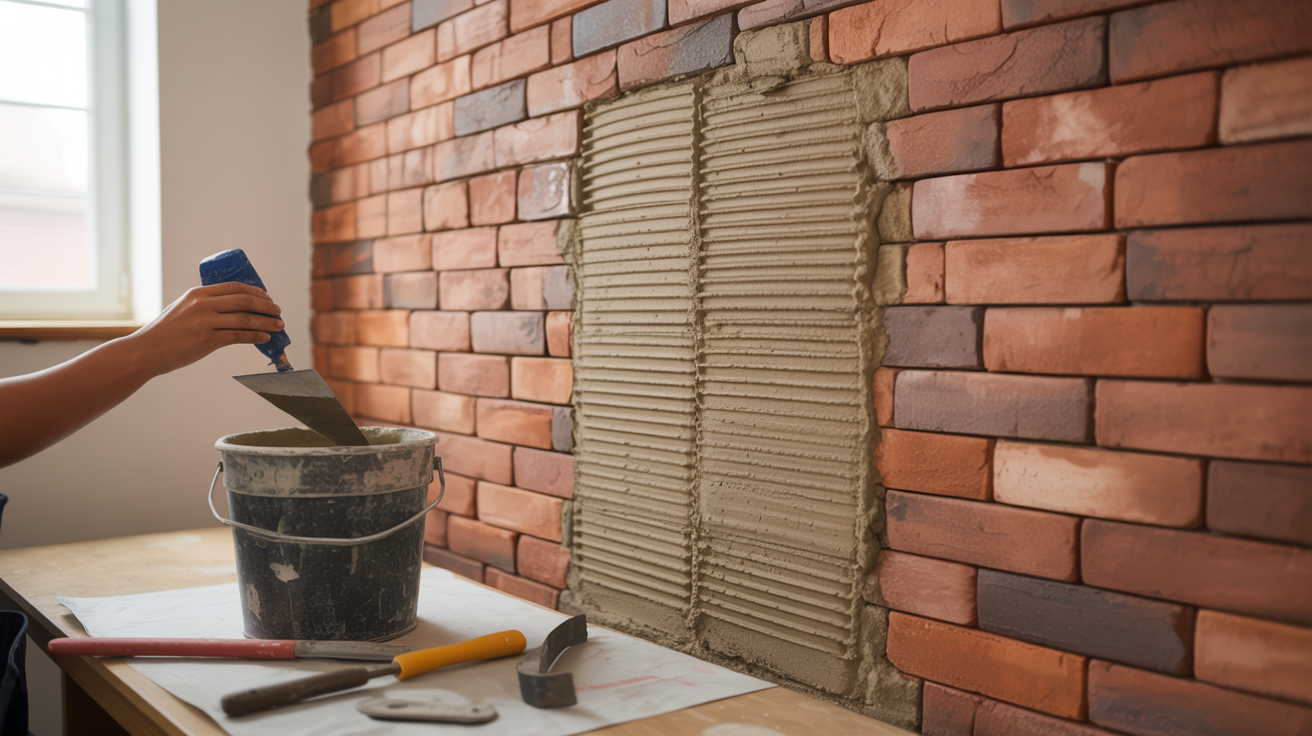
Remove and replace entire sections of damaged brick when cracks are severe, or bricks themselves are broken. This comprehensive approach restores both appearance and strength to the affected area.
This repair is only effective if your foundation has stabilized and stopped moving. Otherwise, you’re just replacing bricks that will crack again within a year or two as settlement continues underneath.
Permanent Solutions for Vertical Crack Repair
I’m going to show you the real fixes that address root causes, not just symptoms. These solutions cost more upfront but actually solve the problem for good.
Foundation Repair
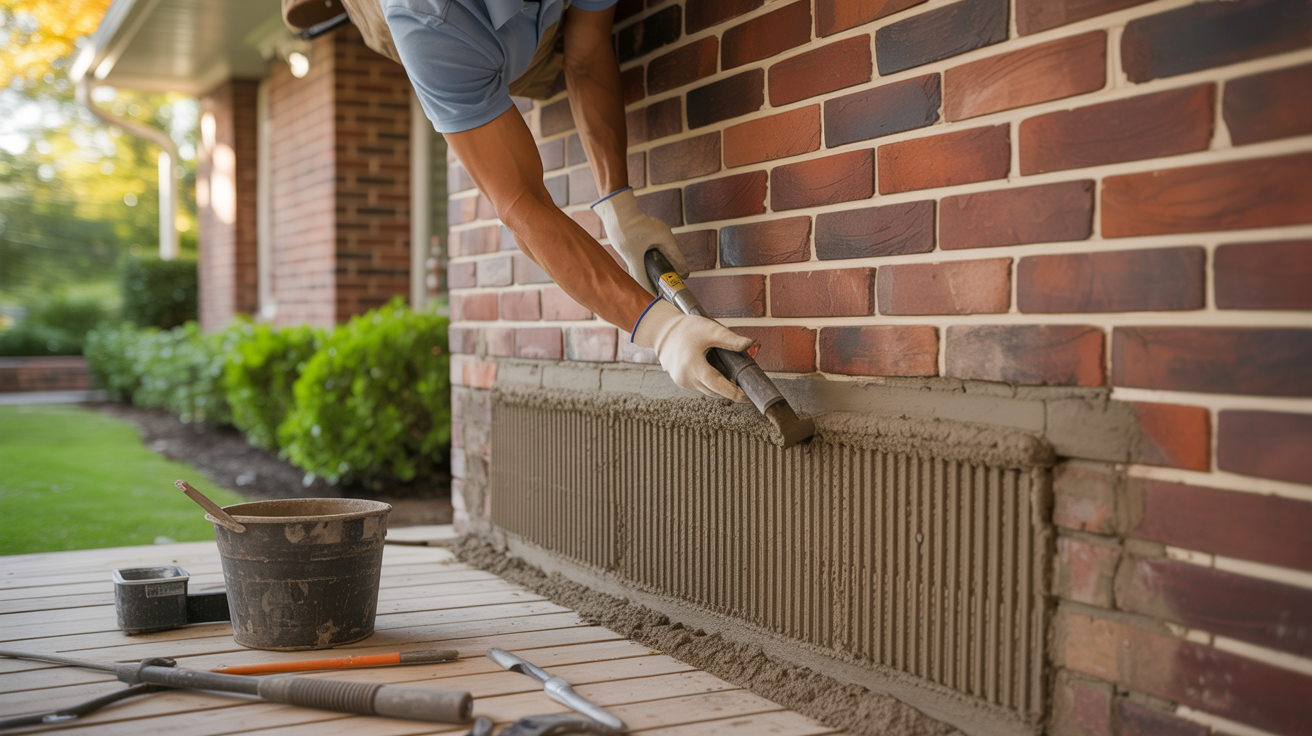
Foundation professionals install push piers or helical piers deep into stable soil beneath your settling foundation.
These steel supports transfer your home’s weight to solid ground, stopping further movement and stabilizing the structure.
Once piers are in place, contractors can slowly raise your foundation back to its original lift.
This process closes existing cracks and prevents new ones from forming, giving you a permanent fix that comes with warranties lasting 25 years or more.
Structural Reinforcement
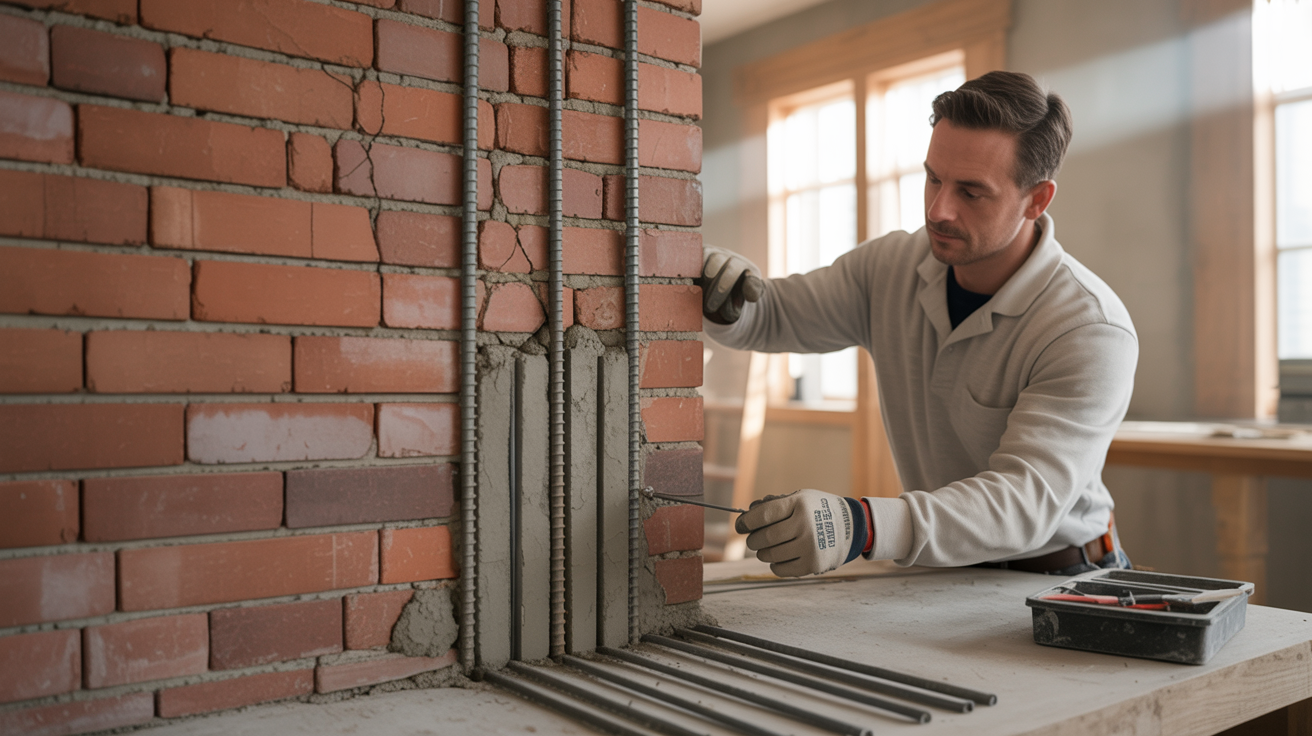
Engineers install steel beams or carbon fiber straps along compromised walls to add strength and prevent further cracking. These reinforcements distribute weight more evenly and stop walls from bowing or shifting under pressure.
Foundation wall anchors attach to your basement or crawl space walls and extend into stable soil outside.
They resist lateral soil pressure that pushes against your foundation, especially important in areas with expansive clay or high water tables that create constant stress.
Complete Wall Replacement
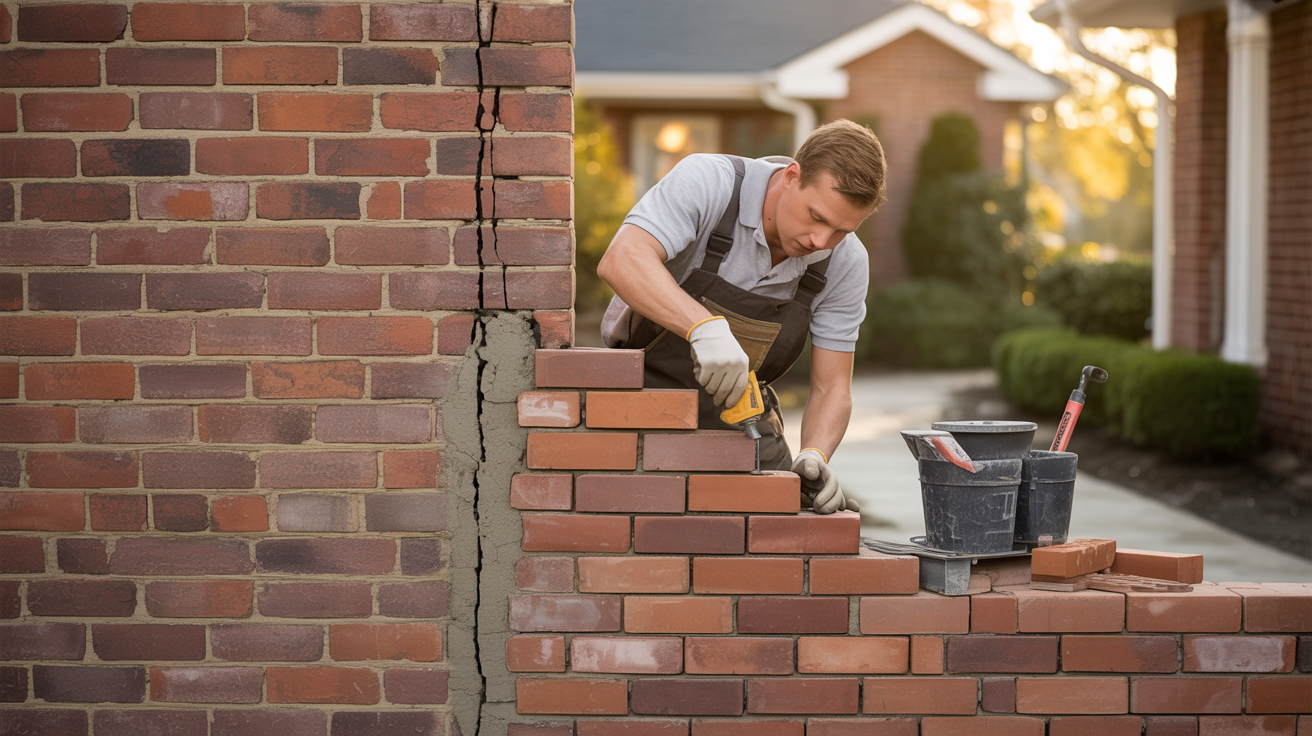
Contractors tear down and rebuild severely damaged sections when cracks are too extensive to repair.
This drastic option only makes sense after you’ve completely resolved all foundation issues causing the damage.
Replacement gives you a fresh start with modern building techniques and proper expansion joints.
The new wall should last decades without problems, but only if the underlying foundation is stable and all soil and drainage issues are fixed first.
Preventing Future Vertical Cracks
I want you to stop cracks before they start, instead of fixing them after they appear. Prevention costs far less than major repairs down the road.
- Moisture Management: Ensure proper drainage flows away from your foundation using gutters, downspouts, and proper grading. Avoid overwatering plants near your walls and maintain consistent soil moisture to prevent expansion and contraction cycles that cause settling.
- Landscaping Precautions: Plant trees and large shrubs at least 10-15 feet away from your foundation to prevent root damage. Install root barriers if you already have mature trees close to your house, as roots seeking moisture can destabilize soil and crack foundations.
- Regular Inspections: Monitor existing cracks and foundation levels every six months by measuring crack widths and checking for changes. Seek professional evaluation immediately if you notice any movement, new cracks appearing, or existing cracks widening over time.
- Maintain Expansion Joints: Keep existing expansion joints clear of debris, caulk, or paint that prevents proper movement. These flexible gaps allow your brick to expand and contract naturally without creating stress cracks in mortar or brick faces.
- Address Issues Quickly: Fix small cracks and minor foundation problems as soon as you spot them before they become expensive disasters. Early intervention with proper repointing, sealing, or minor foundation adjustments prevents small problems from escalating into major structural failures requiring thousands in repairs.
Conclusion
A vertical crack in a brick wall doesn’t have to be a source of stress. Now that you understand the common causes, from natural settling to moisture issues, you can assess the severity and take the right steps to fix it before it becomes a bigger problem.
For minor cracks, simple DIY repairs with mortar or sealant can work wonders. For larger or spreading cracks, calling in a professional ensures your home’s structural integrity stays protected.
The key is addressing it sooner rather than later. With the right approach, your brick wall can look great and stay strong for years to come.
Have questions about your specific situation or want to share your repair experience? Leave a comment below. We’re here to help and learn from each other.
Frequently Asked Questions
What causes vertical cracks in brick walls?
Vertical cracks in brick walls typically result from foundation settlement, thermal expansion and contraction, poor construction, or structural movement. Natural settling of buildings, inadequate support, freeze-thaw cycles, and moisture infiltration can also cause cracking. Most vertical cracks are less serious than horizontal cracks.
Are vertical cracks in brick walls serious?
Most vertical cracks are cosmetic and not immediately dangerous. However, cracks wider than 1/4 inch, those that widen over time, or cracks accompanied by bulging or leaning walls indicate serious structural issues requiring professional assessment. Monitor crack progression regularly.
How do I repair a vertical crack in a brick wall?
For minor cracks under 1/4 inch, clean the crack, and apply masonry crack filler or mortar. For larger cracks, remove loose material, fill with mortar matching the existing color, and tool the joint. Seal with masonry sealer. Serious cracks require professional structural repair.
When should I call a professional for brick wall cracks?
Call a structural engineer if cracks exceed 1/4 inch in width, continue growing, appear suddenly, or accompany doors/windows that stick. Multiple cracks, stair-step patterns, horizontal cracks, or signs of foundation issues also warrant immediate professional evaluation and repair.
How can I prevent vertical cracks in brick walls?
Ensure proper drainage away from the foundation, maintain gutters and downspouts, seal bricks periodically, and address foundation issues promptly. Install expansion joints during construction, use quality materials, and ensure adequate wall ties. Regular inspections help catch problems early before major cracking occurs.