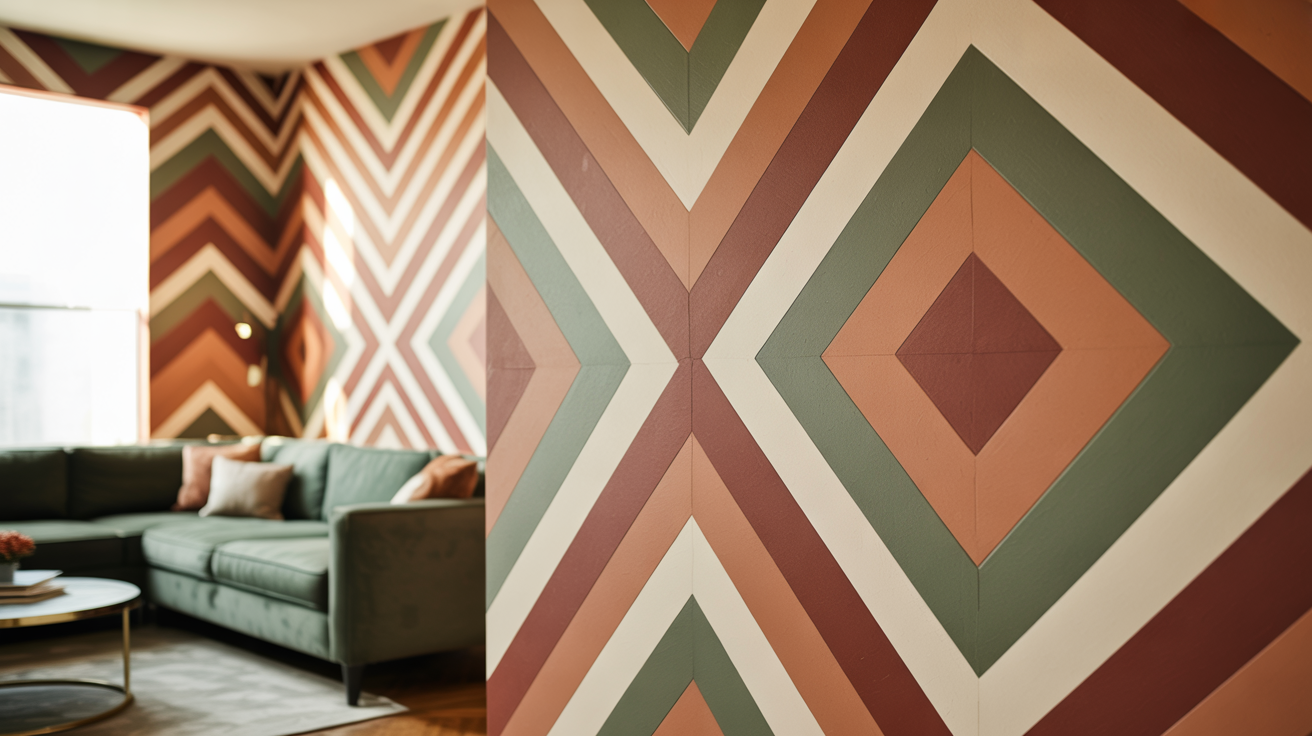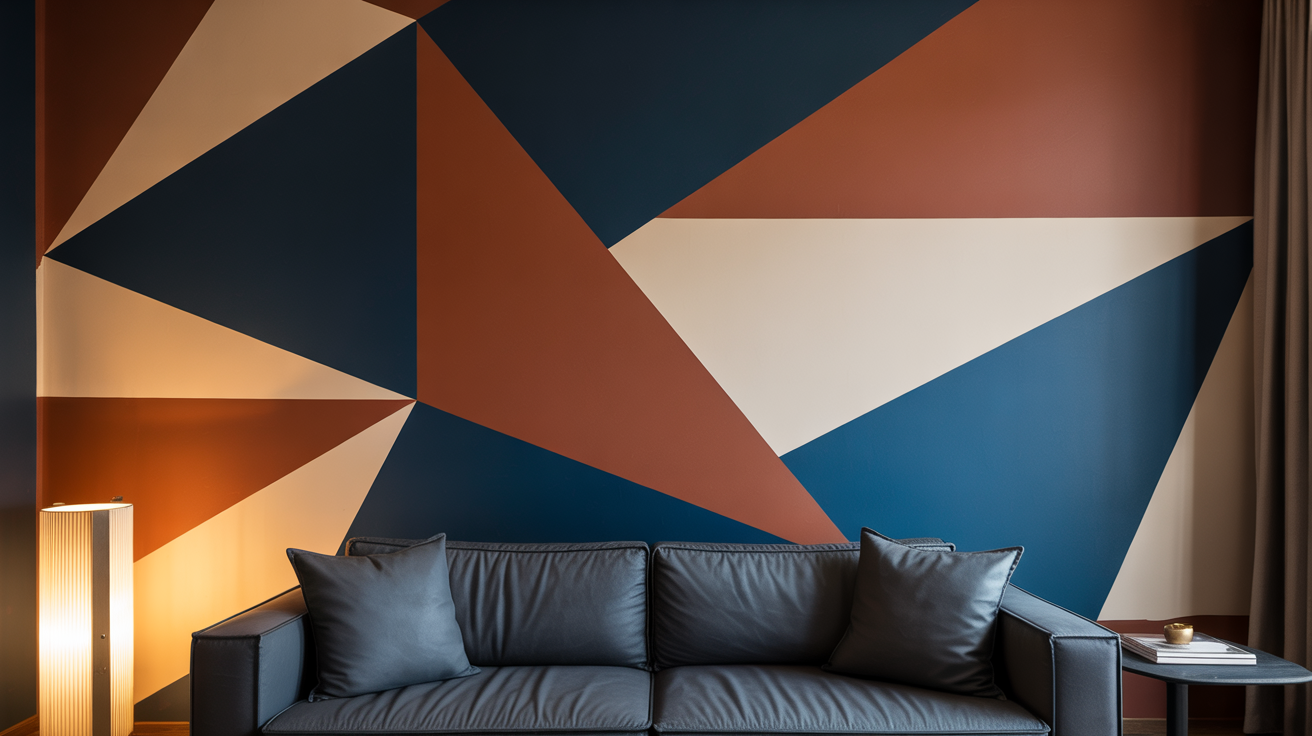
Want to create a bold statement wall without hiring a professional? Geometric paint designs let you change any room with just tape, paint, and a little planning. The results look custom and expensive, but the process is surprisingly doable.
This article walks you through specific geometric patterns you can paint yourself. You’ll see which shapes work in different rooms, how to measure and tape properly, and what color combinations create the most impact. We’ll also cover the tools you actually need and how to avoid messy edges.
These ideas come from real DIY projects that turned out well. No fluff or impossible designs. Just straightforward geometric patterns that look professional when you follow the steps.
If you want subtle triangles or dramatic chevrons, you’ll find patterns that match your skill level and style. Let’s get your walls looking sharp.
How to Paint a Geometric Accent Wall?
I’m going to walk you through painting a geometric wall from start to finish. Follow these steps exactly, and you’ll get professional results.
- Gather Your Supplies: You’ll need wide painter’s tape, angled brushes, textured rollers, a laser level or long ruler, drop cloths, and your chosen paint colors. Quality supplies make the difference between crisp lines and blurry edges that ruin your design.
- Prep Your Wall: Clean the entire surface with TSP or soapy water, fill any holes with spackle, lightly sand rough spots, and wipe away dust. Tape off baseboards, ceiling edges, and adjacent walls to protect them from accidental paint splatter.
- Plan Your Pattern: Measure your wall dimensions and sketch your geometric design on graph paper first. Choose simple shapes like triangles, hexagons, or chevrons, then use a laser level to mark light pencil lines directly on your wall.
- Tape and Paint: Apply painter’s tape along your pencil lines, pressing edges firmly to seal them. Paint your first color using an angled brush for edges and a roller for larger sections, then remove tape at a 45-degree angle while the paint is still slightly tacky.
- Add Second Color: Let your first color dry completely for 24 hours, then tape off new sections for your second color. Repeat the painting process, working carefully to maintain your pattern, and remove tape while tacky for the sharpest possible lines.
13 Geometric Accent Wall Paint Ideas
I’ve gathered thirteen geometric designs that range from simple to showstopping. You’ll find options for every skill level and style preference.
Small Strip of Wall

Paint a narrow sliver between closets or inside a closet door for a subtle statement. This low-risk approach lets you test bold patterns without commitment.
Measure your strip width and tape off the edges carefully. Use bright colors or intricate patterns since the small space won’t overwhelm, and this hidden gem surprises anyone who opens the door.
Triangle Mountains
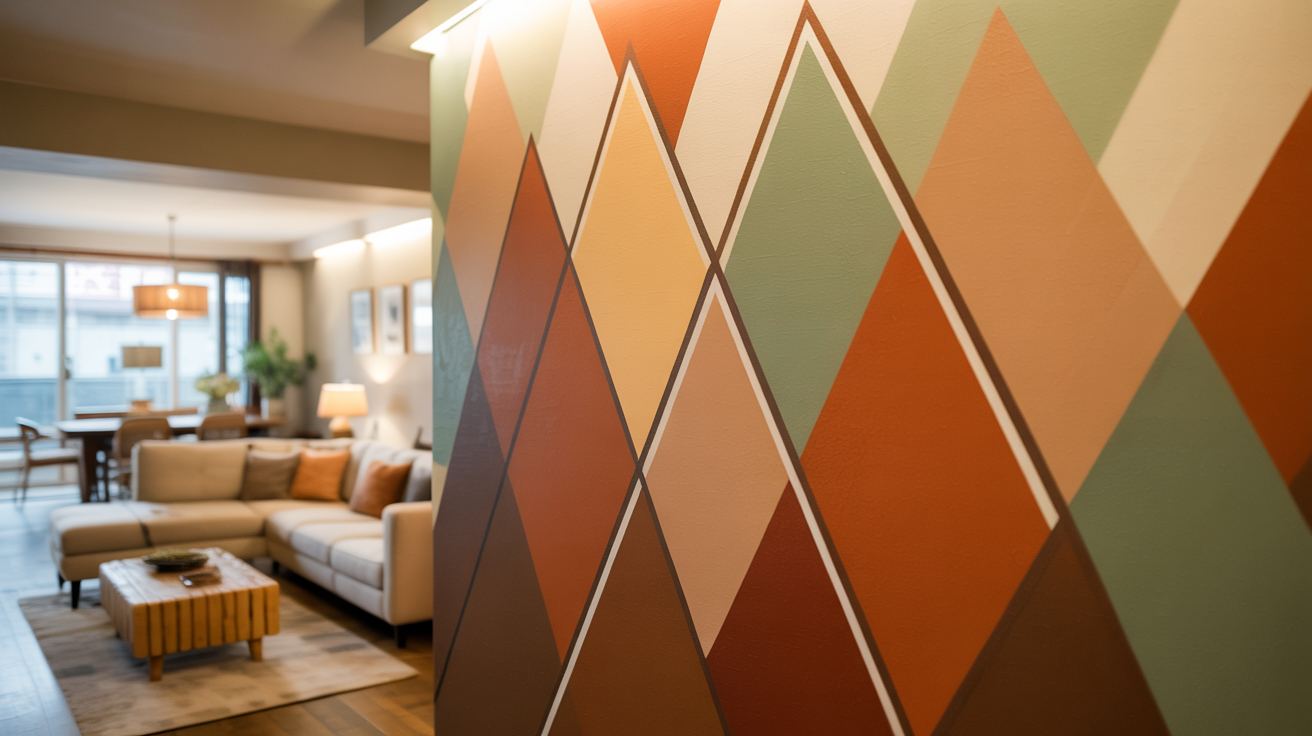
Create mountain-inspired designs using overlapping triangles in blues, greens, and whites. This playful pattern works perfectly in kids’ rooms and nurseries.
Sketch your mountain peaks lightly in pencil across the wall. Tape off each triangle section, paint from back to front in layers, and use different shades to create depth and dimension.
Geometric Blue & Gray Triangles
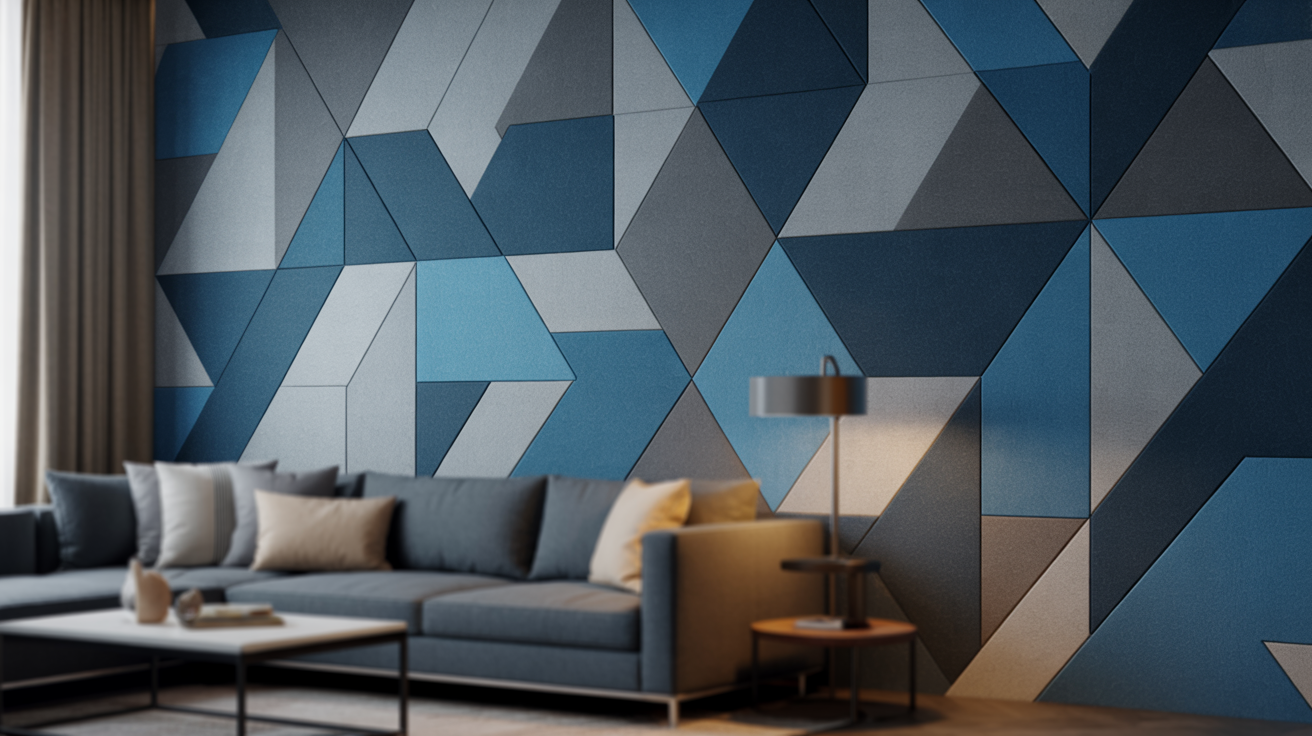
Use clean triangles in similar blue and gray tones for a modern, polished look. Bold tape lines between shapes add extra definition.
Plan your triangle layout with a level to keep angles consistent. Paint alternating sections in each color, leaving the tape on until both colors dry to maintain those crisp, professional edges.
Bold White Lines with Black Triangles
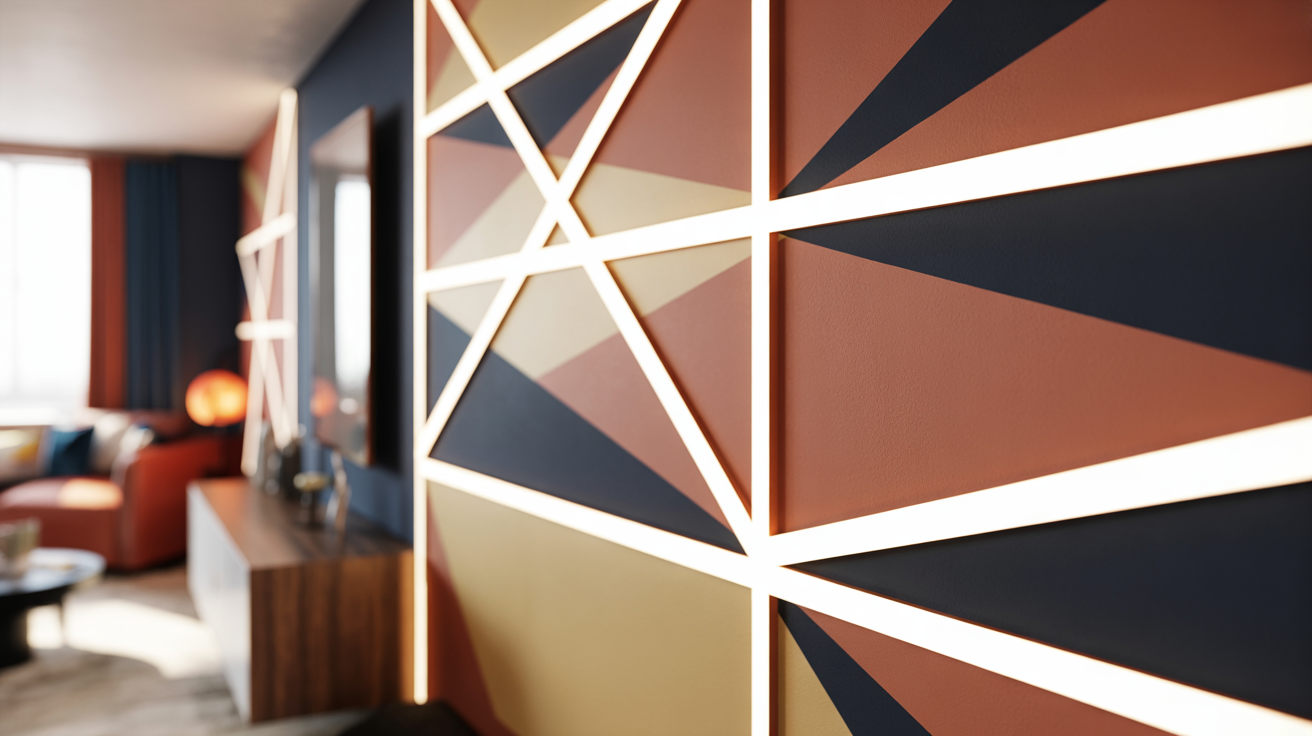
Design a high-contrast pattern with thick white lines and solid black triangles. This masculine style makes a dramatic statement on a single accent wall.
Paint your base wall white first and let it dry completely. Map out your triangle placement, tape off sections, then fill with black paint using a small roller for smooth coverage.
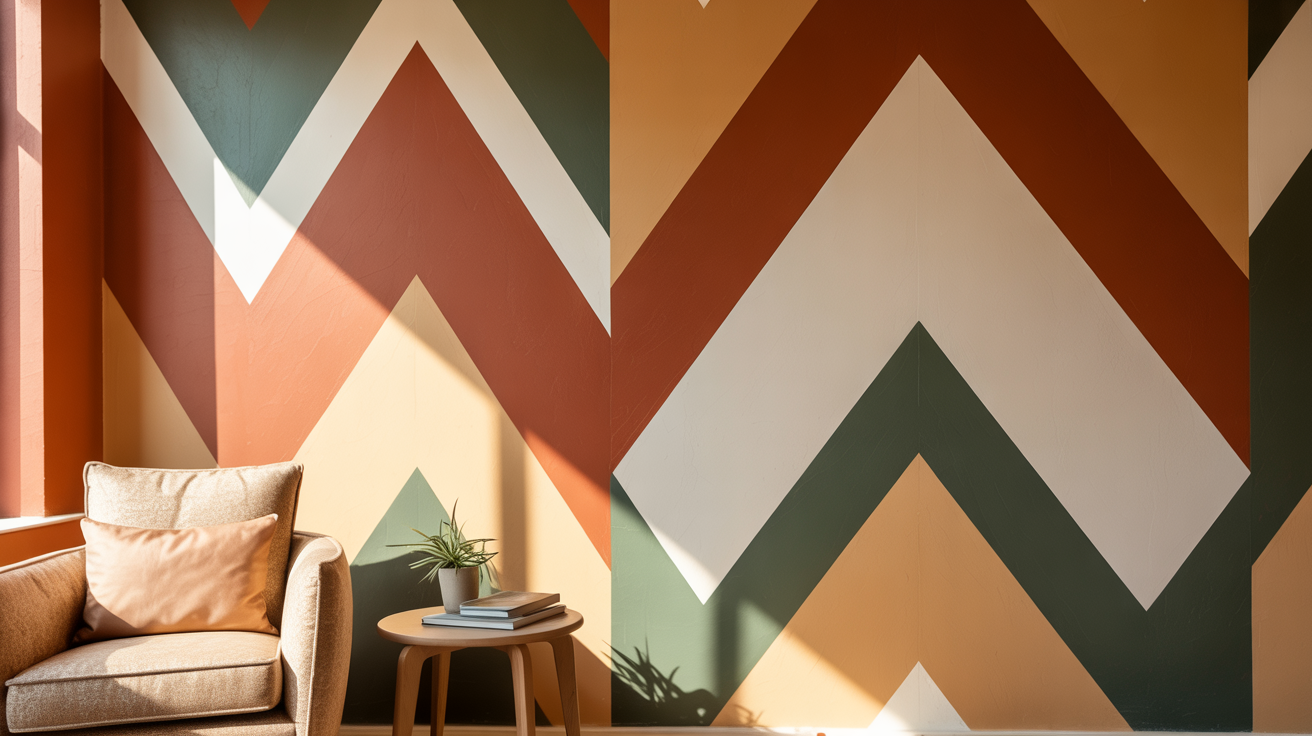
Funky Chevron Twist
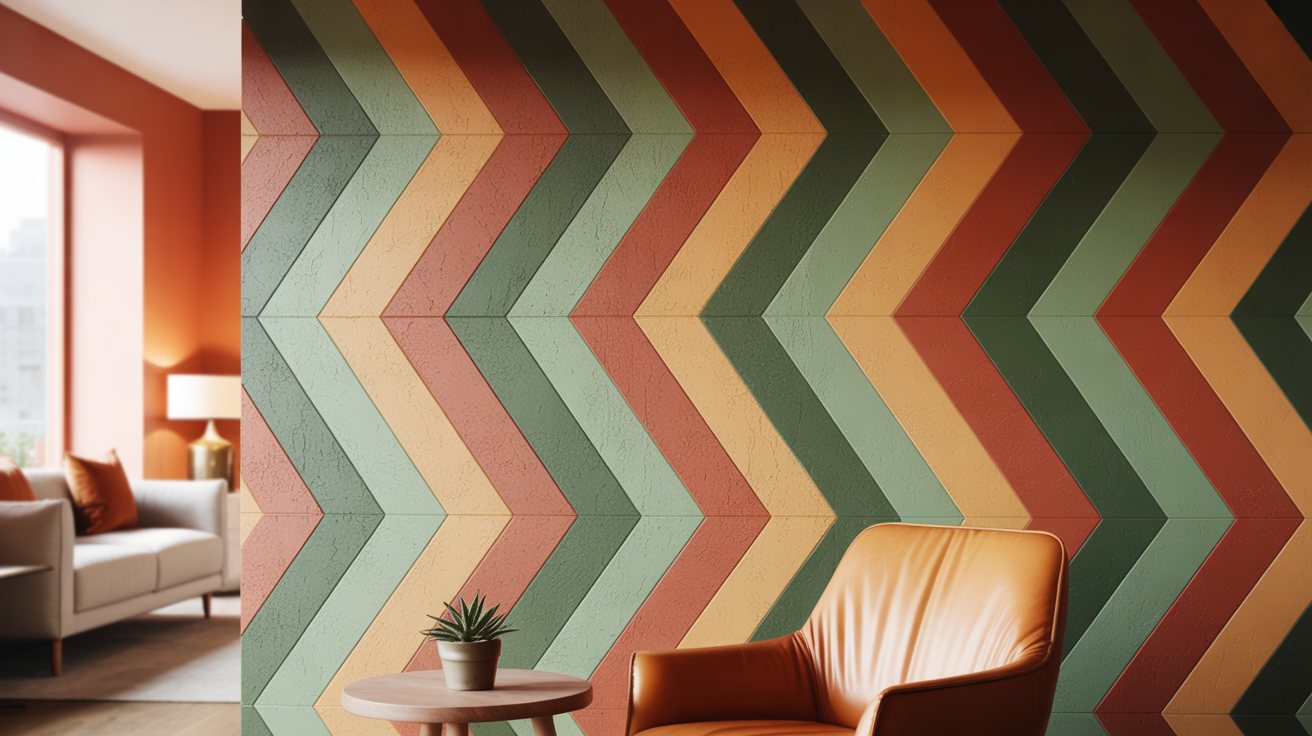
Create a multi-color chevron pattern that feels playful yet structured. Use three to five colors for maximum visual interest.
Mark diagonal lines across your wall at consistent angles. Tape off chevron stripes, paint each section a different color, and work from top to bottom to catch any paint drips.
DIY Painted Hexagons
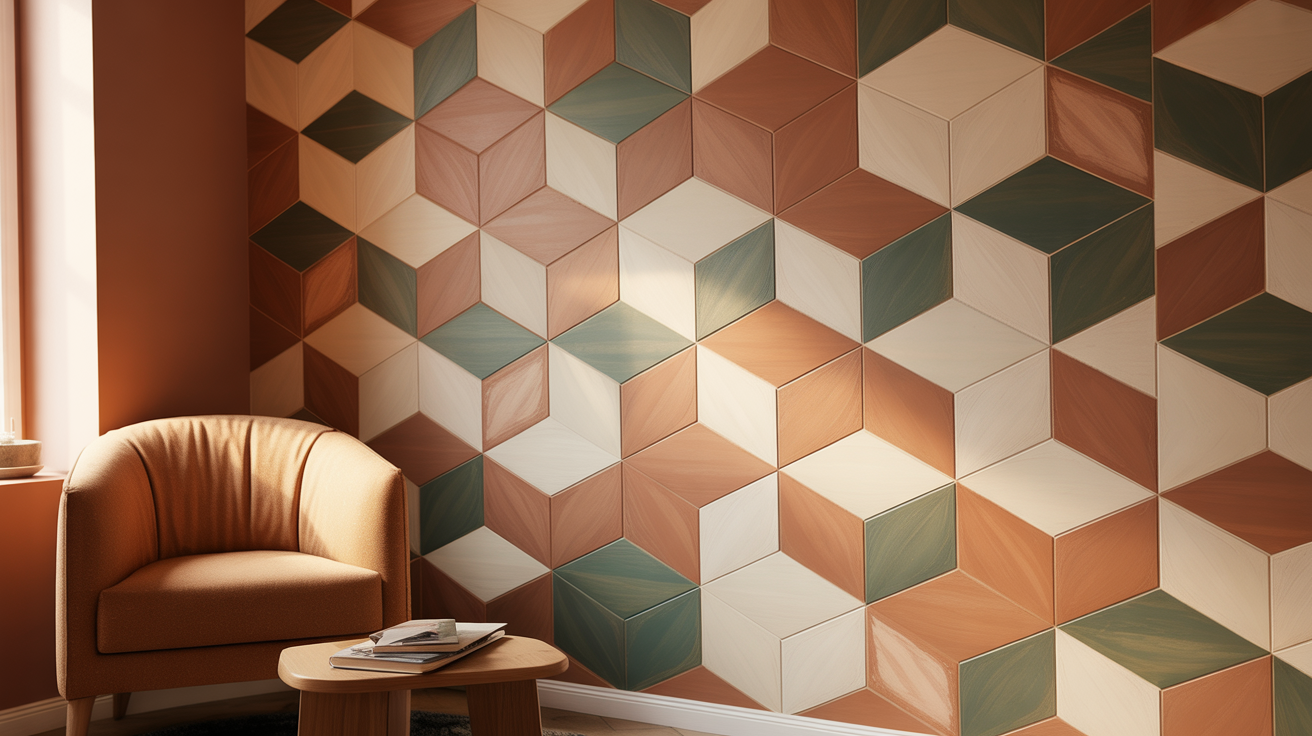
Paint uniform hexagons across your wall for a honeycomb effect. This pattern lets you add pops of color wherever you want them.
Use a hexagon stencil or create a cardboard template for consistency. Trace your shapes lightly, tape around each one, then paint select hexagons in accent colors while leaving others neutral.
Pre-Cut Hexagon Shapes

Arrange pre-cut wooden or foam hexagons on your wall for an instant statement. No painting precision is required with this approach.
Paint each hexagon piece before mounting it to the wall. Use command strips or construction adhesive to attach them in your desired pattern, spacing them evenly for a cohesive look.
Mixed Medium Wall
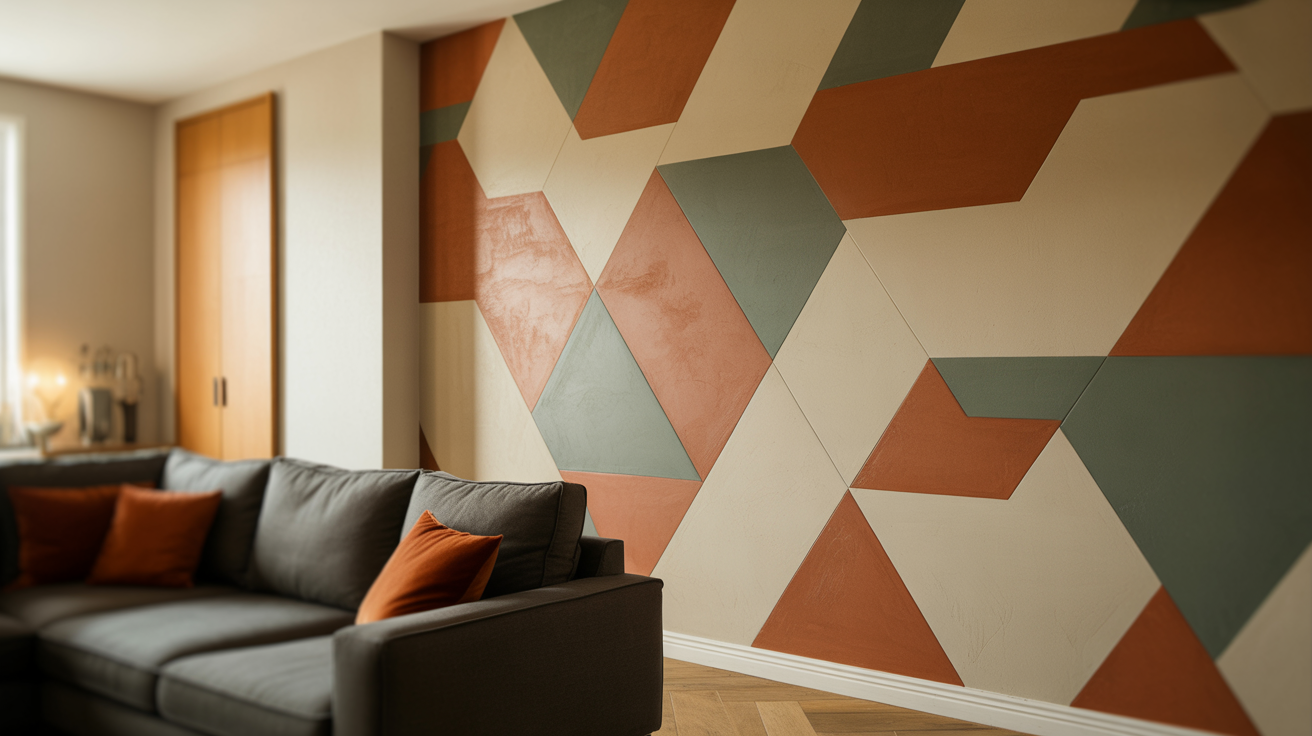
Combine painted geometric shapes with woodgrain wallpaper or metallic tape for a unique texture. This layered approach adds depth you can’t achieve with paint alone.
Paint your base geometric design first and let it dry. Add wallpaper sections inside select shapes, or apply metallic tape along edges to highlight certain angles and create visual separation.
Stenciled Diagonal Stripes
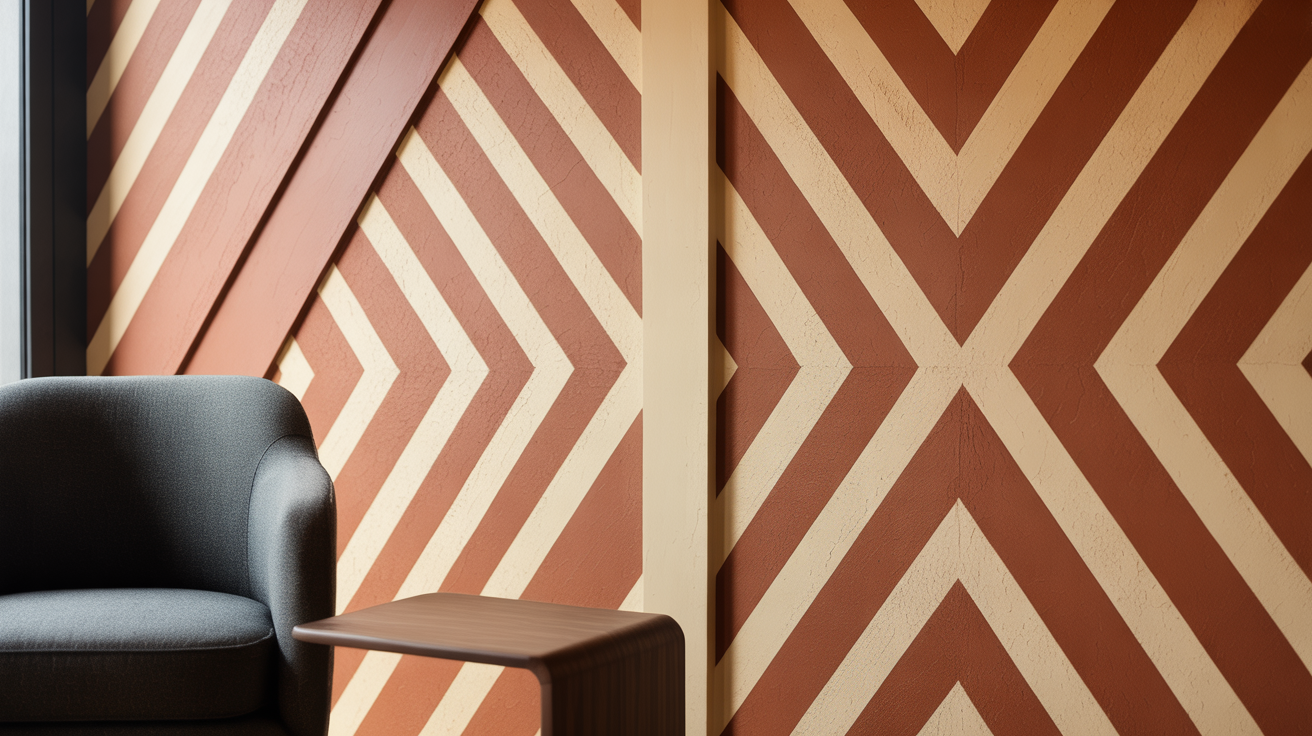
Use wide painter’s tape or pre-made stencils for precise diagonal lines. Extend this pattern across one wall or continue onto adjacent walls for flow.
Decide your stripe width and angle, then mark lines with a level. Tape off alternating sections, paint every other stripe, remove tape when tacky, then repeat for the opposite stripes.
Argyle Pattern
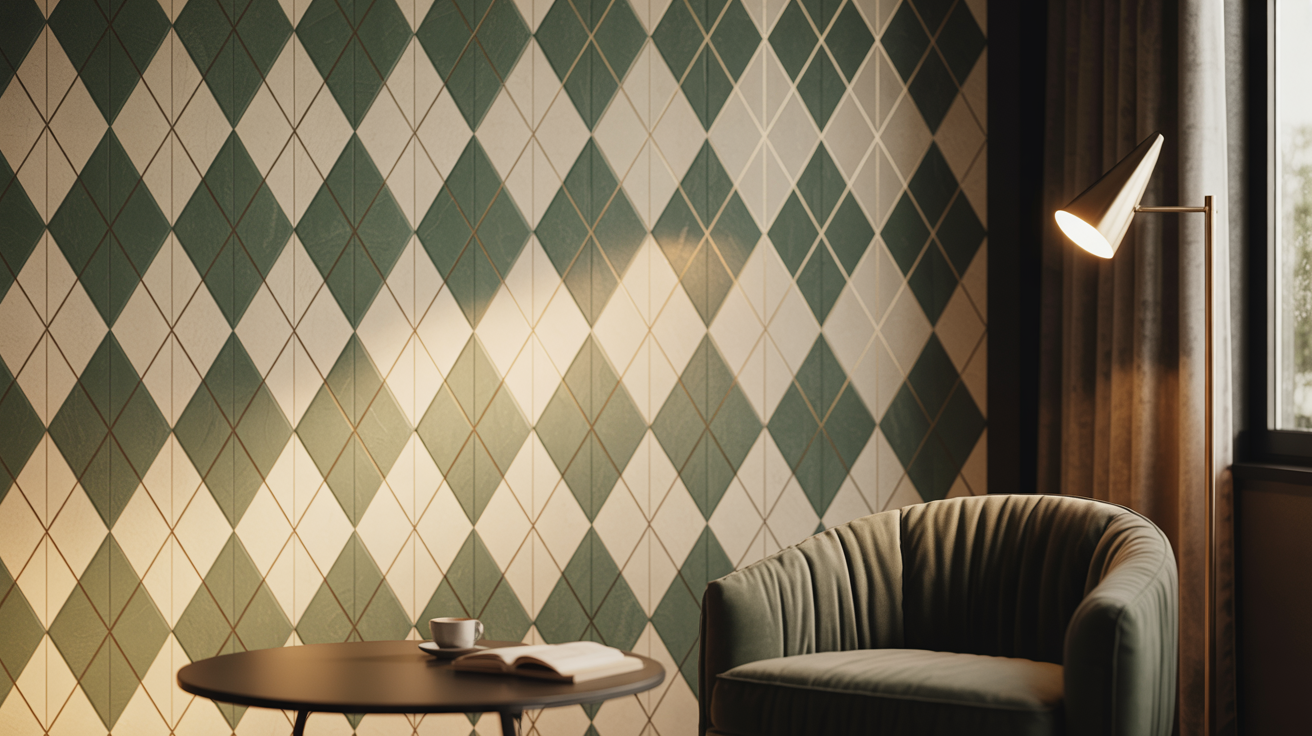
Create classic diamond shapes in overlapping diagonal lines for a warm, polished effect. This preppy pattern works beautifully in home offices and studies.
Draw your diamond grid lightly across the wall using a level. Paint the background diamonds first, let them dry, then add overlapping diagonal lines in a contrasting color for the argyle effect.
Partial Wall Geometry
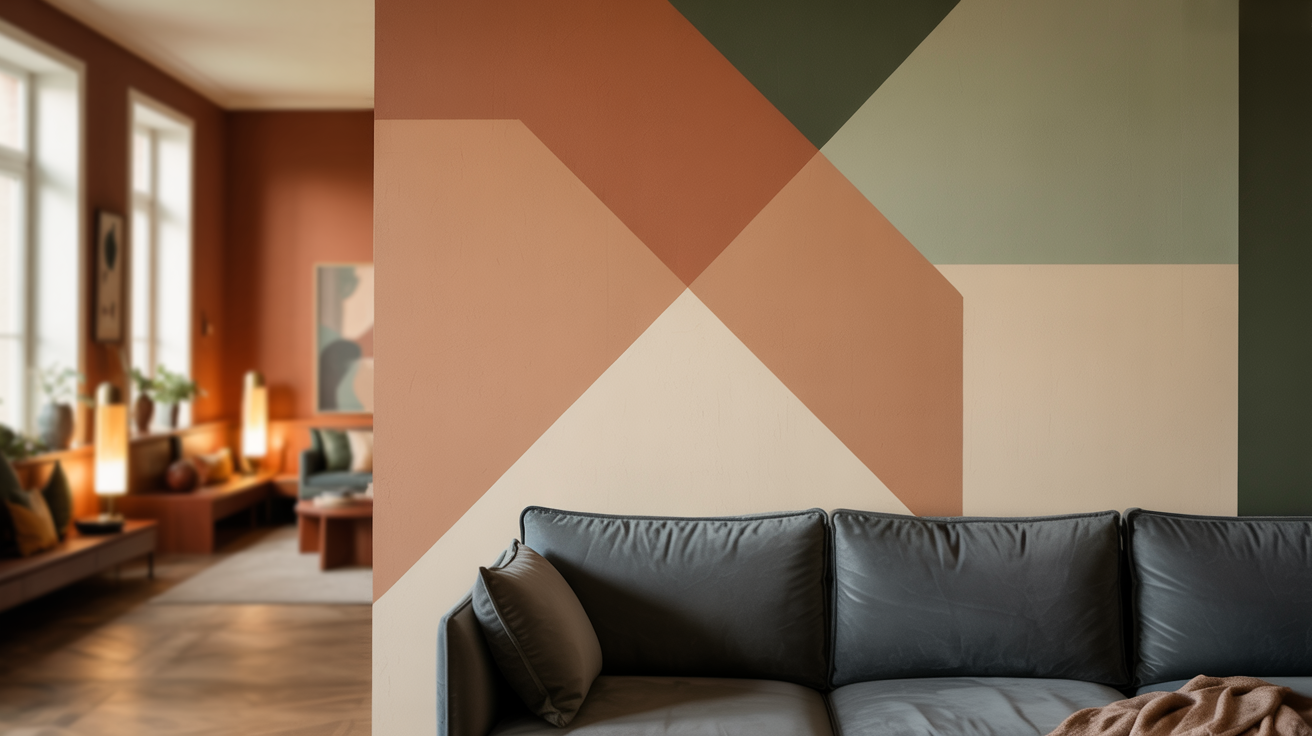
Start your geometric pattern from one corner and expand only as far as you want. This low-commitment option lets you stop whenever you’re satisfied.
Begin at floor level in your chosen corner. Work upward and outward with your pattern, painting section by section, and simply stop when you’ve covered the area you want featured.
3D Ombre Cubes
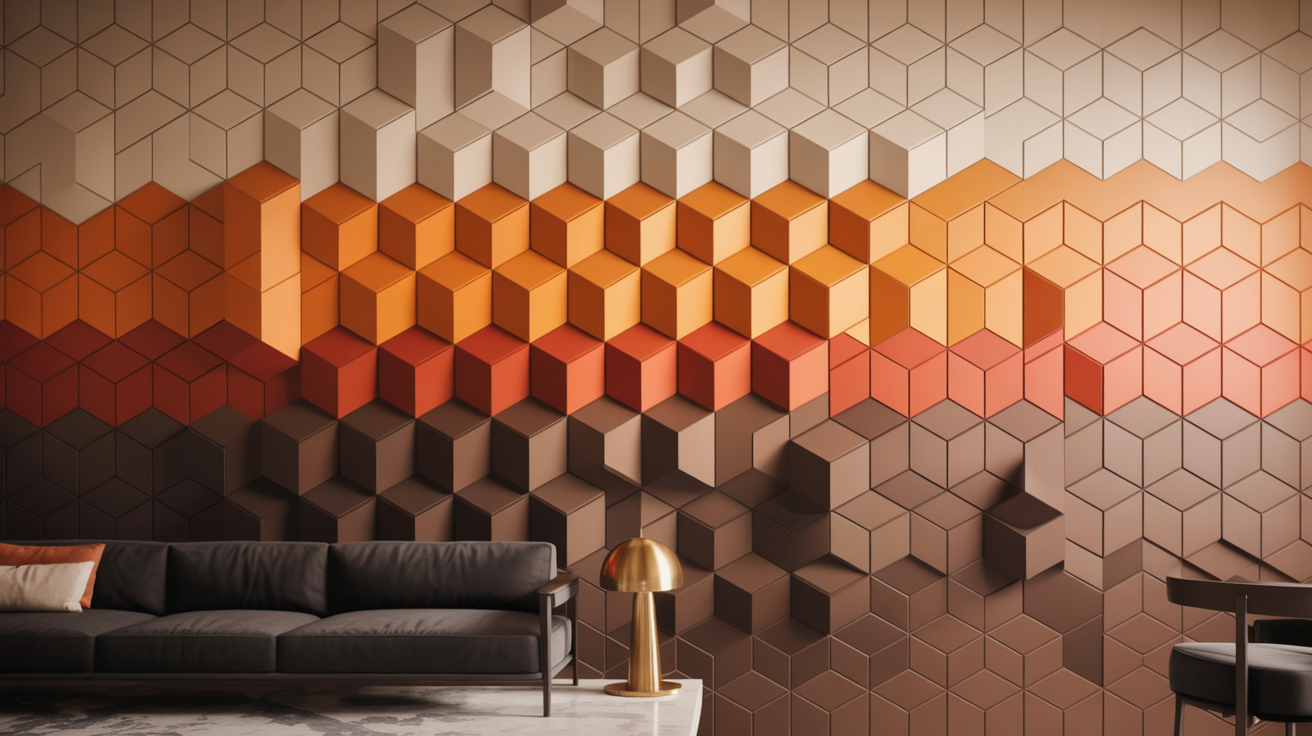
Create dimensional cube shapes using ombre colors that shift from light to dark. This optical illusion adds incredible depth to flat walls.
Draw cube outlines using a ruler and level for perfect angles. Paint each cube face a different shade of your chosen color, with the lightest on top and darkest on the side, for a realistic dimension.
Wrap-Around Ceiling Design
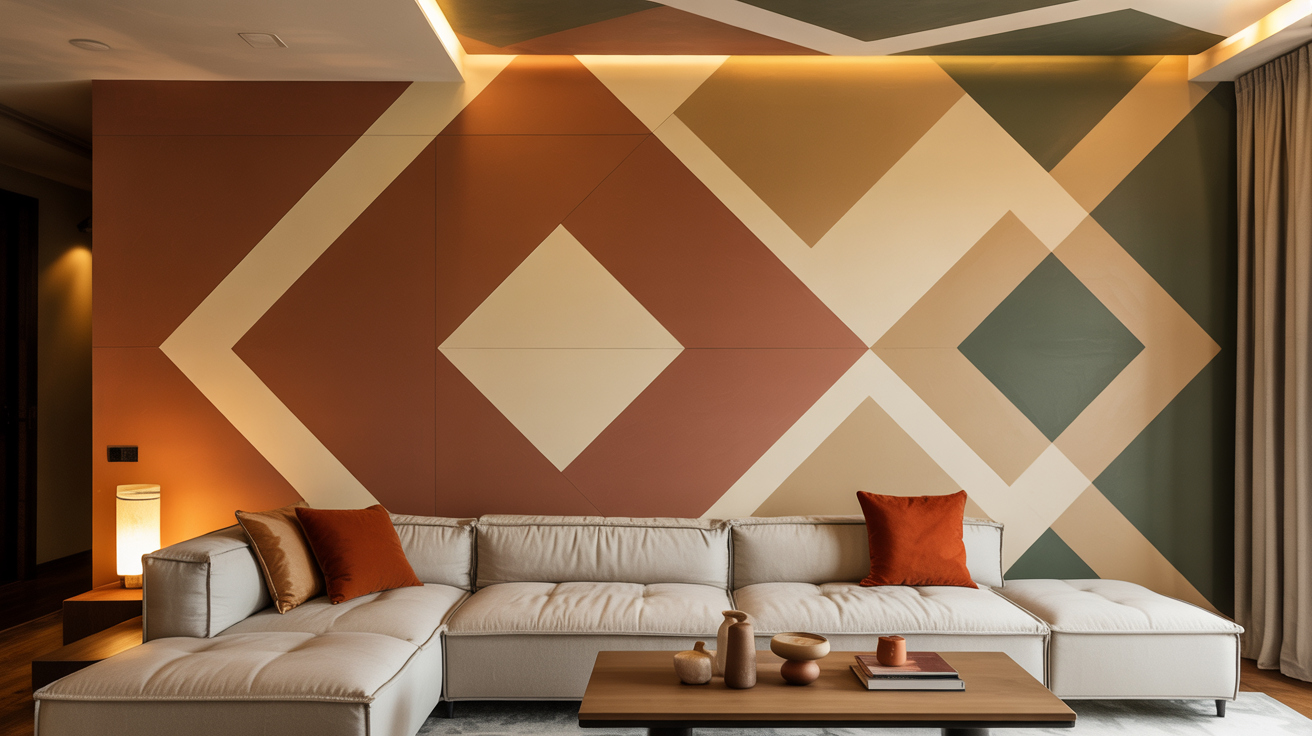
Extend your geometric pattern from the wall up onto the ceiling for dramatic flair. This bold move makes rooms feel taller and more dynamic.
Plan where your wall pattern will transition to the ceiling. Continue your shapes across the corner edge, maintaining consistent spacing and angles, and use the same taping technique for clean lines.
Tips for a Perfect Geometric Accent Wall
I’ve painted several geometric walls, and I’ll tell you, precision matters more than creativity here. You can’t wing it.
- Start With One Wall: Pick a single focal wall, not multiple surfaces. Geometric patterns are bold statements that lose impact when you repeat them around the room.
- Use Quality Painter’s Tape: Invest in wide, high-quality painter’s tape for crisp, clean lines. Cheap tape bleeds and ruins your sharp edges, making your design look sloppy instead of professional.
- Test Your Colors First: Paint small swatches on poster board and tape them to your wall. Live with them for a few days and see how they look in morning light, afternoon sun, and evening lamplight.
- Measure With Precision: Use a laser level or long ruler to mark your lines accurately. Even small measurement mistakes become obvious once you step back and view the finished wall.
- Let Paint Dry Completely: Wait the full recommended drying time between layers and sections. Rushing leads to smudged lines, tape damage, and colors bleeding into each other, ruining hours of careful work.
Conclusion
A geometric accent wall paint design is one of the most impactful ways to add personality and visual interest to any space. If you’ve been inspired by bold triangles, subtle stripes, or intricate hexagons, you now have the knowledge and confidence to create something truly special.
The beauty of geometric patterns is that they work in every room and style. With careful planning, quality tape, and a steady hand, this project is completely achievable, even if you’re new to DIY painting.
So grab your painter’s tape, choose your colors, and start changing that blank wall into a work of art. Remember, there’s no single right way to do it, so let your creativity guide you. Ready to get started? Share your favorite geometric accent wall paint idea in the comments, or tag us when you complete your project.
Frequently Asked Questions
What is a geometric accent wall paint design?
A geometric accent wall paint design uses shapes like triangles, hexagons, chevrons, or stripes in contrasting colors to create visual interest. These patterns add a modern, refined look and depth to any room, changing a plain wall into an artistic focal point.
How do I paint a geometric accent wall myself?
Start by planning your design and measuring the wall. Use painter’s tape to outline shapes, ensuring clean lines. Apply base color first, let it dry, then tape off geometric patterns. Paint alternating sections, remove tape while the paint is slightly wet for crisp edges.
What color combinations work best for geometric accent walls?
Navy and white, black and gold, gray and blush, or teal and cream create eye-catching contrasts. Monochromatic schemes using different shades of one color offer subtle visual balance. Choose two to three colors maximum to avoid overwhelming the space.
Which rooms are ideal for geometric accent wall paint?
Living rooms, bedrooms, nurseries, home offices, and dining rooms all benefit from geometric walls. They work particularly well behind sofas, beds, or desks. The bold patterns suit modern, contemporary, and eclectic design styles while adding personality to any space.
Do geometric accent walls make rooms look smaller?
Not necessarily. Large-scale geometric patterns can actually make rooms feel larger, while busy small patterns may shrink spaces. Use lighter colors and vertical patterns to create height, or horizontal designs to widen narrow rooms. Strategic placement improves room proportions.