Want to add warmth and style to your bedroom without a full remodel? A wood accent wall does exactly that. This article gives you practical ideas using different wood types and installation methods.
I’ve installed wood accent walls in bedrooms for years, from rental apartments to custom homes. You’ll see options that work in real spaces, not just photo shoots.
I’ll cover budget-friendly choices like peel-and-stick planks and permanent options like reclaimed wood. Each idea includes cost, difficulty level, and how it holds up.
I know you’re looking for something that feels both cozy and current. Wood walls deliver that better than anything else.
I’ve learned which woods work behind beds, which finishes last, and which mistakes to avoid. Let’s find the right wood wall idea for your bedroom.
Understanding Wood Accent Walls
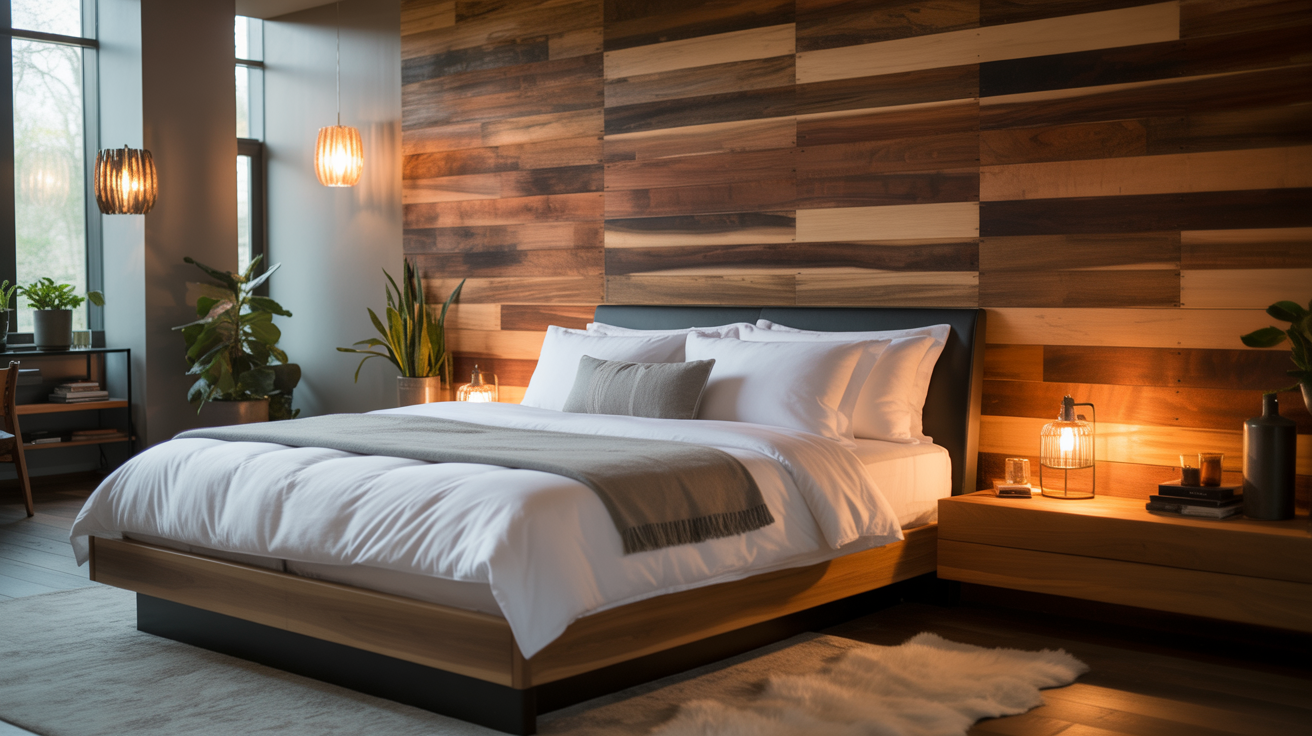
A wood accent wall changes a boring bedroom into something special. It’s one wall covered in wood while the others stay painted.
This creates instant visual interest without overwhelming the space. I’ve installed wood walls in three bedrooms, and each one became the room’s defining feature.
Wood walls add warmth that paint alone can’t match. The texture creates depth and shadows that change throughout the day. Wood also absorbs sound better than drywall, making bedrooms feel quieter and cozier.
You have several wood treatment options:
- Board and batten: Flat boards with thin vertical strips, modern farmhouse look
- Shiplap: Horizontal boards with small gaps, classic rustic style
- Beadboard: Narrow vertical planks with grooves, cottage charm
- Wainscoting: Panels on the lower wall half, traditional refinement
- Raised panels: Frames with center panels, formal architectural style
Each style creates a different mood. Shiplap feels casual. Raised panels feel polished. Pick the treatment that matches your bedroom’s personality.
13 Wood Accent Wall Bedroom Ideas
You need inspiration before picking up tools. These thirteen styles work in different bedroom sizes and design aesthetics.
I’ve seen or created most of these myself. Pick the one that matches your room’s vibe and your skill level.
Single-Tone Painted Wood Wall
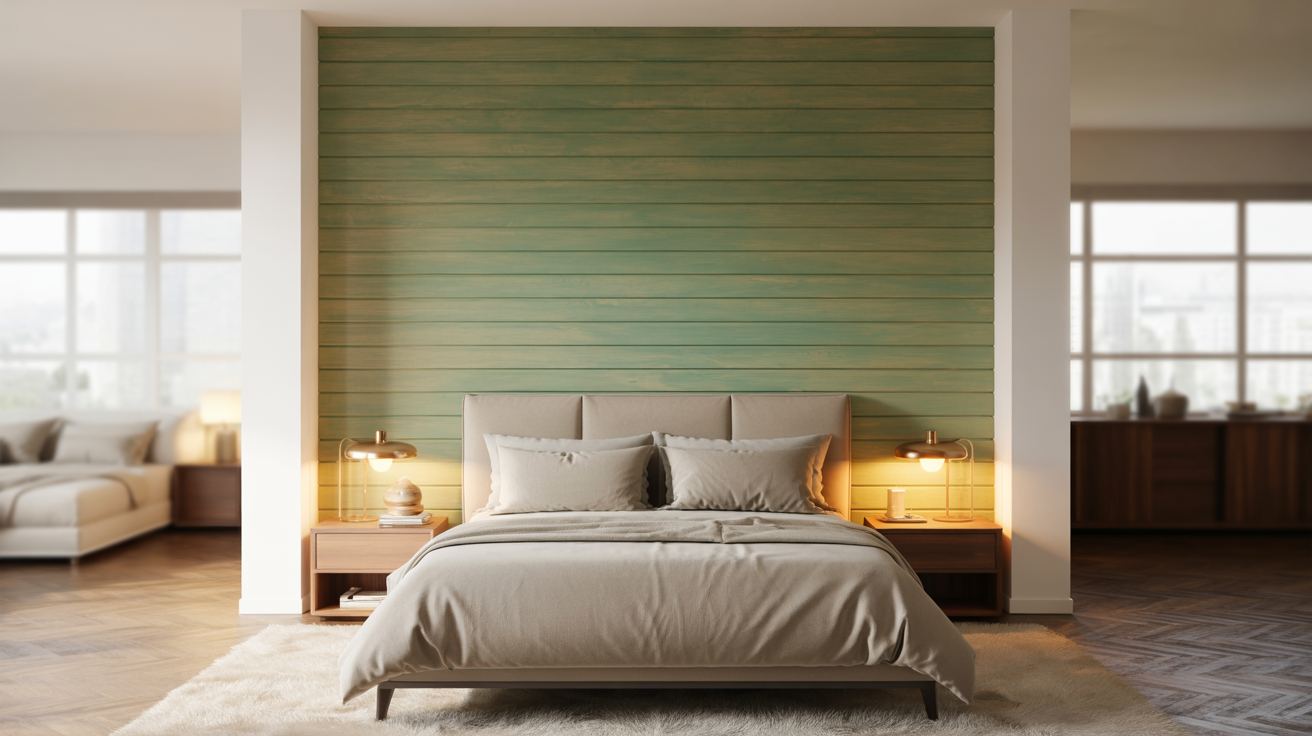
Paint changes basic wood into a sleek, modern statement. Muted colors work best, think soft blue, warm gray, or gentle pastel. Sand your wood smooth, apply two coats of matte or eggshell paint, then install the boards horizontally or vertically. The wood texture shows through the paint, creating subtle depth.
I painted shiplap boards pale blue in a guest bedroom. The color calmed the space while the wood texture added interest. Light colors make small rooms feel larger without losing the warmth that painted drywall lacks.
Natural Wood Wall
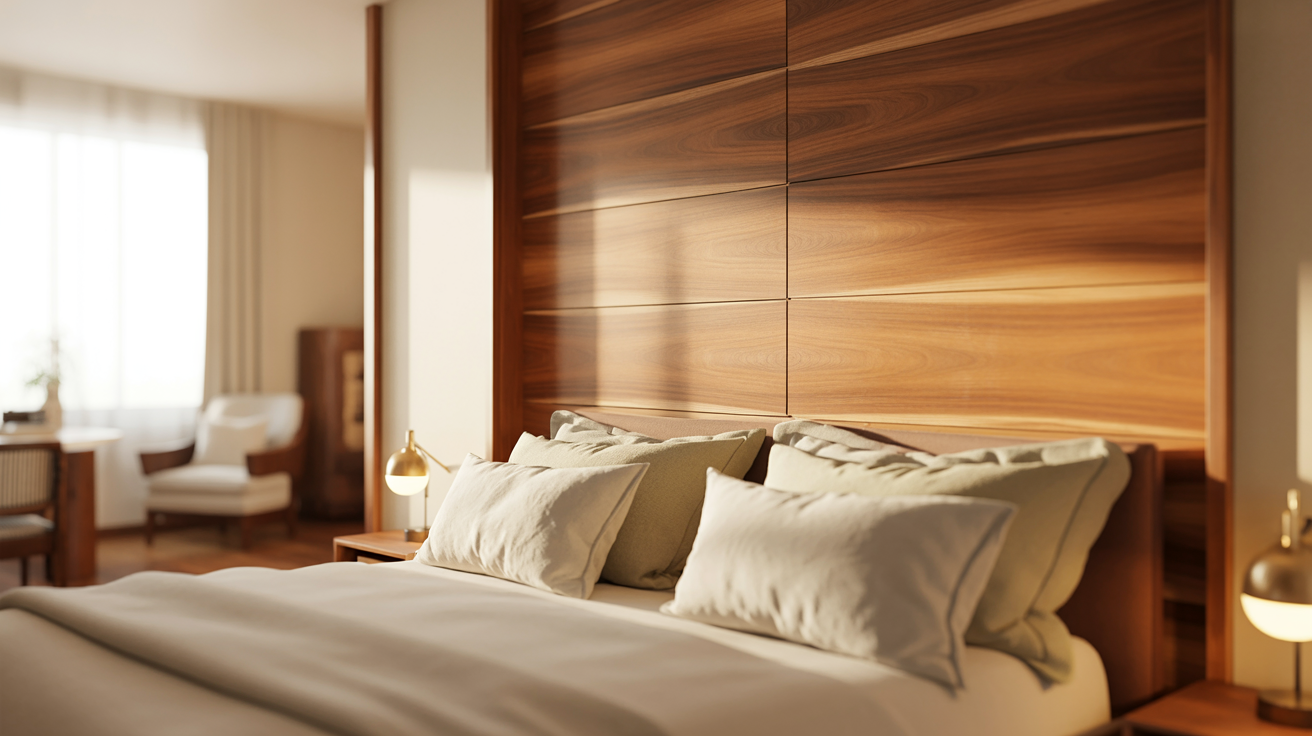
Nothing beats the warmth of real wood grain. Stained or untreated wood brings rustic charm without feeling like a log cabin.
Choose your stain color, apply it evenly to your boards, seal with clear coat, then mount the boards directly to your wall studs.
Clear stain protects wood while showing the grain beautifully. Light stains brighten rooms while dark stains create drama. I used natural cedar in my bedroom, and the smell alone makes the space feel like a retreat.
Two-Tone Accent Wall
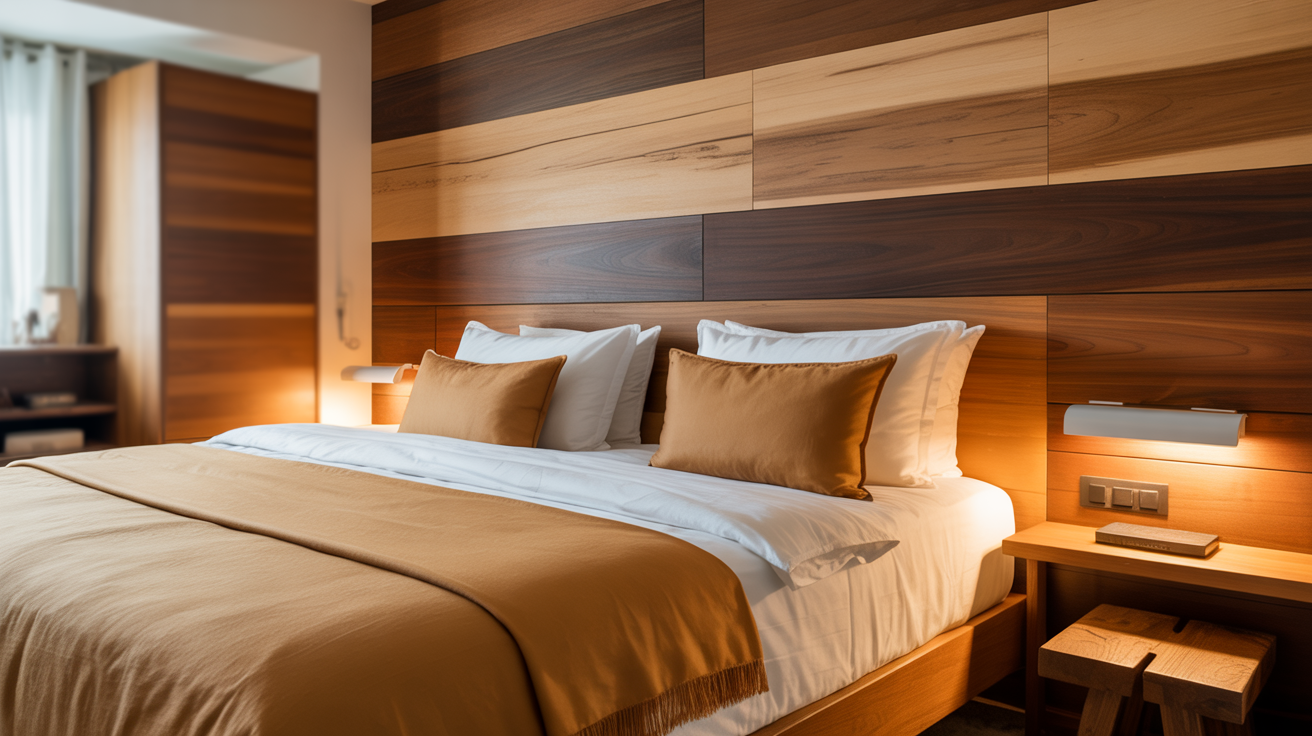
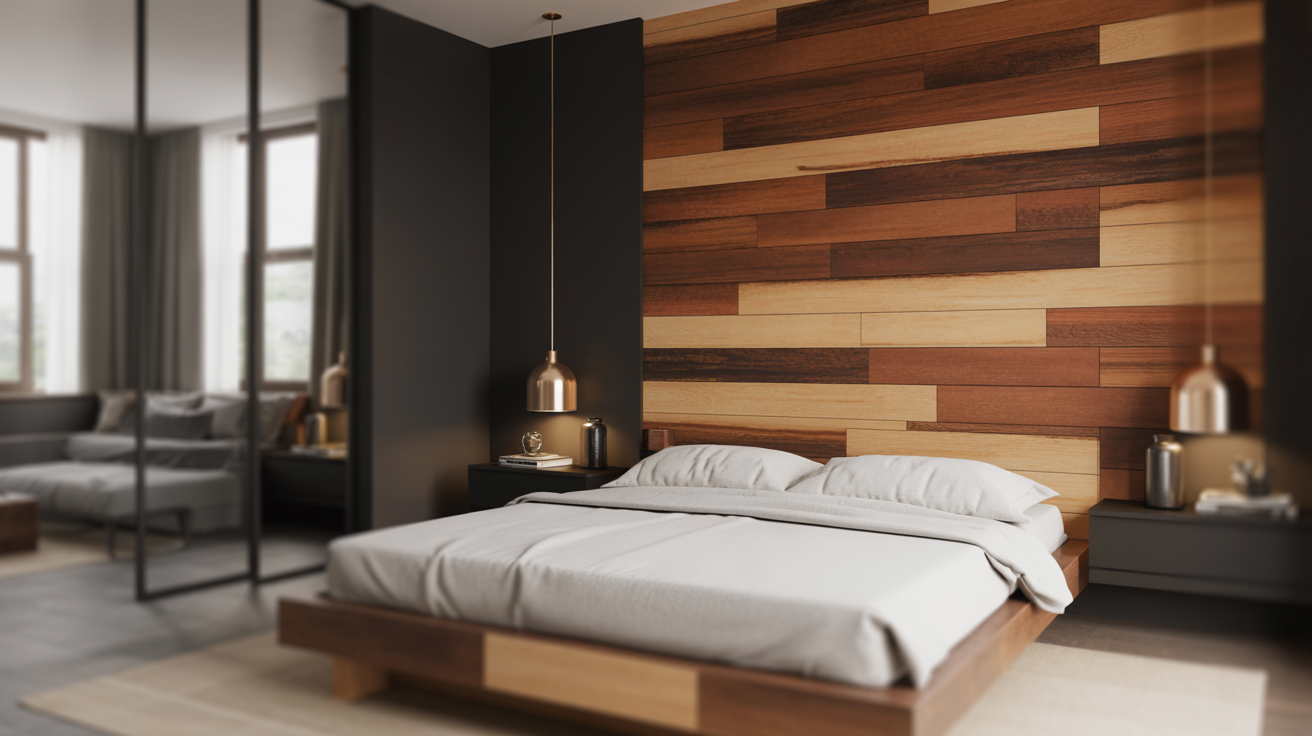
Contrast creates instant visual punch. Pair light and dark wood panels in horizontal stripes, vertical sections, or geometric blocks.
Stain half your boards light and half dark, plan your pattern on paper first, then install alternating colors according to your design.
Split the wall however you like, top half dark and bottom half light, it works great. The contrast frames your headboard naturally.
I’ve seen this done with whitewashed pine and dark walnut, creating an eye-catching modern combination.
Chevron or Herringbone Pattern
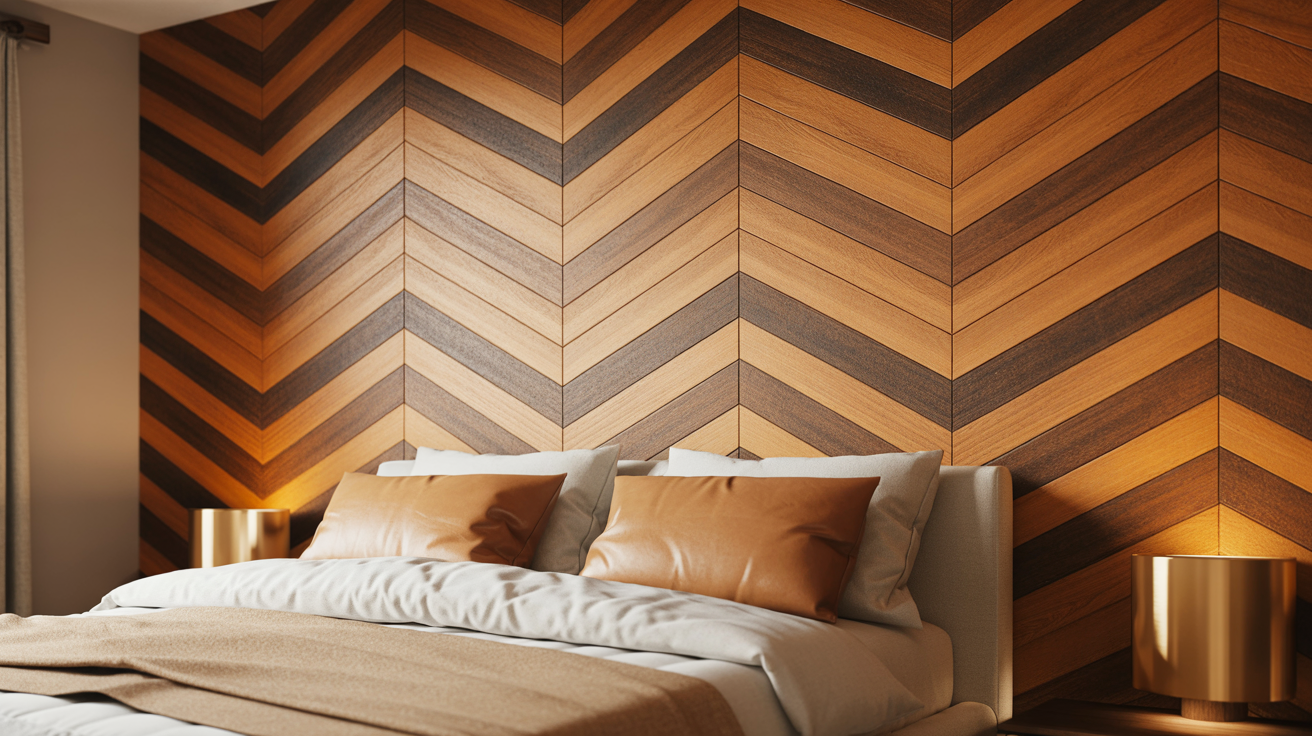
Angled wood adds movement that horizontal or vertical planks can’t match. Chevron creates sharp V-shapes while herringbone creates interlocking zigzags.
Cut your boards at 45-degree angles, mark center lines on your wall, then work outward, installing pieces that meet at precise points.
These patterns require more cutting and planning, as each piece needs exact angles. But the payoff is worth the extra work.
I spent an extra three hours on a herringbone wall, and it became the most photographed spot in the house.
Board and Batten Wall
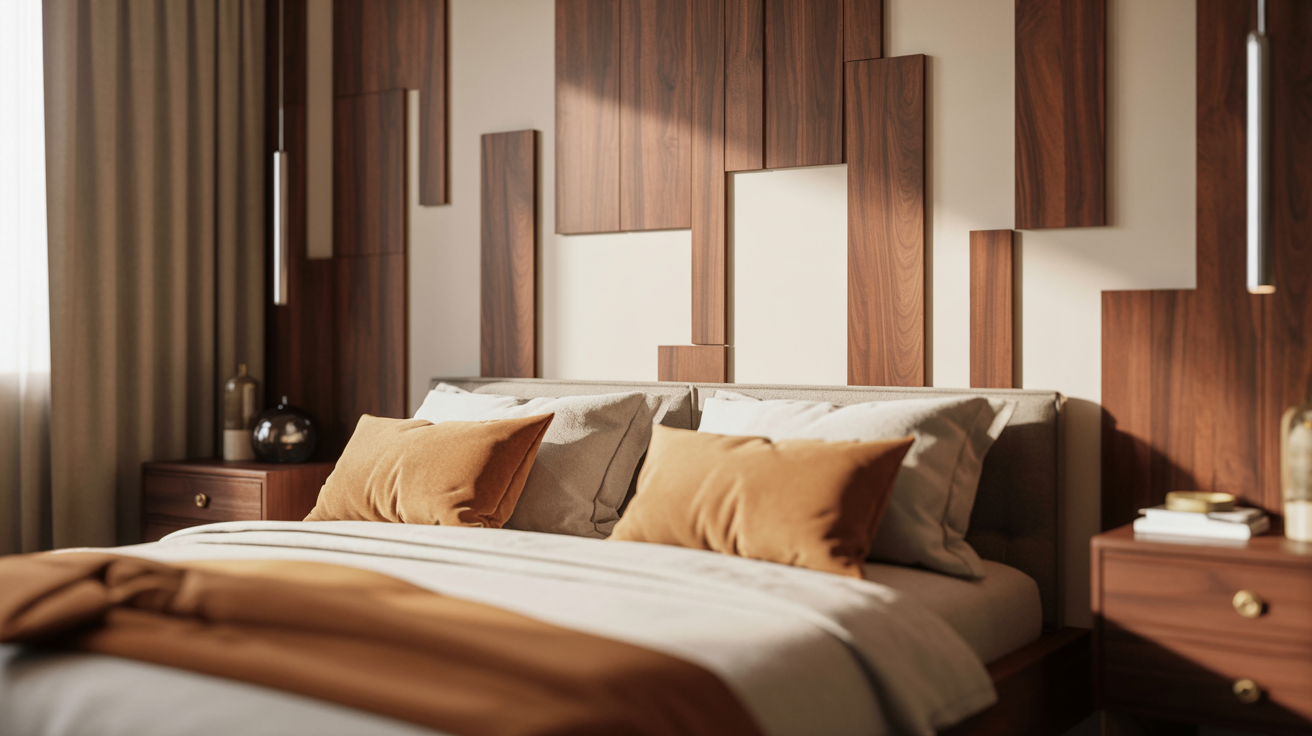
Flat boards with raised strips create a 3D grid effect. This adds architectural detail that makes builder-grade bedrooms feel custom. Install your flat base boards first, measure and mark even spacing for battens (12 to 16 inches apart), then nail thin strips over the seams.
The shadows between boards change throughout the day as light shifts. Keep batten spacing consistent for the best look. Paint everything one color after installation for a cohesive, polished finish.
Oversized Headboard Integration
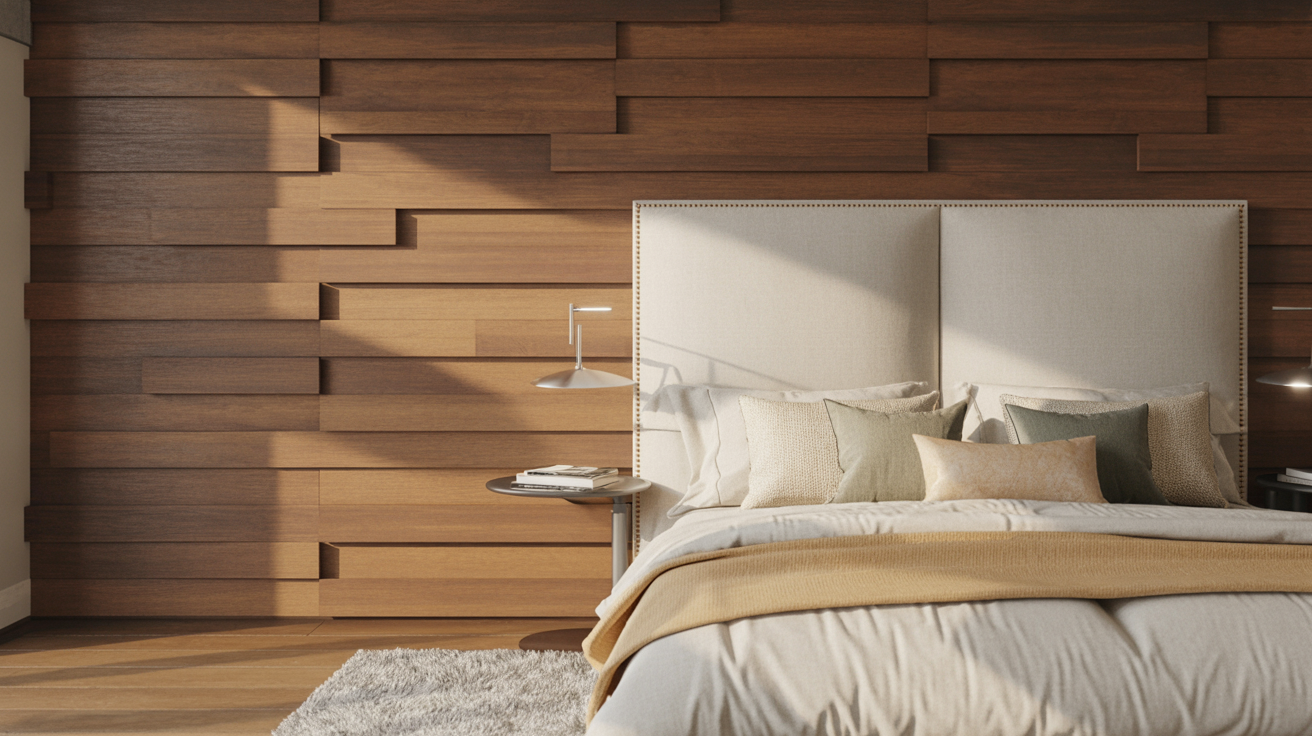
Why buy a headboard when your wall becomes one? Extend wood panels from the floor to the ceiling behind your bed.
Install your wood wall first, then add an upholstered panel in the center section at pillow height for a soft surface to lean against.
This creates a built-in headboard effect that anchors the entire room. The wood frames the upholstered section like expensive custom furniture. Add padding to the section behind your pillows so you can read comfortably in bed.
Ombre Wood Wall
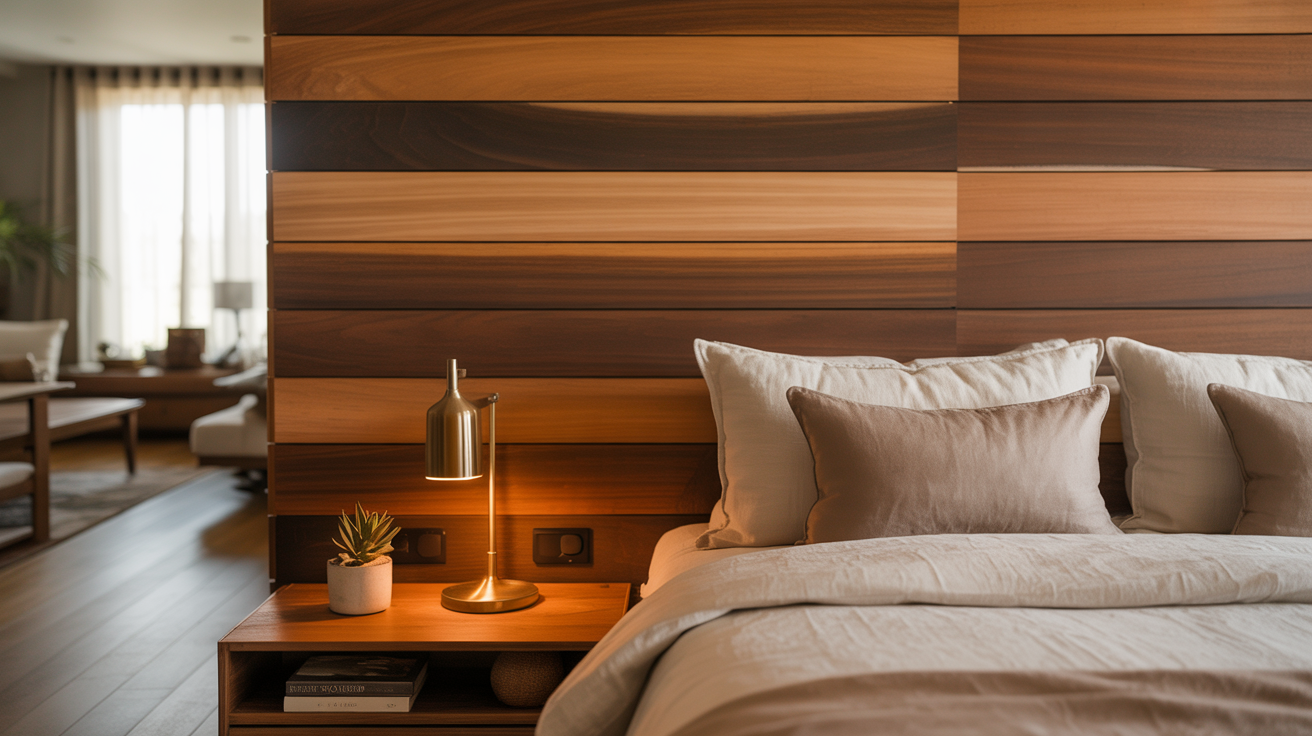
Gradual color shifts create serene, dreamy vibes. Start with a dark stain at the bottom and fade to light at the top.
Mix 4 to 6 progressively lighter stain shades, apply darkest to bottom boards and lightest to top, blend where colors meet for a smooth transition.
The gradient pulls your eye upward naturally and mimics sunset or ocean depths. I’ve seen this done in navy fading to white in a coastal bedroom.
The effect was absolutely calming and made the ceiling feel higher.
Dark Wood Statement Wall
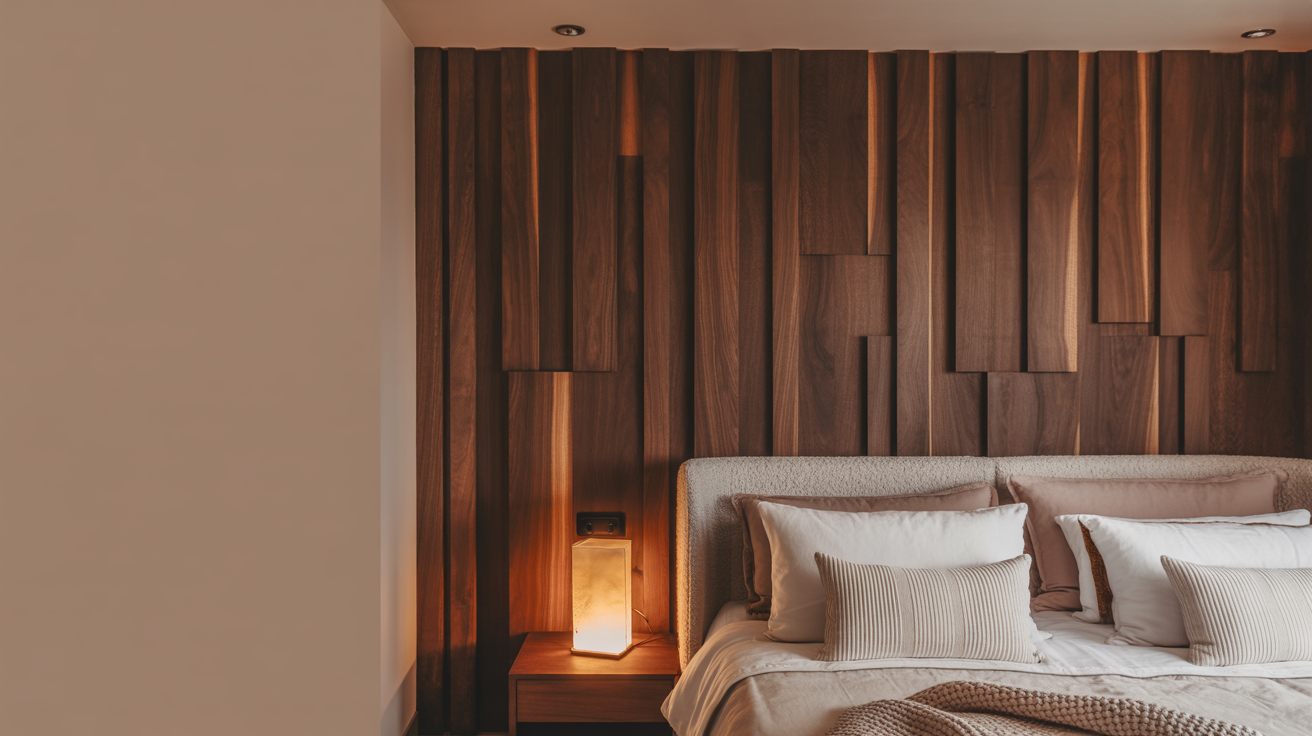
Deep brown or black wood creates dramatic coziness. This works best in larger bedrooms where dark walls won’t shrink the space. Stain your boards espresso or ebony, seal them well, install on your focal wall, then add wall sconces or pendant lights for balance.
Dark wood needs good lighting to avoid feeling cave-like. White bedding pops against dark wood beautifully. I used espresso-stained planks in a master bedroom with white furniture, as the contrast felt modern and unexpectedly bold.
Botanical or Nature-Inspired Panels
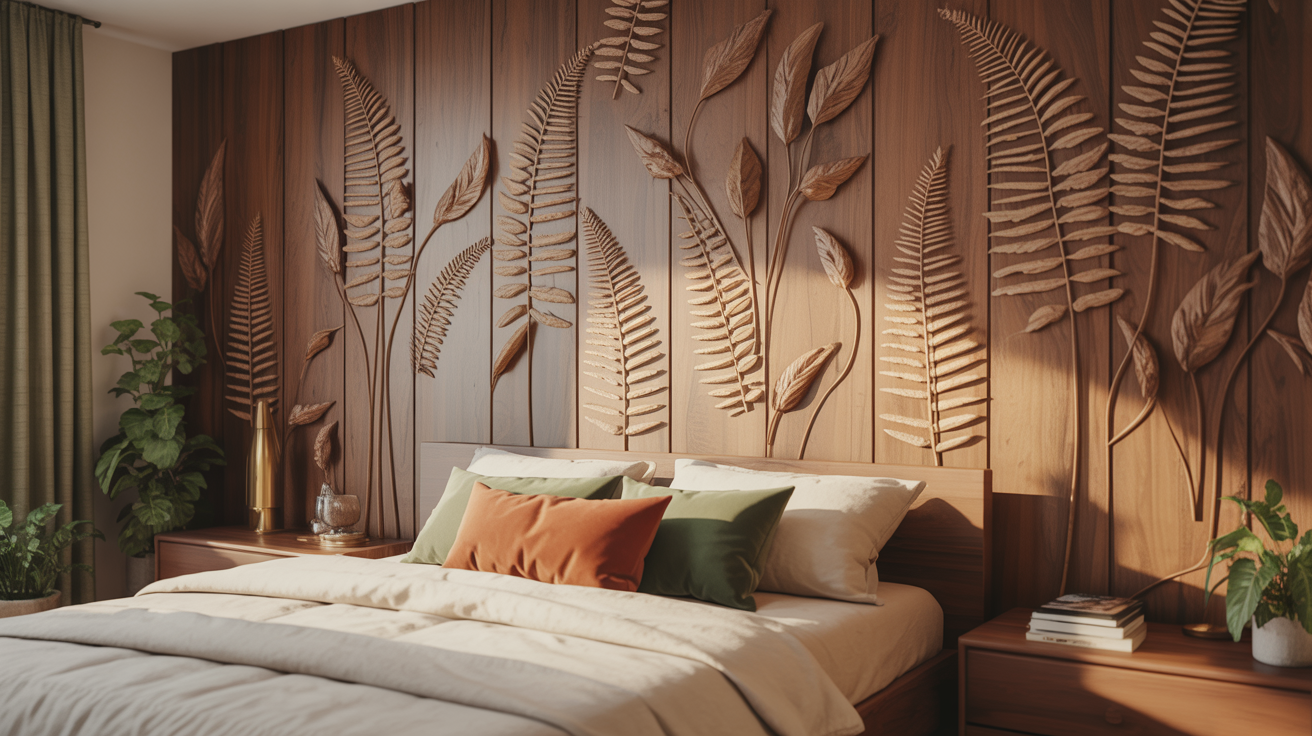
Integrate life into your wood wall. Add floating shelves for plants between wood sections. Install your wood wall first, mount shelves at different heights in asymmetrical groupings, then fill with small succulents or trailing pothos that grow down the wood.
The combination of wood and greenery brings the outdoors inside naturally. This turns a static wall into something alive.
I mounted three shelves on a shiplap wall filled with pothos, and the vines grew down, creating natural living art.
Patterned Wallpaper with Wood Accents
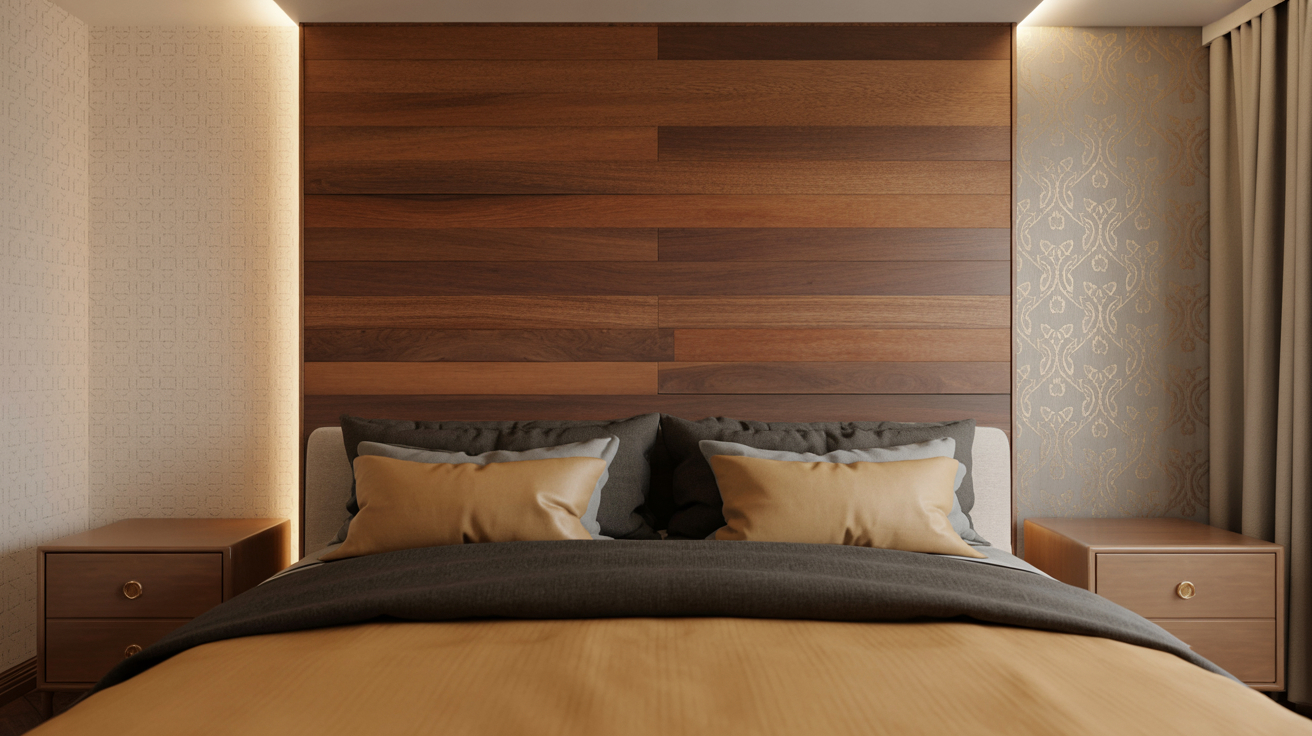
Mix materials for unexpected impact. Apply geometric or floral wallpaper to most of the wall, then frame it with wood trim.
Install wood panel borders first creating a frame, apply wallpaper inside the frame, or alternate wallpaper sections with vertical wood slat sections.
The contrast between smooth paper and textured wood creates dimensional layers. I’ve seen botanical wallpaper paired with vertical wood slats.
The nature theme carried through both materials, creating a cohesive, polished look.
Slanted or Vaulted Ceiling Accent
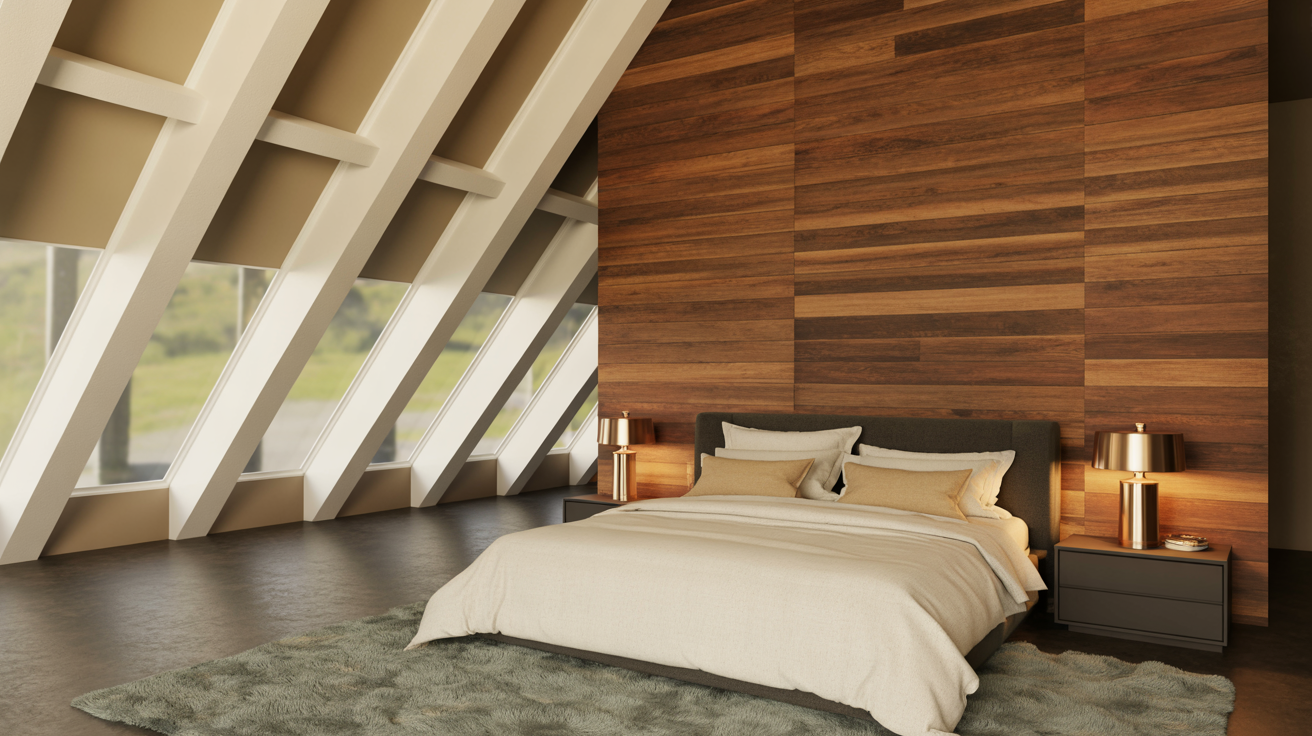
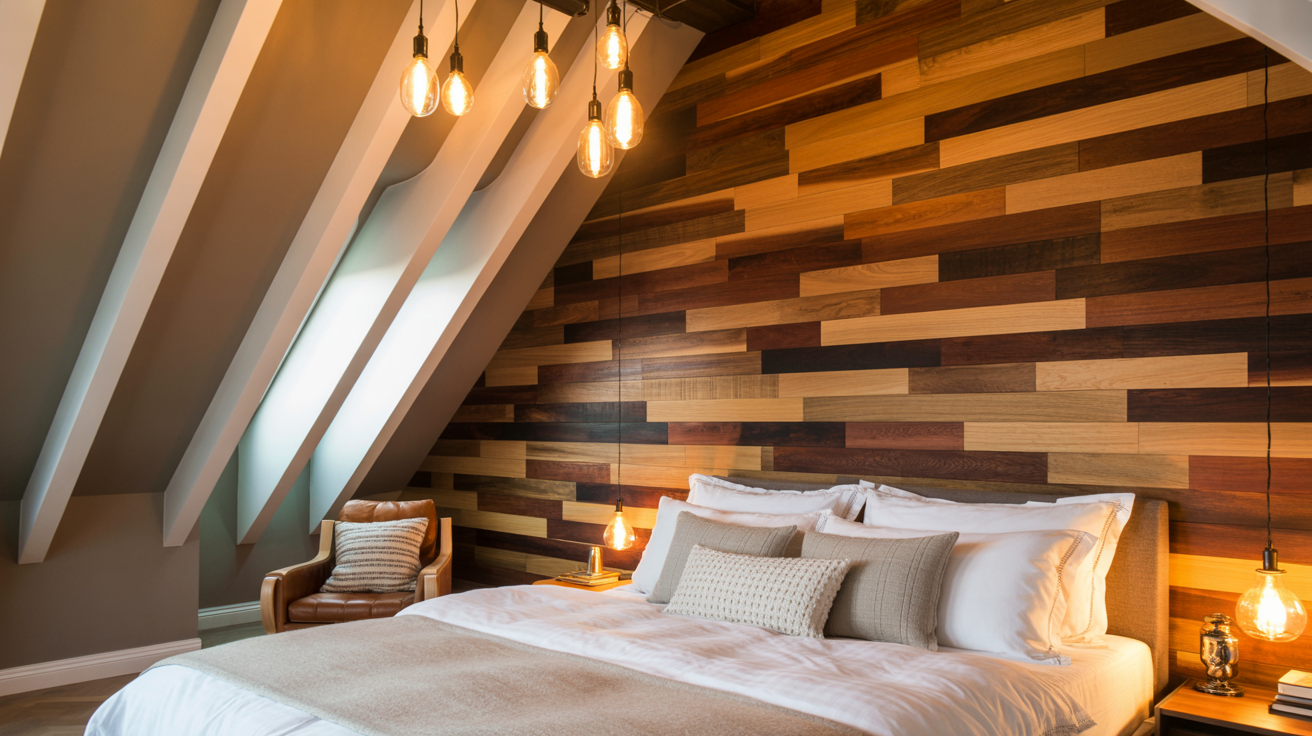
Follow your ceiling’s design instead of fighting it. Extend wood panels up slanted or vaulted ceilings beyond the standard ceiling line.
Measure your angles carefully, cut boards to follow the slope, and install following the ceiling’s natural lines.
The wood draws attention to architectural features most people ignore or hide. Slanted walls become focal points instead of awkward angles.
I did this in an attic bedroom, and suddenly the weird angles looked intentional and designer-planned.
Resort or Coastal-Inspired Wall
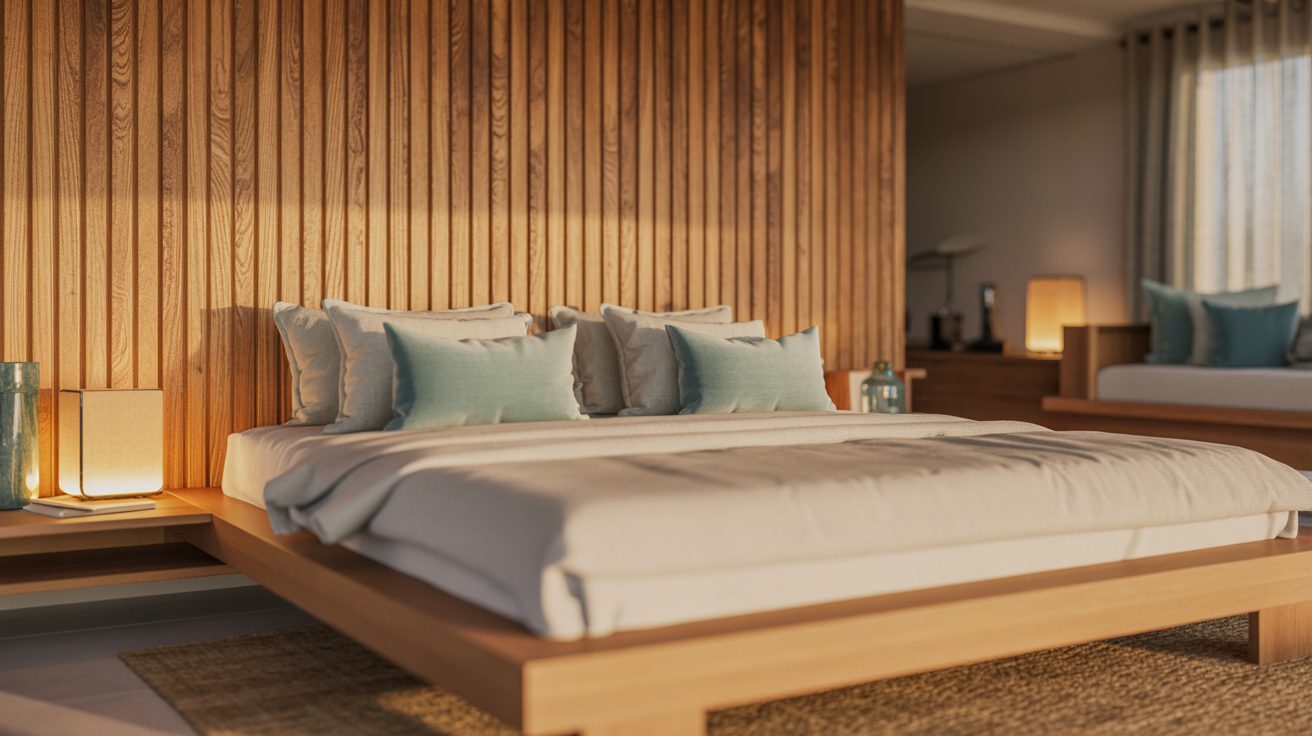
Light wood tones evoke beachy relaxation instantly. Use whitewashed pine, light cedar, or pale driftwood colors.
Apply the whitewash technique to let the grain show through, pair with soft blues or sandy beiges, and keep the entire palette light and airy for maximum vacation vibes.
This style works in any climate, as you don’t need ocean views. Mix weathered and new wood for authentic dimension.
I used this in a landlocked bedroom, and guests always say it feels like waking up at a seaside resort.
Minimalist Black or Bold Color Wall
High contrast creates modern drama that demands attention. Paint wood planks solid black or a bold jewel tone like emerald or navy.
Apply two coats of your bold color to hide all wood grain, install the boards, and keep other walls neutral white to let the accent wall dominate.
This style needs confidence, but the results justify the risk. Black wood walls sound scary, but look incredible with excellent lighting.
I’ve seen them in small bedrooms where they made the space feel more polished instead of smaller, as the key is white bedding and metallic accents.
Tips for a great Wood Accent Wall
I’ve built dozens of accent walls, and these tips will save you time and frustration. Here’s what actually works.
- Measure twice, always: Double-check every measurement before cutting to avoid wasting wood and money on mistakes.
- Pick smart materials: Use MDF for smooth painted finishes or common boards for textured rustic looks that match your vision.
- Match your room: Look at your furniture, bedding, and existing colors before choosing stain or paint for harmony.
- Keep panels level: Use a level for every single board and maintain consistent spacing throughout your entire wall.
- Fill every gap: Use wood filler on nail holes and gaps, then sand smooth between coats for that professional finish.
- Start with basics: Pick one wall and try a simple vertical or horizontal pattern before attempting complex geometric designs.
- Light it right: Add ambient or accent lighting to create shadows that make your wood grain and texture really pop.
Conclusion
You now have wood accent wall bedroom ideas that bring warmth and style to your space. If you choose peel-and-stick planks, reclaimed wood, or another option, you know exactly what works behind a bed.
Your bedroom makeover just got easier. These ideas fit different budgets and skill levels, so you can pick what makes sense for your situation. A wood wall creates that cozy, modern feel you’re after without tearing apart your whole room.
Pick your favorite wood style and start planning this weekend. If these ideas helped you decide on your bedroom upgrade, share this guide with someone who needs bedroom inspiration. Already installed your wood wall? Leave a comment about which option you chose and how it turned out. Real feedback helps others make better choices.
Frequently Asked Questions
Which wall should I put a wood accent on in my bedroom?
The wall behind your bed works best for wood accents. It creates a headboard effect and becomes the room’s focal point. Some people choose the wall opposite the bed or a side wall with windows. Avoid walls with doors or those covered by large furniture since you won’t see the wood.
How much does a wood accent wall cost?
Costs range from $100-$1,500, depending on materials and room size. Peel-and-stick planks cost $100-$300 for an average bedroom wall. Real wood planks run $300-$800. Reclaimed wood varies widely based on source. Professional installation adds $200-$500 to any option if you don’t do it yourself.
Can renters install wood accent walls?
Yes, renters should use removable peel-and-stick wood planks that don’t damage walls. They install without nails and peel off cleanly when you move. Avoid permanent installations like nailed planks or glued reclaimed wood. Always check your lease first and take photos before starting any wall modifications.
What type of wood looks best in bedrooms?
Light woods like pine, birch, or whitewashed oak create airy, modern feels. Dark walnut or mahogany adds warmth and coziness. Reclaimed barn wood gives rustic character. Choose based on your existing furniture and desired mood. Lighter woods make small bedrooms feel bigger while darker woods add intimacy.
How do I maintain a wood accent wall?
Dust wood walls monthly with a microfiber cloth or soft duster. Wipe spills immediately with a slightly damp cloth. Avoid harsh cleaners or excessive water. Sealed wood needs less maintenance than raw wood. Check for loose planks every few months. Most wood walls need minimal care beyond regular dusting and occasional touch-ups.