Ready to make one wall the star of your room? Painter’s tape and two paint colors are all you need. This article shows you accent wall patterns that look professional but are easy to create.
I’ve painted various accent walls using tape techniques, and I’ll share the patterns that get the best reactions.
You’ll learn geometric designs, stripes, and modern shapes that work in any room. I’ll tell you which tape to buy, how to keep lines sharp, and how long each pattern takes.
I know you want results that look like you hired someone. That’s completely possible with the right approach.
I’ve learned through messy mistakes what actually works and what wastes paint. You’ll get honest tips about measuring, taping, and fixing errors. Let’s start with the simplest pattern that makes the biggest impact.
Tools & Prep You Need Before Starting
Get your supplies ready before you touch the wall. Trust me, stopping halfway to find tape is annoying.
- Painter’s tape: Buy multiple widths so you can create thin stripes and thick bands. Mixing sizes adds visual interest to your design.
- Wall paint: Pick one to three colors that work together, as too many colors look messy, too few look boring.
- Drop cloths: Cover your floors and furniture with protective sheets. Paint drips go everywhere, even when you’re careful.
- Measuring tools: Use a pencil, ruler, and level to mark straight lines, as eyeballing it leads to crooked stripes that bug you forever.
- Prep time: Clear the room and wash your walls with soap before taping, as dust and dirt ruin paint adhesion.
13 Tape Accent Wall Paint Pattern Ideas
Painter’s tape turns plain walls into art. You don’t need steady hands or special skills. Just tape, paint, and peel.
I’ve tested these patterns in my own home, and each one creates a different mood. Pick the style that matches your space.
Classic Vertical Stripes
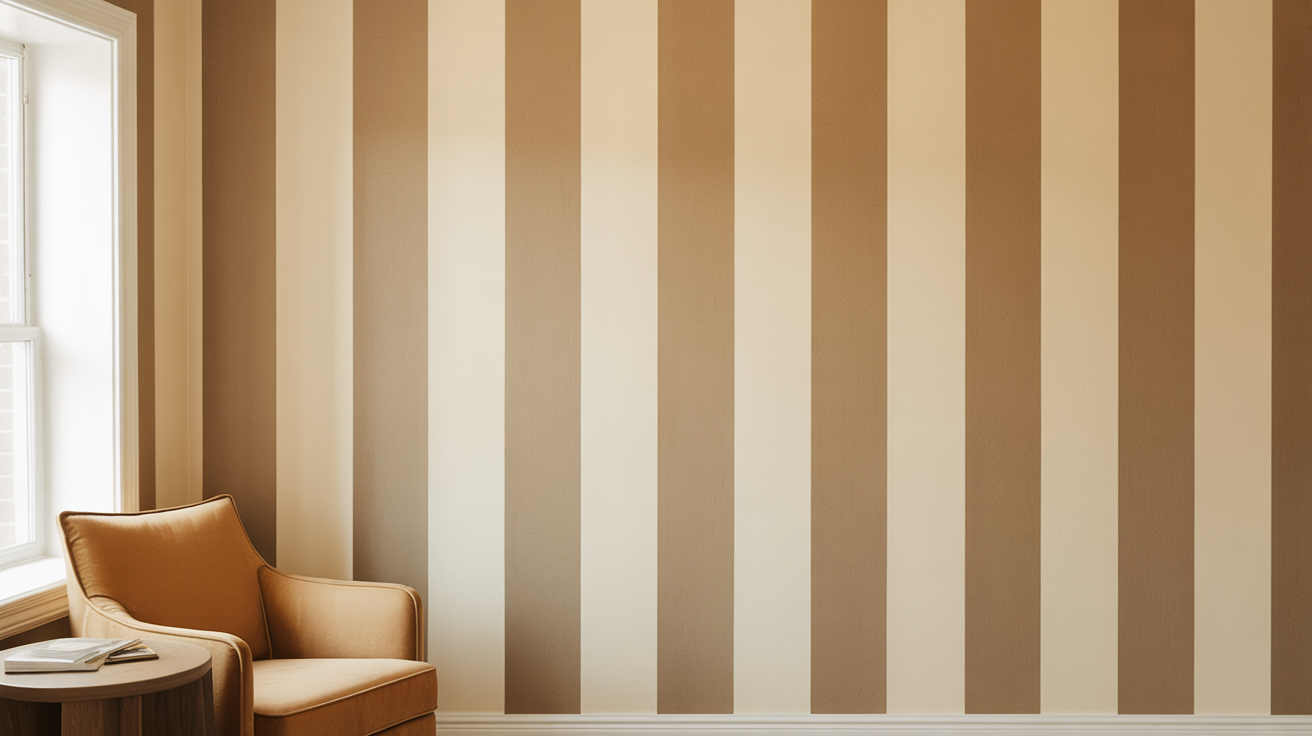
Vertical lines pull your eye upward. This makes low ceilings feel higher. Narrow rooms look more open and airy.
- Measure from the ceiling to the floor and mark stripe positions with a pencil.
- Apply tape along the marks and paint between the lines
- Peel the tape while the paint is slightly tacky for clean edges
I used this in a hallway with 8-foot ceilings. The vertical lines made it feel like a 10-foot space. Space your stripes evenly, 6 inches or 12 inches works best.
Horizontal Color Band Stripes
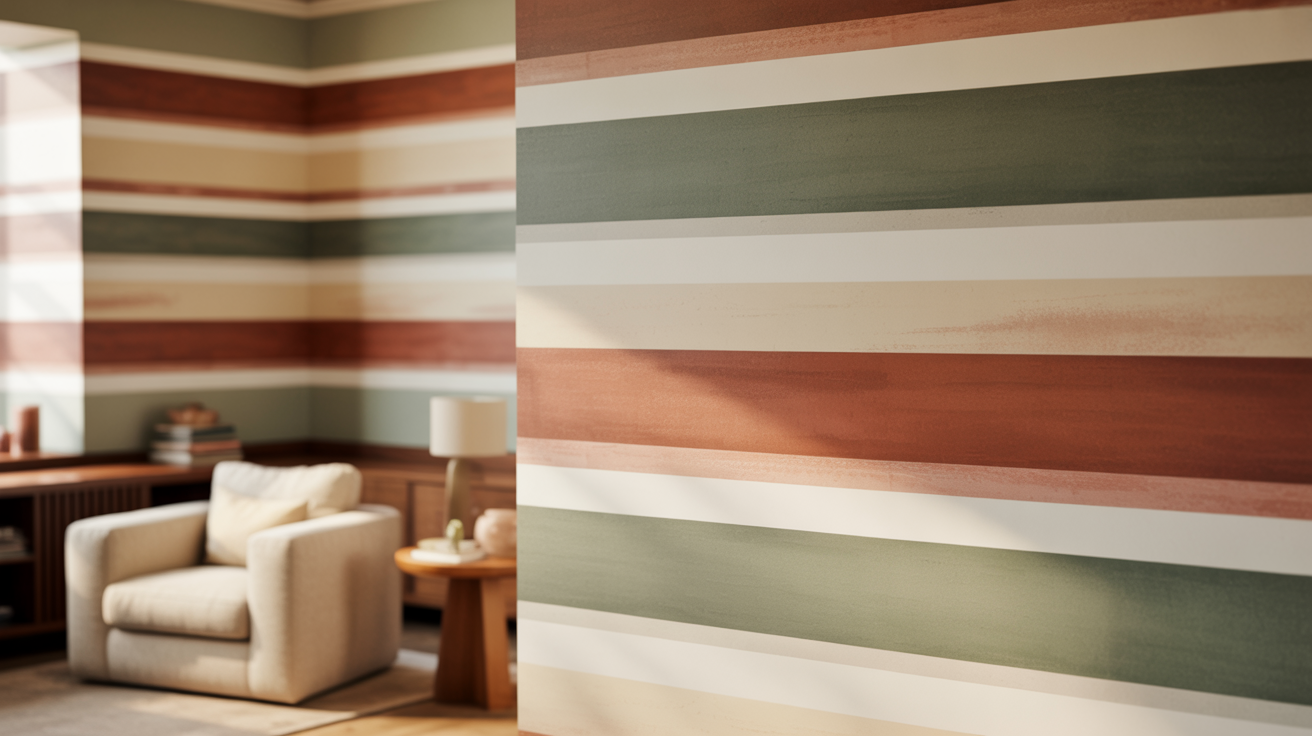
Horizontal stripes widen narrow walls. Perfect for small rooms that feel cramped. The eye travels left to right instead of up and down.
- Paint your base color first and let it dry completely
- Tape off horizontal bands at even intervals
- Paint accent colors over top and remove tape carefully
Thicker bands feel bold and modern. Thinner bands create a refined style. This pattern took me just two hours in a bedroom.
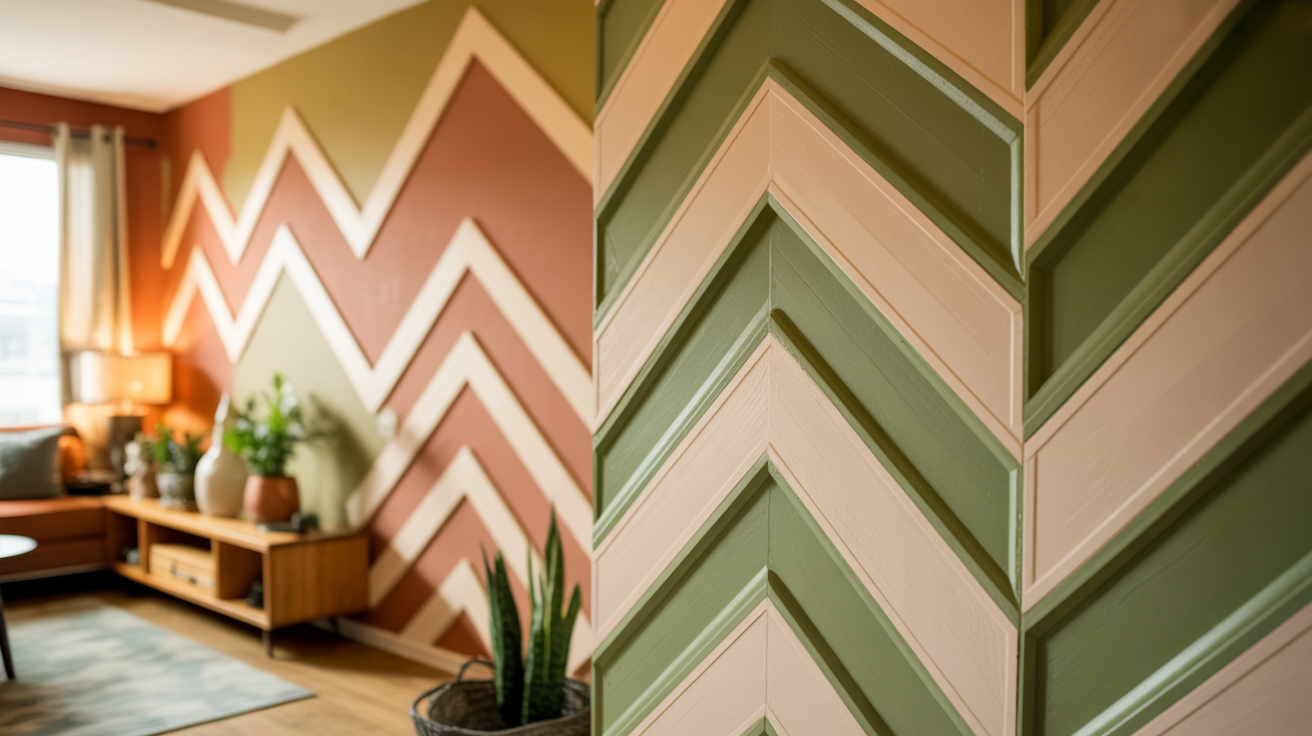
Chevron Tape Accent Wall
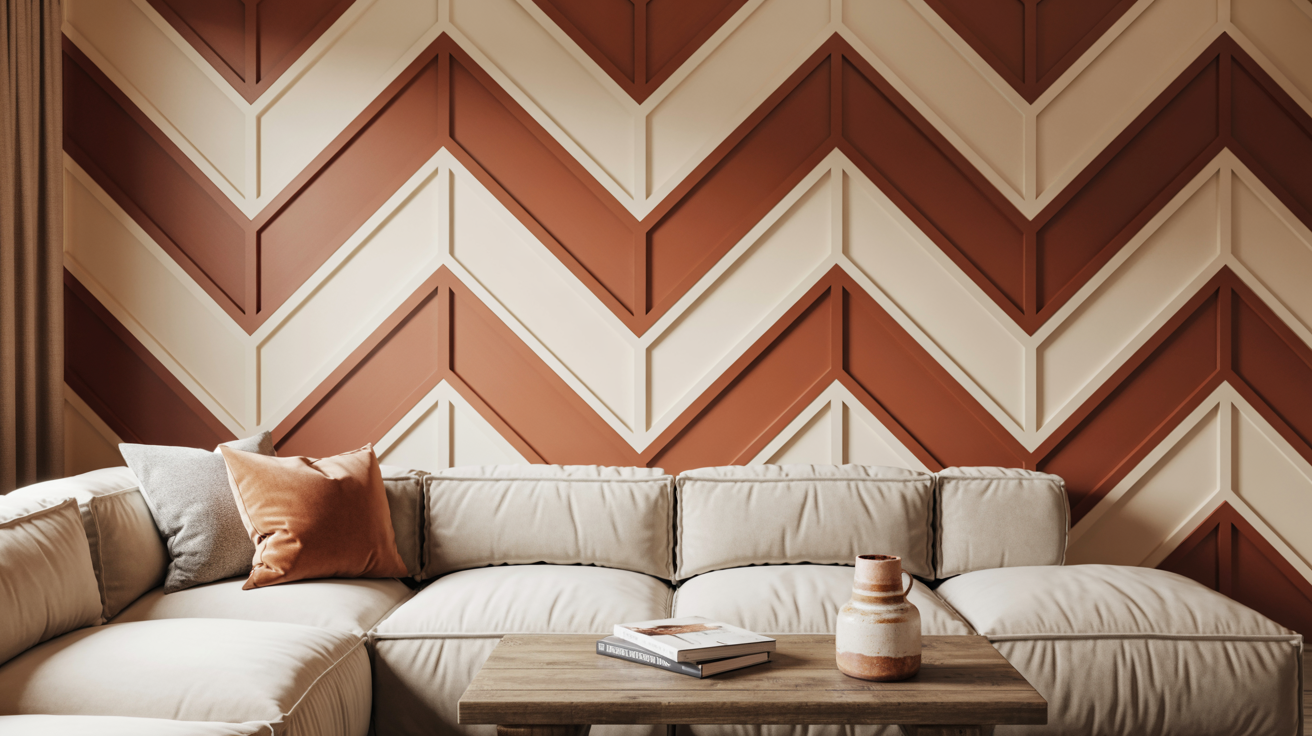
Zigzags bring energy to boring walls. This pattern requires angled tape lines that meet at points.
- Mark your angle at 45 degrees using a level
- Tape from the top corner down and create the opposite angle to form the V
- Repeat across the wall and alternate paint colors in each section
This takes longer than straight stripes but looks incredible. I did this behind my bed in navy and white. It became the room’s instant focal point.
Geometric Triangle Pattern
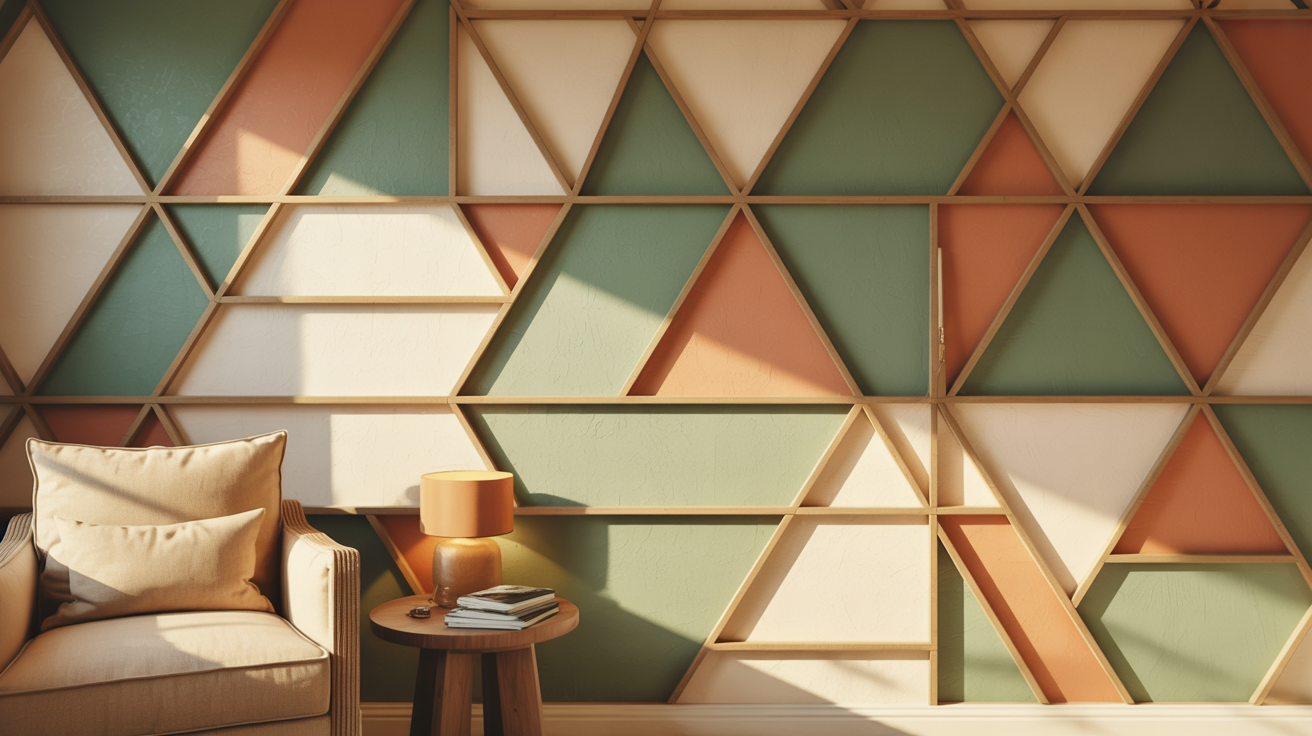
Triangles create drama unlike any other shape. Starting from a corner multiplies the impact. Large triangles work better than small ones.
- Draw your pattern on paper first with measurements
- Transfer measurements to the wall and tape off triangle shapes
- Paint triangles in three different colors for depth and dimension
Mix one base color with two accent colors. The overlapping triangles create movement that makes people stop and stare.
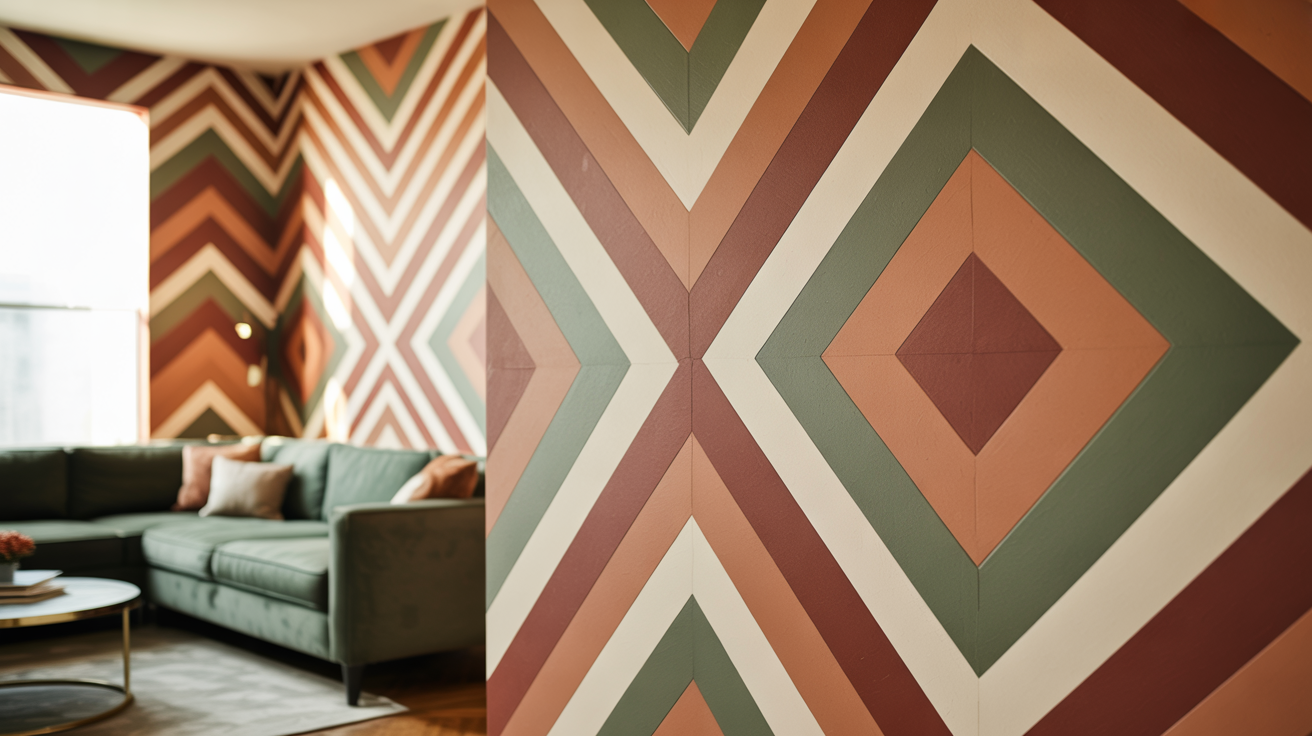
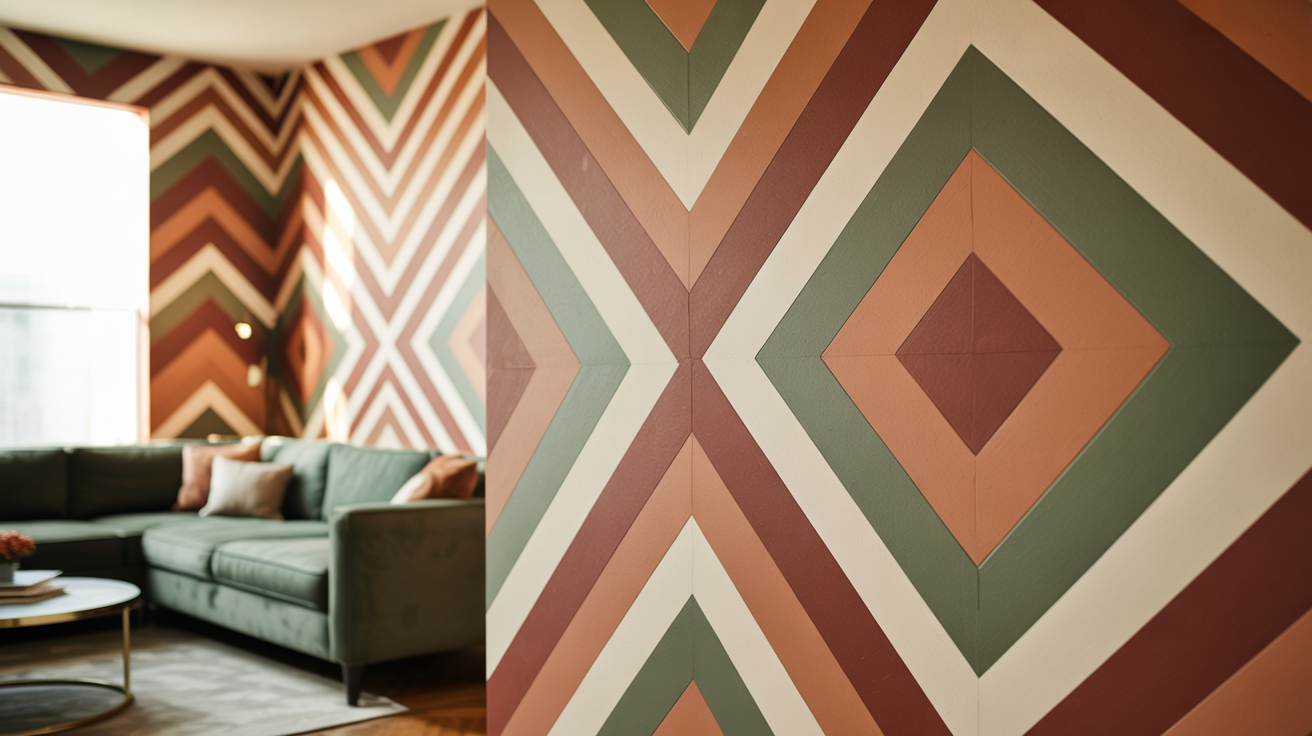
Diamond Tape Pattern
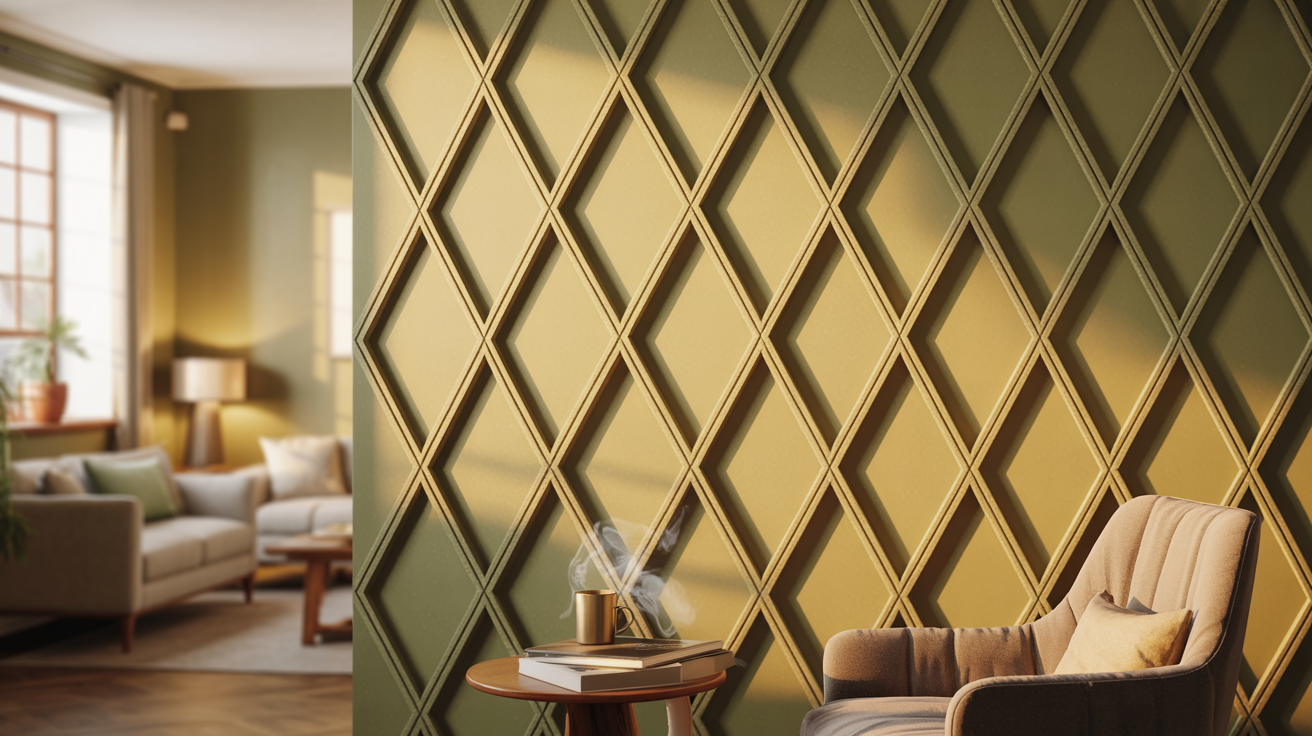
Diamonds add style without feeling fancy. This works beautifully in living rooms and bedrooms.
- Start with vertical and horizontal center lines on your wall
- Tape diagonals at 45-degree angles to form diamond shapes
- Paint alternating diamonds in different colors for contrast
My friend used soft gray and blush pink diamonds in her nursery. The polished pattern grew with the baby instead of feeling too childish.
Honeycomb Hexagon Design
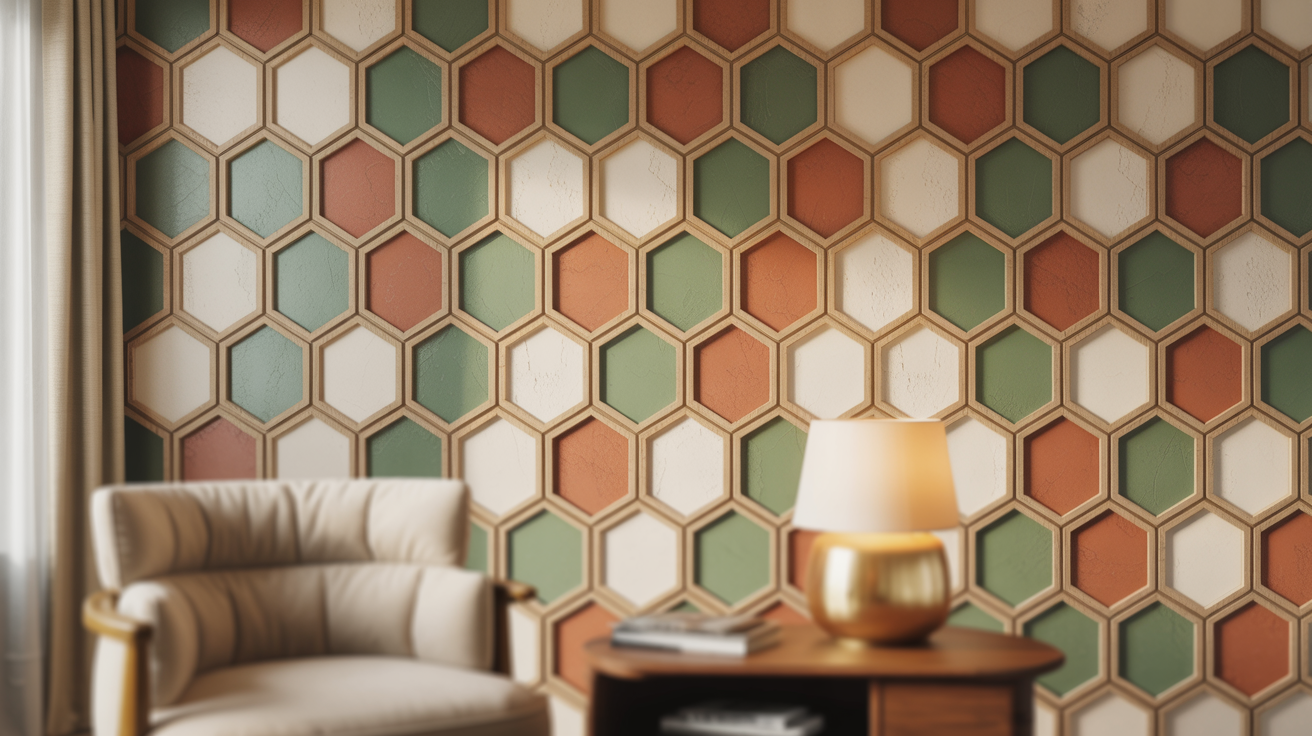
Hexagons feel modern and geometric. They work especially well with earthy tones.
- Cut a hexagon template from cardboard for consistency
- Trace it repeatedly across your wall in a connected pattern
- Tape around each shape and paint each hexagon a different shade
This pattern takes patience, but the payoff is worth it. The connected pattern looks like expensive wallpaper. Use sage green, terracotta, and cream.
Color Block Accent Wall
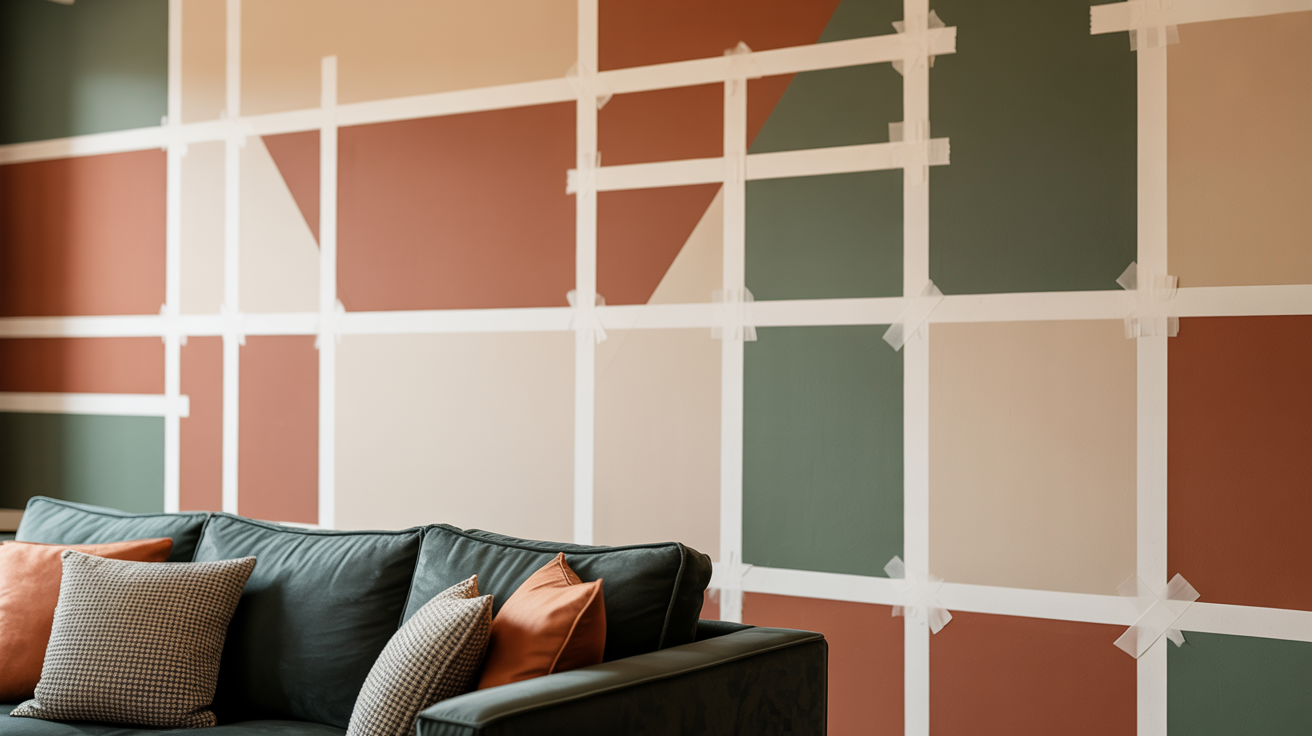
Large rectangular blocks are the fastest pattern to execute. No measuring dozens of stripes or angles.
- Divide your wall into 4 to 8 big sections with pencil marks
- Tape the borders between sections cleanly
- Paint each block a different color from the same family
Remove tape while the paint is slightly tacky. Not too wet, not completely dry. This pattern transformed my home office in under three hours.
Offset Block Pattern
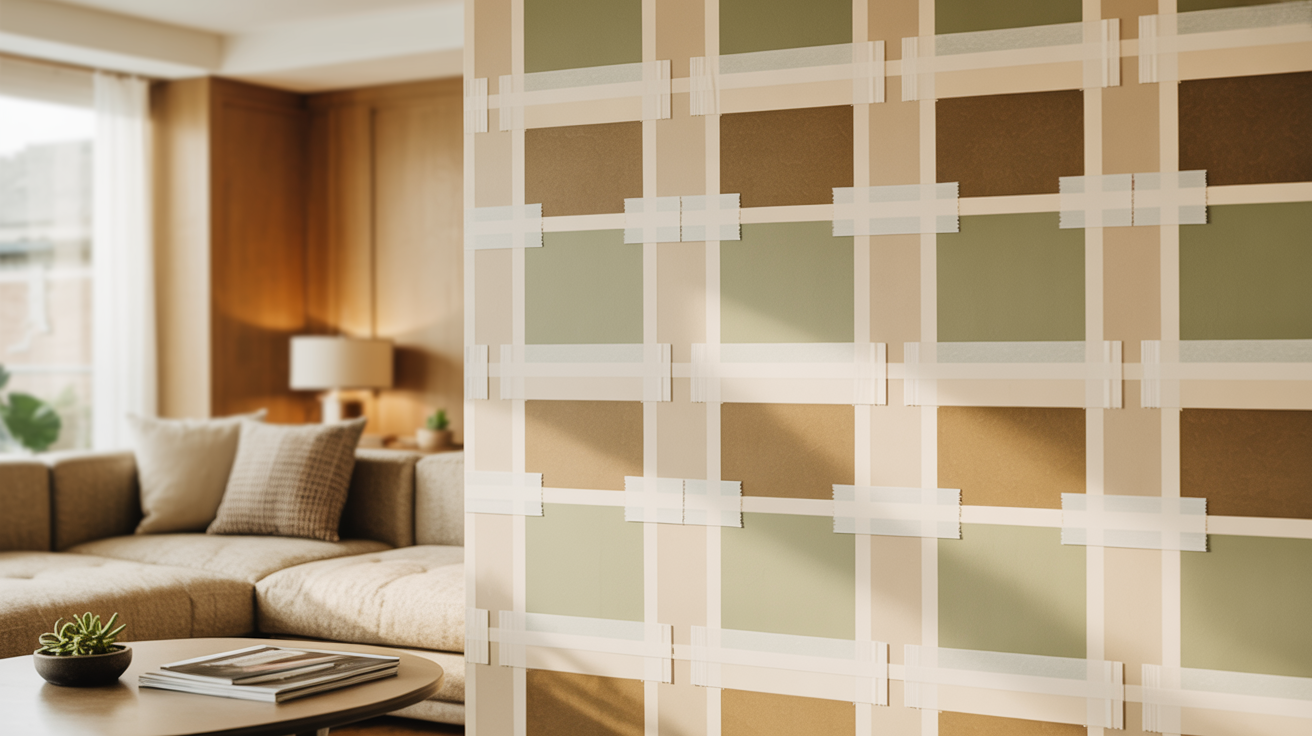
Regular blocks feel too structured sometimes. Offset blocks add artistic chaos.
- Sketch your layout first, so blocks feel intentionally irregular
- Make some blocks tall and narrow, others short and wide
- Tape and paint each section in up to four colors maximum
No two blocks should match in size. This pattern breaks design rules in the best way possible without looking messy.
Circle Ombre Accent Wall
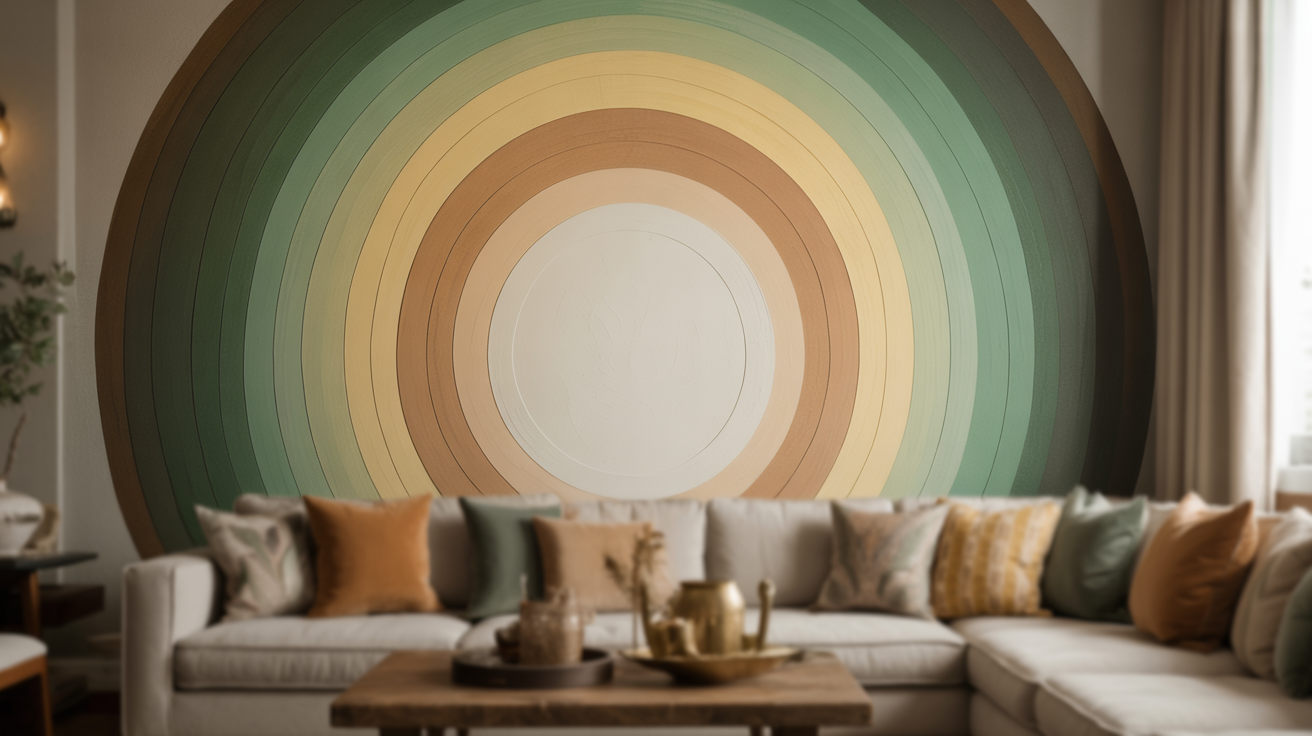
Circles soften geometric patterns. Use the string-and-pencil compass method to create perfect circles.
- Mark your focal point on the wall center and tie a string to a pencil
- Draw the smallest circle first and add larger circles around it
- Tape outside each line and paint the darkest color in the center, lighter shades outward
This ombre effect pulls people into the room. I’ve seen this work incredibly well behind dining tables, where it draws attention naturally.
Half-Wall Tape Divider
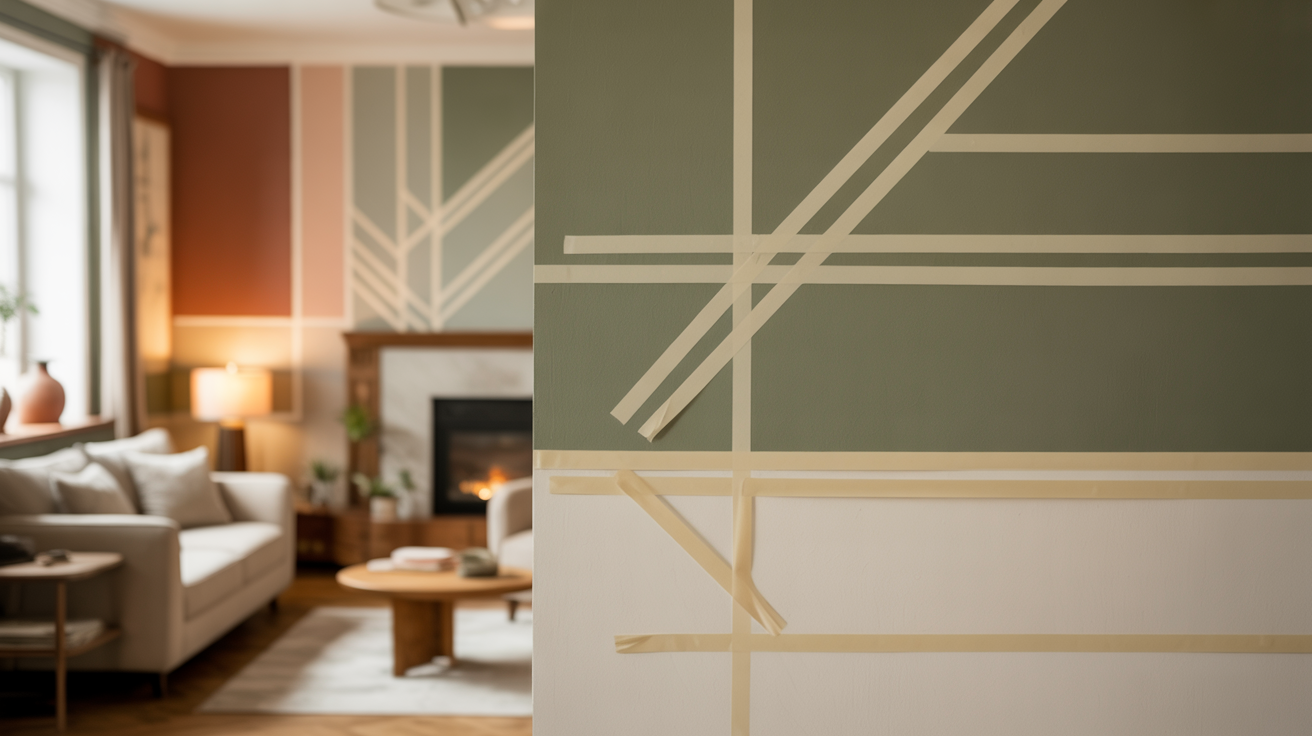
Two-tone walls feel polished and easy. Tape a horizontal line exactly halfway up your wall.
- Measure the halfway point and tape a perfectly straight horizontal line
- Paint the bottom half one color and the top another color
- Remove tape carefully for a clean dividing line between colors
Dark on the bottom hides scuffs, while light on top keeps rooms bright. Add a third accent color in a thin stripe along the division for designer detail.
Angled Line Pattern
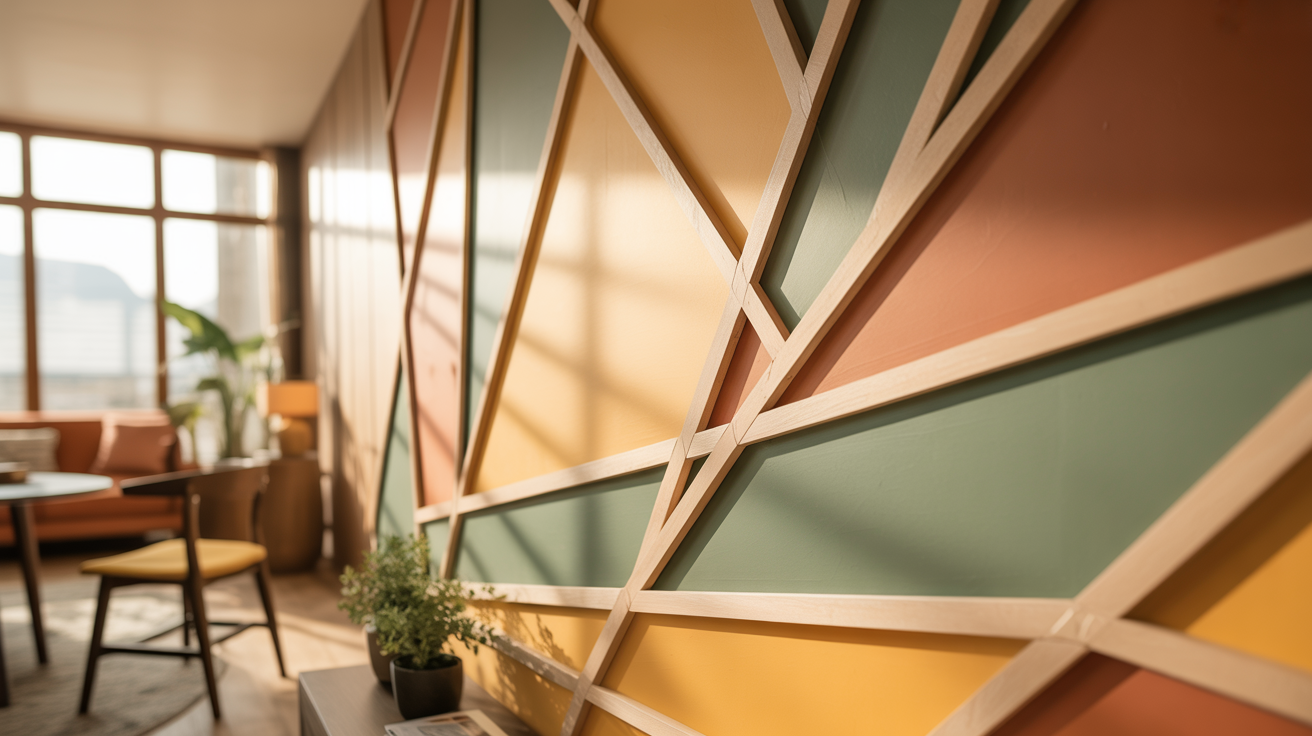
Diagonal lines feel contemporary and bold. They create movement across your wall.
- Start from one corner and angle tape lines toward the opposite corner
- Space lines evenly every 8 to 12 inches across the wall
- Paint between lines in alternating colors for contrast
The angle makes small rooms feel larger. Your eye follows the diagonal instead of hitting flat walls. This works great in narrow bathrooms.
Tape-as-the-Pattern Design
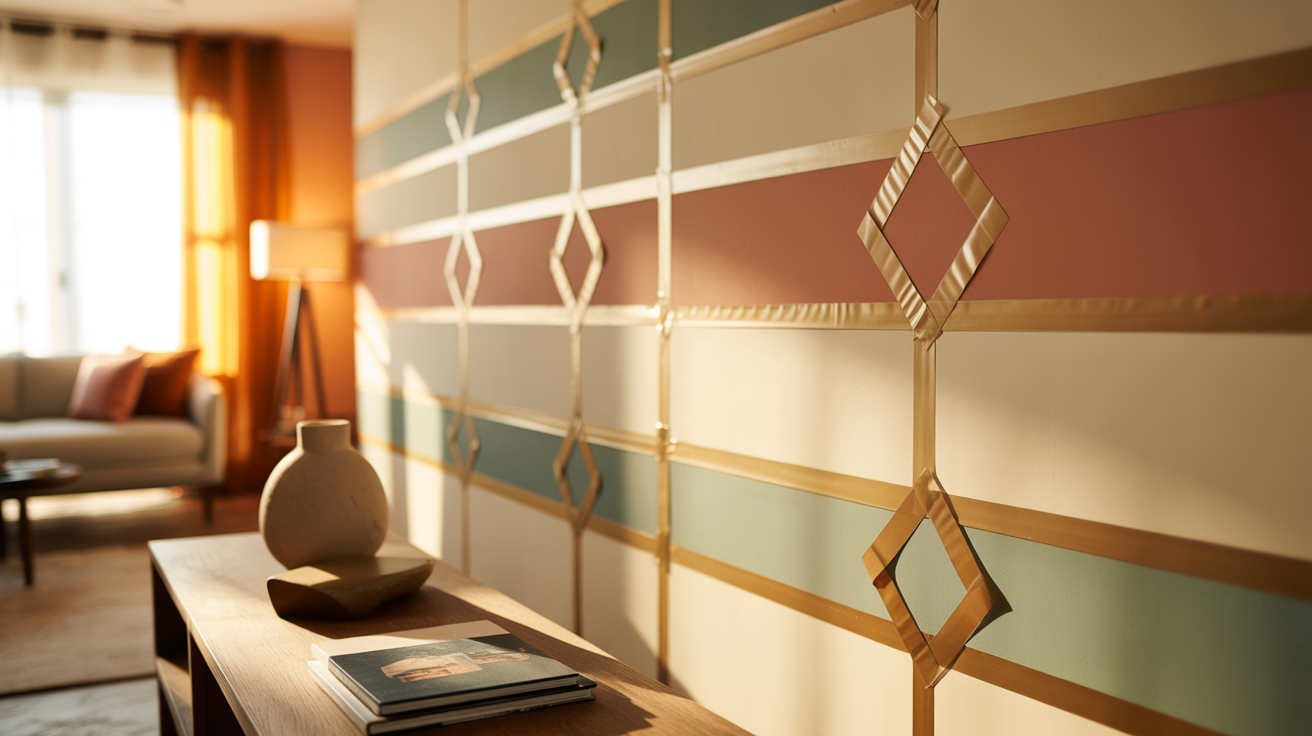
Here’s a twist: don’t remove the tape at all. Use colored painter’s tape as your actual design.
- Use colored painter’s tape or washi tape in different widths
- Layer tapes and cross them at angles to create geometric overlaps
- Leave the tape permanently as the finished pattern
This is perfect for renters who can’t paint walls. The tape peels off cleanly when you move. I used gold washi tape above my desk, took 20 minutes.
Freehand Abstract Tape Art
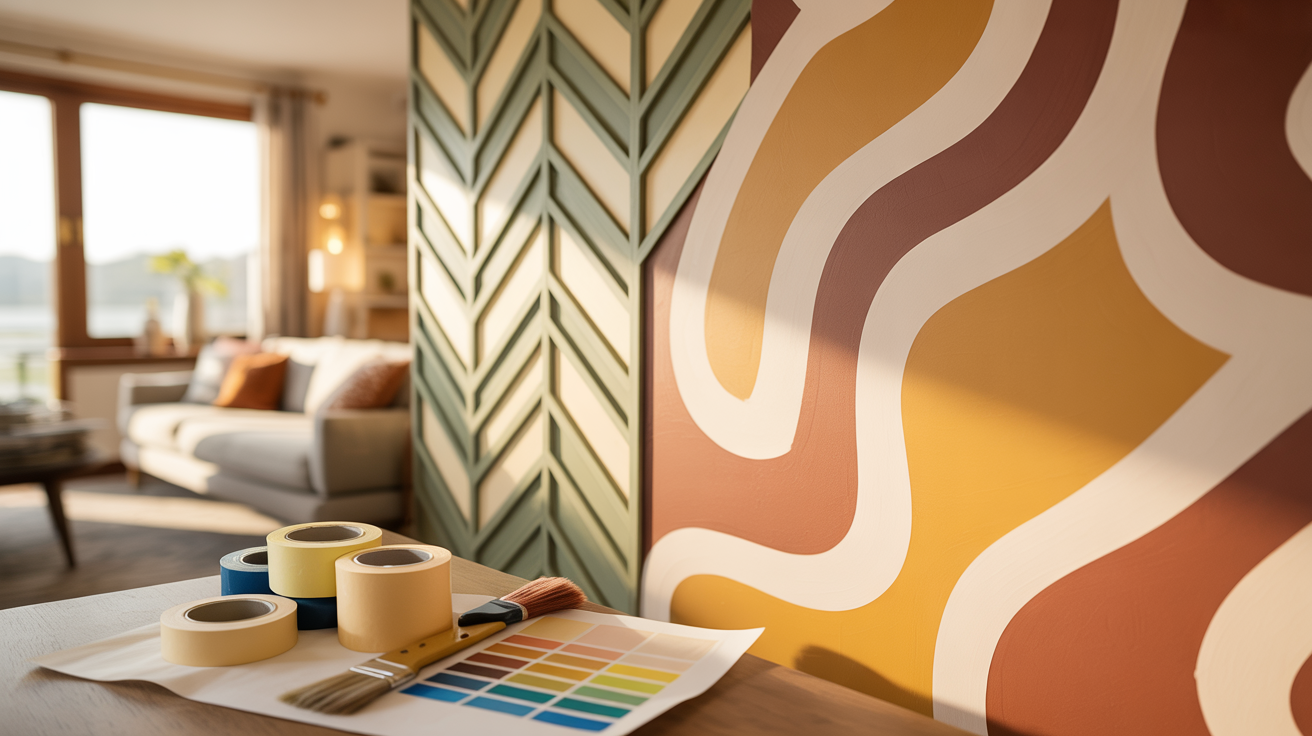
Forget rulers and measurements. Tear tape by hand and place it organically.
- Tear tape edges by hand to create flowing curves and random angles
- Layer torn pieces in overlapping sections across your wall
- Paint spaces between in bold colors and peel to reveal white lines
The imperfection is the entire point here. This pattern works best on smaller accent walls where controlled chaos feels intentional and artistic.
How to Apply Tape for Clean, Sharp Results?
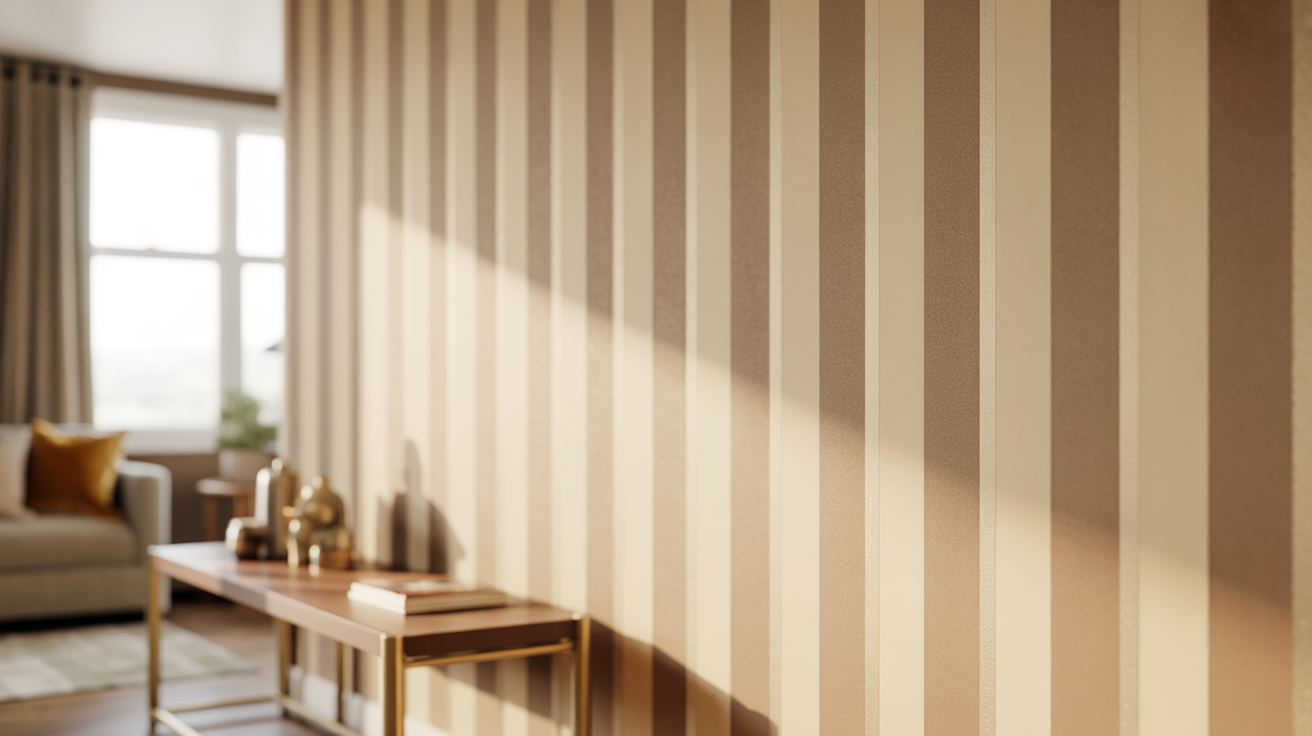
The way you apply tape makes or breaks your lines. Do it right, and your stripes look professional.
- Clean walls first: Wipe down your walls with a damp cloth and let them dry completely. Dust and grease under the tape cause paint to seep through.
- Press edges down: Run your finger firmly along both edges of the tape, as this seals it tight, so paint can’t bleed underneath and ruin your crisp lines.
- Remove while damp: Peel the tape off carefully when your paint is still slightly wet, waiting too long causes the paint to dry on the tape and chip off with it.
Tips for Perfect Tape Accent Wall Paint Patterns
I’ve painted dozens of accent walls. These tips will save you from the mistakes I made early on.
- Quality tape matters: Buy good painter’s tape from a hardware store, as cheap tape tears easily, leaves residue, and lets paint bleed through the edges.
- Test first: Try your pattern on a small hidden section or poster board before committing. This shows you if your colors work and if your spacing looks right.
- Limit colors: Stick to two or three colors maximum on your wall, as more than that creates visual chaos and makes the room feel busy instead of stylish.
- Match tape width: Use thin tape for delicate geometric designs and wide tape for bold stripes, as the wrong width makes application harder, and your pattern looks off.
- Photo your layout: Snap a picture of your taped design before painting. This helps you check balance and symmetry while you can still adjust things easily.
Conclusion
You now have tape accent wall paint pattern ideas that can change your room in a weekend. From simple stripes to geometric designs, these patterns prove you don’t need professional skills to create something that looks high-end.
Your bland wall has a solution. Pick the pattern that matches your comfort level, grab the right tape, and take your time with the measuring. The results will look like you spent way more money than you actually did.
Start with one wall and see how it changes the whole room. If this guide gave you the confidence to try it, share it with someone who’s been putting off their accent wall project. Already finished yours? Comment below with which pattern you chose and any tips you learned along the way.
Frequently Asked Questions
What type of tape is best for accent wall patterns?
Use painter’s tape designed for delicate surfaces, preferably the blue or green multi-surface kind. FrogTape works great for sharp lines. Avoid masking tape as it bleeds under the edges. Choose a 1-2 inch width for most patterns. Quality tape costs more but prevents paint bleed and protects your base coat.
How long should I wait before removing the tape?
Remove tape while paint is still slightly damp, about 30-60 minutes after your final coat. Don’t wait until it’s completely dry, or the tape pulls off dried paint with it. Pull slowly at a 45-degree angle away from the painted edge for the cleanest lines.
How do I prevent paint from bleeding under the tape?
Press tape edges down firmly with a credit card or putty knife. Some painters seal tape edges with the base wall color first, then apply the accent color. Use less paint on your roller near tape lines. Quality painter’s tape also helps prevent bleeding significantly.
What’s the easiest tape pattern for beginners?
Horizontal or vertical stripes are the easiest starting patterns. They require simple measuring and straight lines. Chevron patterns look impressive but need precise angling. Start with three wide stripes rather than many thin ones. Fewer lines mean fewer chances for mistakes while you learn the technique.
How much does a tape accent wall cost?
Expect to spend $30-80 total for a standard accent wall. This includes painter’s tape ($8-15), two paint colors ($25-50 per quart), and basic supplies like rollers and brushes. Larger walls or intricate patterns need more tape and paint. It’s much cheaper than hiring a professional painter.