More people are bringing their entertainment outside, with movie nights and sports becoming regular weekend plans. The issue is that outdoor TVs cost a lot, and the weather can damage them fast. You need a setup that protects the screen while still looking good.
This guide gives clear outdoor TV wall ideas that keep your screen safe from rain, sun, and moisture.
We cover materials that last outdoors, mounting options that hold the TV firmly, and simple steps that help the equipment last longer. You also get design ideas for patios, decks, and poolside spaces.
These ideas come from real setups that have lasted through many seasons. No guessing about what works. With the right wall design, your patio or deck can become a comfortable place to watch films and games, and your guests will remember the experience.
Why Install an Outdoor TV Wall?

An outdoor TV wall does more than hold your screen. It creates a complete entertainment space that works in any weather while adding serious value to your home.
An outdoor TV wall turns your backyard into a real entertainment space where you can host movie nights, watch sports with friends, or stream shows in the fresh air.
Your living area extends beyond your back door, giving you a reason to use your yard all year long.
A well-designed outdoor TV wall boosts your property value because buyers notice it right away. It creates a modern focal point that makes your outdoor space look upscale, and homes with these features sell for higher prices.
Built-in cabinets and shelves keep remotes, cables, and equipment organized so nothing sits scattered around. You can customize your wall with lighting, panels, and materials to match any style, whether traditional, modern, or in between.
Best Materials for Outdoor TV Walls
Material choice determines how long your TV wall lasts and how good it looks. Some options handle weather beautifully while others fail within months.
Stone and Masonry Options
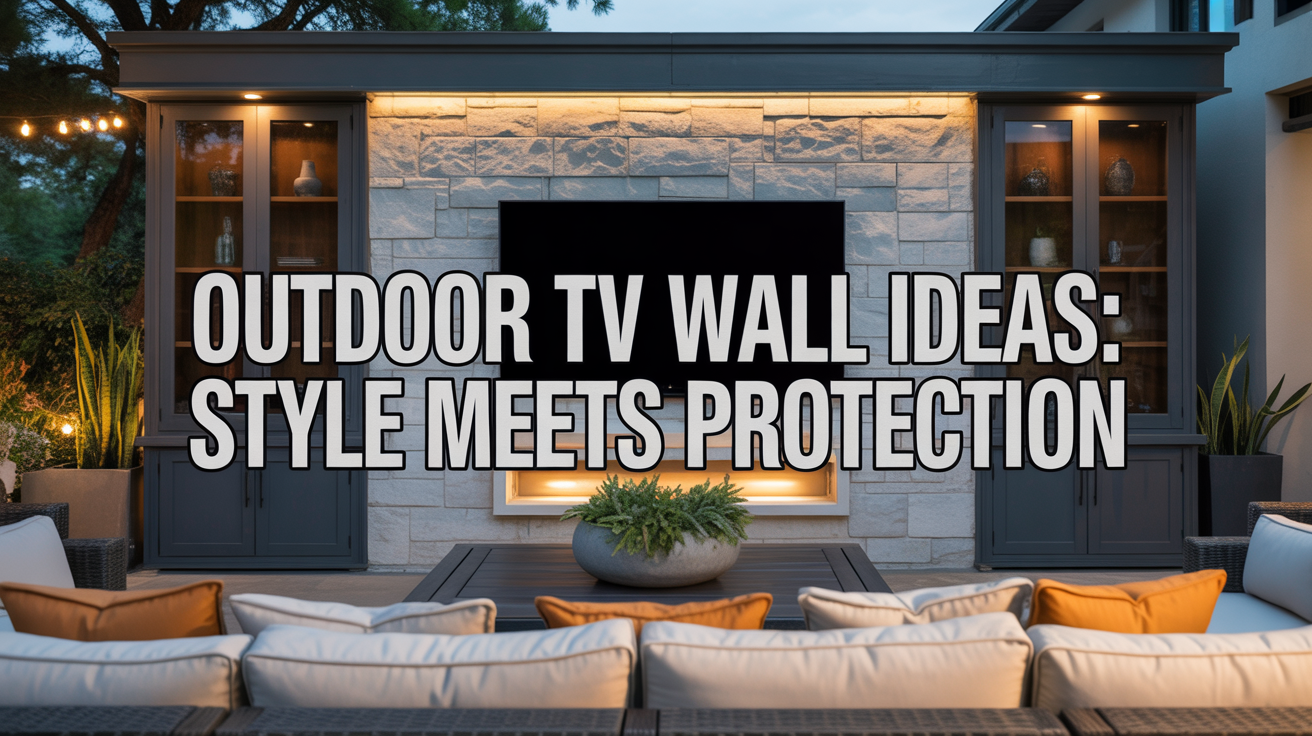
Natural stone creates a TV wall that lasts decades. It handles sun, rain, and humidity without breaking down or looking worn.
Stone adds genuine texture and character that manufactured materials can’t match. The timeless appearance works equally well with modern or traditional homes.
Brick offers similar weather resistance with a more classic look. Both options create a stylish backdrop that makes your TV installation feel permanent and intentional rather than temporary.
Treated Wood and Composite Panels
Treated wood resists moisture and decay when properly maintained. Wood slat walls deliver a modern, sleek appearance that’s currently popular in outdoor design.
Composite panels provide the wood aesthetic with even less maintenance. Both options are weather-resistant and long-lasting when installed correctly. The warm, natural look complements outdoor settings beautifully, and you can paint or stain either material to match your existing decor perfectly.
Metal and Modern Materials
Steel and aluminum bring an industrial, contemporary edge to outdoor spaces. These materials are highly durable and weather-resistant, with minimal upkeep required.
The sleek appearance suits modern design sensibilities. Metal doesn’t warp or crack as wood can. You can easily incorporate lighting into metal structures. For homeowners wanting a bold, statement-making TV wall, metal delivers both durability and visual impact.
Weatherproof Panels and Siding
Weatherproof panels are specifically engineered for outdoor exposure. They come in a variety of colors and textures, including options that convincingly mimic wood or stone.
Installation and maintenance are straightforward. These panels effectively protect your TV from elements while remaining cost-effective for most budgets. They’re the practical choice when you want reliable performance without the expense of stone or the maintenance of wood.
Outdoor TV Wall Design Ideas
Design options range from simple and practical to elaborate showpieces. Your choice depends on space, budget, and how you’ll actually use the area.
Fireplace Integration Designs

Mounting your TV above an outdoor fireplace creates instant coziness. The combination serves as a dual focal point that draws people outside even on cooler evenings.
Stone or brick fireplace walls provide a natural, attractive TV backdrop. Add comfortable seating to complete the outdoor living room feel.
This setup works exceptionally well on covered decks and patios where both features stay protected. Movie nights with warmth become a regular thing rather than a special occasion.
Built-In Wall Niche Solutions

A custom wall niche gives your TV a seamless, integrated appearance. The recessed placement protects the screen from the weather better than surface mounting.
This clean, modern look maintains its appeal even when the TV is off. You can include surrounding storage or shelving in the design. Professional appearance requires careful planning and construction, but the result is worth the effort for a high-end, permanent installation.
Pergola and Covered Structure Installations

Pergolas provide partial shade and strong architectural interest. They protect your TV from direct sunlight and light rain while creating a defined outdoor room.
The TV remains visible from bar seating or lounge areas underneath. You can add a retractable canopy for additional protection when needed. Suspended mounting options work well with pergola structures, giving you flexibility in exact TV placement.
Pool and Poolside Cabana Setups

Position your TV where it’s visible from both the pool and the surrounding seating areas. This creates a resort-like experience in your own backyard.
Cabana walls or areas near outdoor kitchens work perfectly for TV mounting. The setup handles humidity from the pool environment while serving multiple viewing zones. Often, these installations include an adjacent bar or grill area, making the space a complete entertainment hub for larger gatherings.
Outdoor Kitchen and Bar Combinations

TV placement above or near your outdoor cooking area lets you watch sports while grilling. It’s visible from bar seating, integrating entertainment with meal preparation naturally.
Small to medium screens work best in these spaces. You don’t want the TV dominating the entire outdoor area or competing with the social aspects of cooking together. This creates a genuine social hub where people gather, cook, eat, and watch together.
Corner and Multi-Zone Placements

Position your TV in a corner of your covered patio to maximize space efficiency. The corner location makes the screen visible from multiple seating arrangements without blocking traffic flow.
This works brilliantly in multifunctional outdoor spaces that include a fireplace, grilling station, and various lounge areas. Anchor different zones with indoor-outdoor area rugs. The TV serves everyone without forcing a single-purpose layout on your entire patio.
Detached Patio Structures

A standalone patio with its own dedicated TV wall separates the entertainment zone from your main house. This creates a private outdoor retreat that feels special.
Include a small outdoor kitchen or bar in the structure. Position the TV opposite the main seating for optimal viewing. This setup is ideal for larger properties where you have room for distinct outdoor spaces with different purposes.
Indoor-Outdoor Transitional Spaces

Bifold or sliding glass doors blur the line between inside and outside. Mount your TV where it’s visible from both spaces.
This creates a seamless flow for entertaining. Your TV stays protected from the weather while the space feels open and airy.
The setup works exceptionally well with covered patios, extending your usable living space significantly without the full exposure of completely outdoor installations.
Screened Porch Installations

Screened porches offer additional protection from insects and weather. They’re perfect for climates with bugs or unpredictable conditions.
You get indoor comfort with outdoor ambiance. Include a fireplace and comfortable furniture for year-round usability in many regions.
Less weatherproofing is needed than in fully exposed locations, which can reduce costs and maintenance requirements.
Maintenance and Care Tips
Regular maintenance extends your TV’s life and prevents small problems from becoming expensive repairs.
- Clean your screen carefully and often: Use gentle screen cleaners and microfiber cloths, remove debris regularly, and check for water.
- Check your setup twice a year: Inspect mounting hardware and seals, clean ventilation ports, and test all connections.
- Protect your TV during winter: Cover it when not in use and bring it inside during harsh weather.
- Fix common problems yourself when you can: Check power and connections first, adjust settings for image issues, and replace remote batteries.
- Know when to call a professional: Get expert help for moisture damage or repairs beyond your skill level.
Conclusion
The right outdoor TV wall ideas give you a strong mix of protection and style. You now know how to choose materials that handle weather, how to mount your TV safely, and how to shape a space that feels comfortable.
Begin with weatherproof gear and smart placement. Add the level of protection your climate needs, then choose a look that fits your home and your outdoor habits. Your patio can become a place people enjoy all year, with stone, wood, metal, or composite panels, as long as strength comes first.
If you are ready to plan your project, review local rules, measure your space, and bring in a professional for complex steps. If you have questions or want to share your setup, add a comment below.
Frequently Asked Questions
What is the best material for an outdoor TV wall?
Stone, brick, and treated wood are top choices for durability. Stone and brick withstand the weather best and require minimal maintenance. Treated wood offers a warm aesthetic but needs regular upkeep. Weatherproof panels provide a cost-effective alternative. Choose based on your climate, budget, and design preferences for the longest-lasting results.
Can I use a regular TV outdoors?
No, standard indoor TVs will fail outdoors. They cannot withstand rain, humidity, UV rays, temperature extremes, or insects. Outdoor TVs are specifically built to handle weather conditions, with temperature ranges typically from -40°F to 140°F. The higher cost is justified by durability and protection against elements that destroy indoor models.
How do I reduce glare on my outdoor TV?
Position your TV in naturally shaded areas and avoid south-facing placement. Use pergolas or roof overhangs for coverage. Install swivel mounts to adjust angles as the sun moves. Increase TV brightness and adjust contrast settings. Anti-glare screen protectors provide additional help for daytime viewing in bright conditions.
How much does an outdoor TV wall cost?
Costs vary widely. Outdoor TVs range from $500 to $5,000+, depending on size. Construction materials run $500 to $10,000+ for stone, brick, or wood walls. Add $500 to $5,000+ for professional installation, plus mounting hardware ($50 to $300) and accessories. Total projects typically cost $2,000 to $20,000+.
Do I need a professional to install an outdoor TV wall?
It depends on project complexity. Simple wall mounts suit DIY if you have experience. Complex builds with stone, brick, or structural modifications require contractors. Always hire licensed electricians for outdoor electrical work and obtain necessary permits. Professional installation ensures safety, proper weatherproofing, and often includes warranties.