Thinking about removing a wall in your home? Don’t touch it until you read this. Load-bearing walls support your home’s structure, and removing one without proper support beams can lead to serious damage or even collapse.
This guide explains everything you need to know about support beams, what types work best, how to size them correctly, and when you absolutely need a structural engineer.
We’ve consulted with licensed contractors and building professionals to bring you accurate, safety-focused information you can trust.
You’ll learn how to identify load-bearing walls, understand beam materials like steel and LVL, and handle the permit process.
This isn’t about cutting corners. It’s about doing the job right so your family stays safe, and your investment is protected. If you’re opening up your kitchen or creating an open floor plan, proper support beam installation is non-negotiable.
Understanding Load-Bearing Walls and Support Beams

A load-bearing wall carries weight from your roof and floors down to the foundation. Non-load-bearing walls?
They just divide rooms. You’ll find load-bearing walls on exterior walls or running down the center of your home. Remove one without support, and you’re asking for trouble.
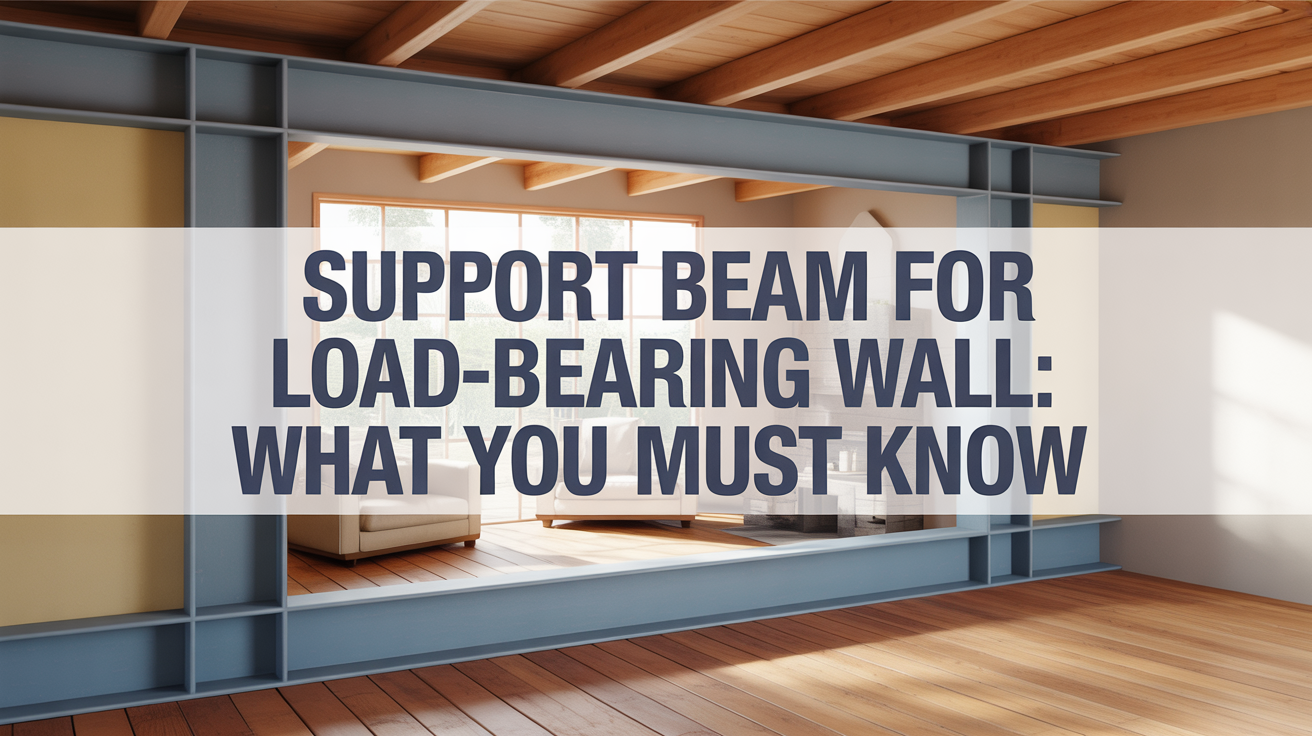
A support beam replaces or supports a removed load-bearing wall. It catches the weight from above and spreads it across columns at each end. Think of it as a bridge inside your house. The beam does the heavy lifting so you can open up your space.
Support beams come in steel, LVL, glulam, or wood. Get the right size calculated by a professional. Why? An undersized beam causes sagging floors or collapse. Your home’s safety depends on it. Don’t cut corners.
Why Replace or Modify a Load-Bearing Wall?
Homeowners today want open spaces. The trend toward open-concept living has changed everything. You want to see your family while cooking. Your guests shouldn’t feel boxed in. I get it.
- Better flow between rooms
- More natural light throughout your home
- Higher resale value (buyers love open layouts)
- Easier entertaining and family time
- A home that feels twice as big
The most common projects? Kitchen-living room openings top the list. Basement remodels come next. Sometimes you’re fixing structural damage on an aging wall. Whatever your reason, the goal stays the same: create space while keeping your house safe.
Here’s the critical part: the new beam system must handle the redistributed loads properly. That weight doesn’t disappear. It shifts to the beam and posts. Get the engineering wrong? You’re looking at serious problems. Safety first. Always.
Types of Support Beams for Load-Bearing Walls
Choosing the right beam matters. You’ve got five main options, and each has its strengths. Let me walk you through them so you can make the best choice for your project.
1. Steel Beams

Steel beams are the powerhouses of structural support. You’ll see them as I-beams or H-beams, slim profiles that pack serious strength. They handle heavy loads without taking up much space.
- High strength-to-weight ratio (strong but not bulky)
- Resistant to fire, pests, and rot
- Ideal for long spans and heavy loads
Steel works best for modern open layouts and large structural openings. Got a multi-story home? Steel’s your answer. The slim profile gives you maximum space with maximum support.
2. Solid Wood Beams

Solid wood beams are traditional timber. They’ve been used for centuries. You get that warm, natural look that steel can’t match. For small spans only.
- Susceptible to moisture, rot, and termites
- Less suitable for wide openings
- Can warp or crack over time
I recommend solid wood for rustic or farmhouse-style interiors where appeals matter. If you’re opening up a large space, skip the solid wood. Go with something stronger.
3. Glulam Beams

Glulam beams are engineered wood made from multiple layers of glued timber. Think of it as wood on steroids. Stronger than solid wood. More stable too.
- Stronger and more stable than solid wood
- Resistant to warping and cracking
- Available in curved or exposed designs
Glulam shines when you want exposed beams that blend strength with appeal. I’ve used these in cathedral ceilings and open living areas. They look amazing and do the structural work you need.
4. Laminated Veneer Lumber (LVL) Beams

LVL beams are made from thin layers of wood veneer pressed and glued together. They’re engineered for consistency. No knots, no weak spots. You get predictable performance every time.
- Cost-effective compared to steel or glulam
- High strength-to-weight ratio
- Consistent quality with minimal defects
LVL is my go-to for cost-effective remodeling and interior wall replacements. You get solid performance without breaking the bank. Most residential projects? LVL handles them just fine.
5. Composite Beams

Composite beams combine materials, steel, wood, and sometimes concrete. You’re getting the best properties of each material in one beam. They offer excellent durability for complex situations.
- Excellent durability and flexibility
- Ideal for complex or large-scale projects
- Customizable for specific load requirements
I use composite beams for custom residential or commercial applications. They’re not common in standard remodels. But when you’ve got unusual loads or spans? Composites solve problems that other beams can’t handle.
Design and Appeal Ideas Using Support Beams
Support beams don’t have to be boring. They’re structural necessities, yes. But they can also be remarkable design features. I’ve seen beams transform ordinary rooms into showstoppers.
Incorporating Beams into Modern Interiors

Exposed beams create an immediate visual impact. Steel beams give you that industrial edge. Timber beams bring warmth and character. You’re not just supporting your ceiling, you’re making a statement.
- Leave steel or timber beams exposed as focal points
- Paint beams to match your walls (or go bold with contrast)
- Add cladding for industrial, farmhouse, or contemporary looks
- Use dark stains on wood for a dramatic effect
The key is intentionality. Don’t just leave a beam exposed because you’re too lazy to hide it. Make it look purposeful. Match it to your design vision, and suddenly that structural element becomes your favorite feature.
Blending Function and Style

Sometimes you want the support without the visual. Other times, you want to showcase the beam. Both approaches work. It depends on your space and style. I’ve done it both ways.
- Conceal beams within the ceiling for a seamless look
- Highlight wooden beams for warmth in open spaces
- Use wrapped faux beams for purely decorative accents
- Box in steel beams with drywall for a clean finish
Concealing works great in modern, minimalist homes. Highlighting works when you want rustic charm or structural interest. Faux beams? They’re perfect when you want the look without the structural work. Pick what fits your vision.
Creative Examples

Let me share some real-world applications I’ve seen work beautifully. These aren’t theoretical. They’re projects that turned out amazing. You can steal these ideas for your own home.
- Kitchen-to-living-room transitions with exposed LVL beams (affordable and clean)
- Vaulted ceiling conversions using glulam beams (dramatic and structural)
- Rustic designs featuring reclaimed wood support beams (character for days)
- Industrial lofts with exposed steel I-beams painted matte black
The kitchen-living room opening is my most requested project. That single exposed beam defines the space without closing it off. Vaulted ceilings? They’re showstoppers when you use beautiful glulam beams. And reclaimed wood brings history and warmth that new materials can’t match.
How to Choose the Right Support Beam?
Picking the right beam matters. A lot. I’ve seen homeowners make costly mistakes here. You don’t want to be one of them. Balance your budget between steel and LVL options. Follow local building codes and permit requirements. Don’t skip professional help. Hire a structural engineer to calculate beam size and load paths. Use a licensed contractor for safe installation.
- Structural engineer: calculates the exact beam size and load requirements based on your specific home
- Load path: determines how weight transfers through your structure to the foundation
- Professional assessment: identifies hidden issues you can’t see in yourself
- Contractor expertise: ensures proper installation following safety codes and engineering specs
- Permit compliance: guarantees your project meets legal requirements and passes inspections
Cost of Installing a Support Beam for a Load-Bearing Wall
Let’s talk money. I know you want real numbers, not vague estimates. Installing a support beam isn’t cheap, but knowing the costs upfront helps you plan better.
Average Cost Range
The price varies wildly based on your project.
- Basic installations: $1,000 – $3,000 for straightforward beam replacements
- Complex projects: $5,000 – $10,000+ when structural challenges arise
- Open-concept remodels: $3,000 – $15,000 for kitchen-living room transformations
Cost Factors
Several things drive up your final bill.
- Beam type: Steel costs more than wood or engineered lumber
- Beam size: Longer and larger beams increase material and labor costs
- Labor expertise: Experienced contractors charge premium rates for safety
- Permits required: Building department fees and inspection costs add up
- Additional renovations: Drywall repair, flooring replacement, and paint touch-ups
Budgeting Tips
Don’t get caught off guard.
- Multiple quotes: Get at least three estimates from licensed contractors
- Hidden costs: Budget for relocated electrical wiring and plumbing lines
- Engineering fees: Always include the structural engineer consultation in your total
Your final cost depends on your specific situation. I’ve seen simple beam swaps done for $2,000. I’ve also seen complex projects hit $20,000. Get detailed quotes. Ask questions. Understand what you’re paying for before signing any contract.
Professional Guidance: When to Hire an Expert
You need experts for this job. Period. I don’t care how handy you are. Load-bearing walls aren’t DIY projects. The risks are too high. The consequences are too severe.
- Structural engineer: Calculates load requirements, determines exact beam size, ensures code compliance
- Licensed contractor: Handles wall removal, installs the support beam properly, and completes finishing work.
- Building inspector: Verifies code compliance, reviews plans, and approves permits at each stage
Why Hiring Pros Matters?
- Safety guarantee: Professionals prevent structural failures that endanger your family
- Legal compliance: Experts ensure your project meets all building codes and regulations
- Financial protection: Proper installation avoids costly repairs from amateur mistakes
Here’s the truth. I’ve seen homeowners try to save money by skipping engineers. They end up spending triple fixing their mistakes. Some face legal issues when selling their homes. Others deal with sagging floors or cracked walls. Don’t be that person. Hire the right professionals from the start. Your home’s structural integrity isn’t worth gambling on.
Conclusion
Installing a support beam for load-bearing wall removal isn’t a DIY guessing game. You now understand the importance of proper sizing, choosing the right materials, and getting professional structural calculations. Safety comes first, and cutting corners on load-bearing walls can cost you far more than hiring the right experts.
Armed with this knowledge, you can confidently plan your renovation project. You know when to call a structural engineer, what questions to ask contractors, and why permits matter. Your home’s structural integrity is protected when you follow the right steps.
Planning a wall removal project or addressing questions about load-bearing walls? Share your experience or concerns in the comments below. Your situation might help someone else handle their own renovation safely. And remember, when in doubt, always consult a licensed structural engineer before making any changes to load-bearing walls.
Frequently asked questions
Do I need a support beam for load-bearing wall removal?
If the wall runs perpendicular to floor joists, sits directly above another wall, or is located in the center of your home, it’s likely load-bearing. You’ll need a support beam to carry the weight before removing it. Always hire a structural engineer to confirm and provide calculations.
What types of support beams are used for load-bearing walls?
Common options include steel I-beams, laminated veneer lumber (LVL), glulam beams, and engineered wood. Steel offers maximum strength in compact sizes. LVL and glulam are lighter and easier to install. Your structural engineer will specify the right type based on your load requirements and span distance.
How much does a support beam for a load-bearing wall cost?
Costs range from $1,000 to $10,000, depending on beam size, material, and labor. Steel beams run $100-$400 per linear foot installed. LVL beams cost $50-$200 per foot. Add $500-$2,000 for structural engineer fees and permits. Complex installations with foundation work cost more.
Can I install a support beam for a load-bearing wall myself?
No, this requires professional installation. Load-bearing beam work involves precise calculations, temporary support walls, structural modifications, and inspections. Mistakes can cause catastrophic failure. Hire licensed contractors and structural engineers. Most jurisdictions require permits and professional installation for load-bearing modifications anyway.
Do I need a permit to install a support beam?
Yes, almost always. Removing load-bearing walls and installing support beams requires building permits and inspections. Your structural engineer provides stamped drawings for permit applications. Skipping permits risks fines, insurance issues, and problems selling your home. The permit process ensures work meets safety codes.